
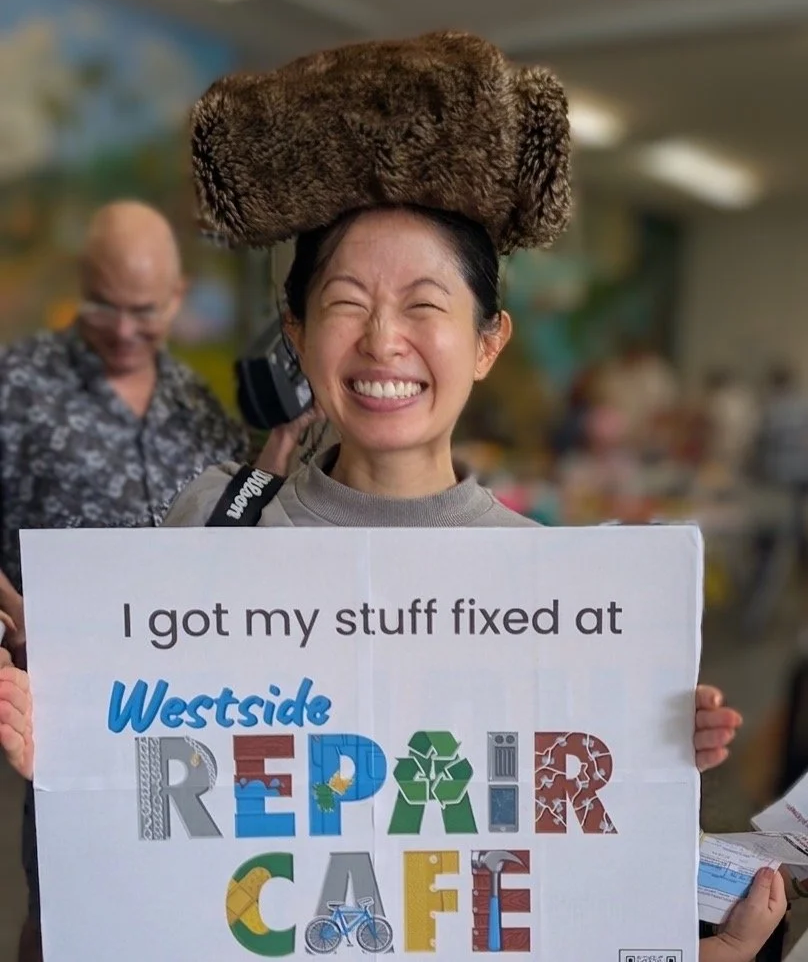
When Jo Wright’s friend Quynh Nguyen invited her to bring along her sewing machine to the Westside Repair Café, Jo didn’t think she had the chops to contribute. A longtime sustainability advocate, she loved the idea of pop-up fix-it clinics where people mend broken or torn items on the spot, thereby saving them from landfills and the cost of replacements. “I told her, ‘that sounds great, but terrifying. I’m nowhere good enough, maybe next year.”
A U.K. native, Jo had been in the area for more than two decades and had a full-time job. Sewing was a hobby, and she considered herself a dabbler. “I made some clothes and bags; I tried quilting, but mainly did practical things like replacing buttons and light alternations,” she says.
Like a good friend, Quynh kept insisting. When Jo finally went to her first Repair Cafe, she said, “It was so fun, and I am good enough, and it’s fine!” That moment captures something essential about the repair café movement. It’s not about perfection, professional credentials, or having mastered a particular craft. Rather, simply showing up with a willingness to try, sharing whatever knowledge we have and discovering that even modest skills can make a meaningful difference.
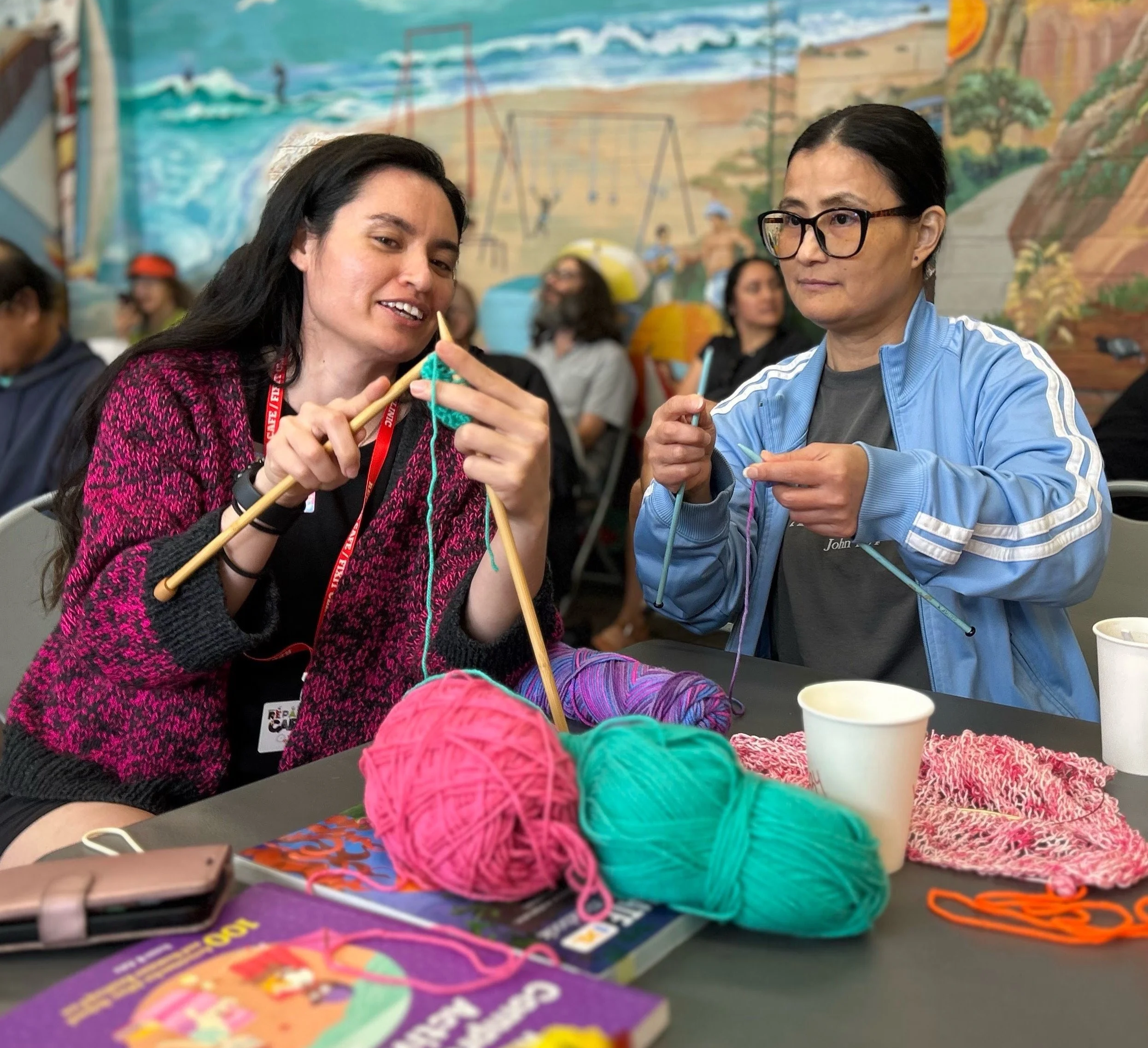
The repair cafe movement was started in the Netherlands in 2009, by Martine Postma. Since 2011, Postma’s nonprofit Repair Café International Foundation has given guidance to anyone wanting to start their own and has built a worldwide sustainability and community movement. Originally established by Michelle Weiner, the Westside Repair Café recently celebrated fifteen years. Quynh became involved through the TimeBank and stepped up when Michelle retired. Jo is not only a sewing volunteer, but helps with organizational admin.
Many repair café volunteers are also TimeBank members. Those who volunteer at the event can earn Time Bank hours, even though, as with all TimeBanking, they’re not necessarily providing a service directly to another member. Jo, however, hasn’t joined the Time Bank and doesn’t want to be reimbursed for the small amounts she spends on materials. “I don't need to be compensated. I am getting a lot out of this,” she says. “It’s very satisfying to fix things and I love helping other people.” She’s also become friends with other Repair Cafe volunteers. “It’s truly become a community in the largest sense of the word. Meaning, laughter, purpose, and contributing all together. It’s so feel-good it could be the setting for a romantic comedy. She retooled his lawnmower, or he sharpened her knives.”
The Westside Repair Café doesn’t have a permanent home. It moves around, relying on organizations and venues willing to donate space. It’s a challenge finding somewhere large enough to accommodate multiple repair stations, worktables, electrical equipment, and the steady flow of visitors on the Westside of L.A.
Luckily, the City of Santa Monica generously provides recreation rooms at local parks. St. Monica’s has hosted the event in its large indoor space, as has the Elks Lodge. Because of its pop-up nature, the Repair Cafe can always use volunteers to smooth the channels between those with repairs and those doing the fixing.
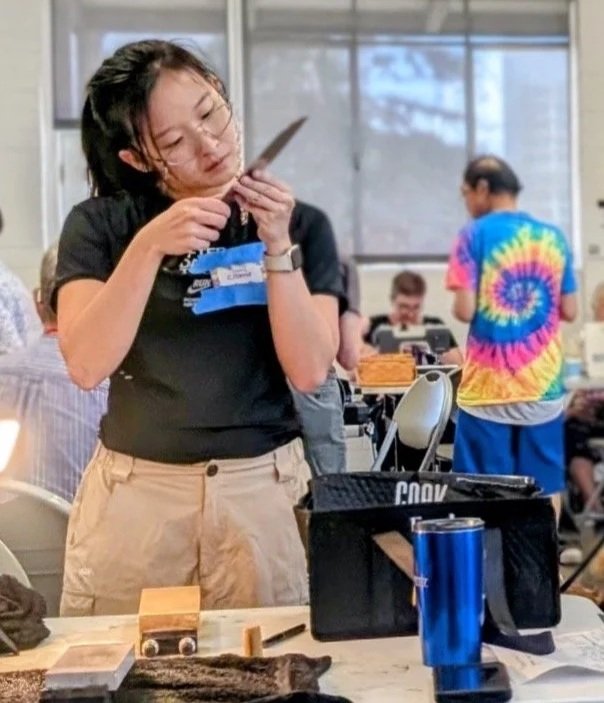
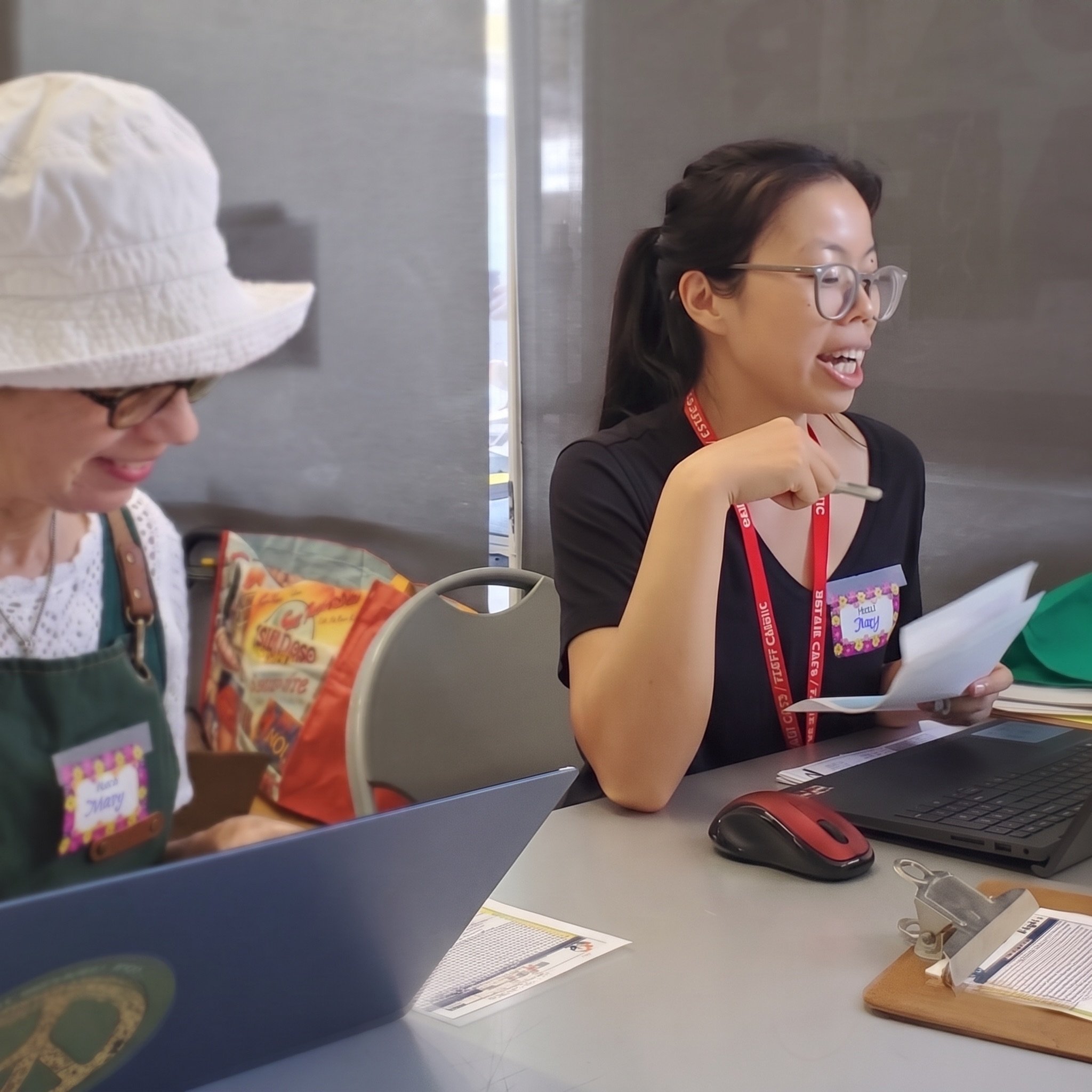
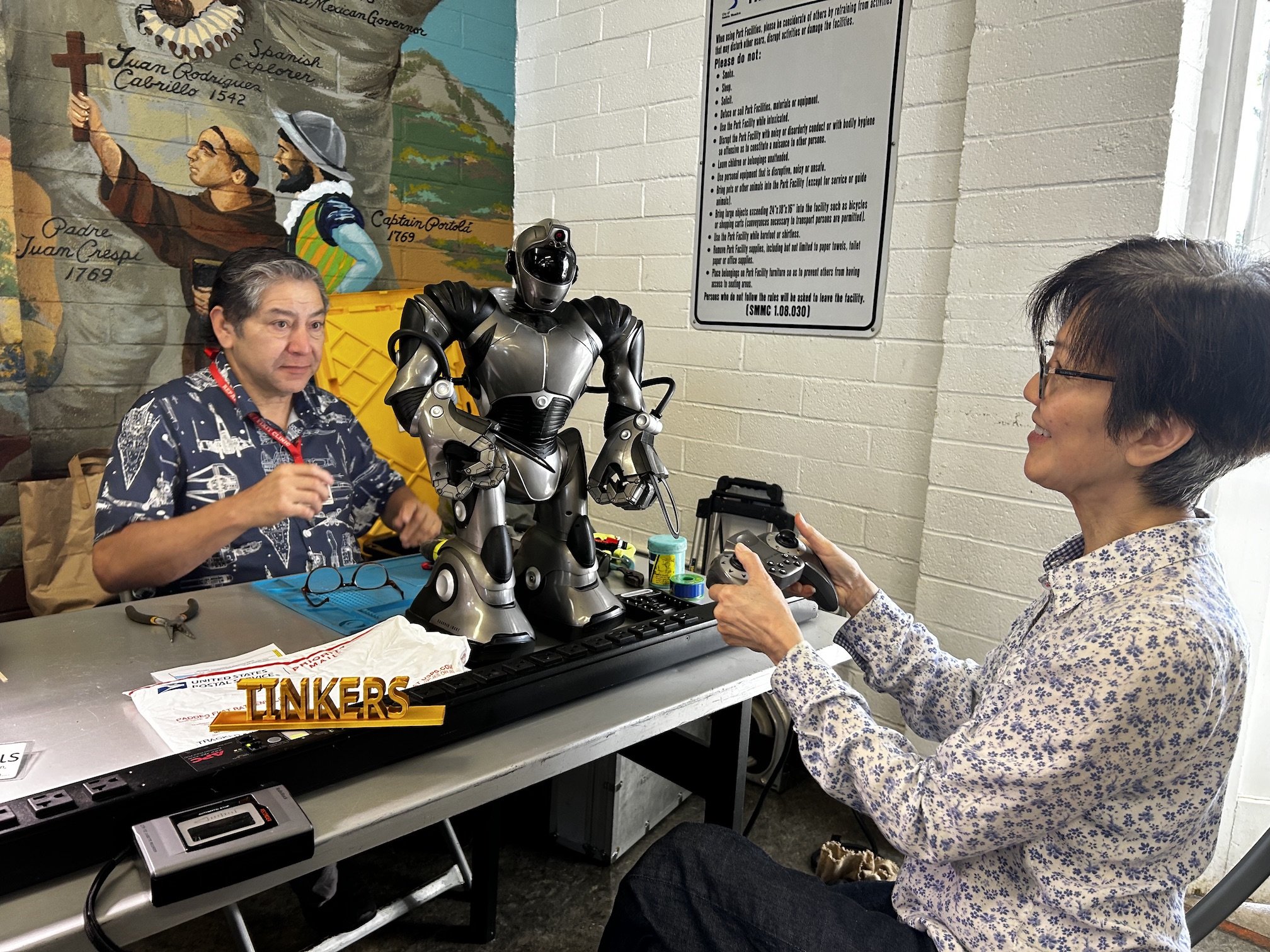
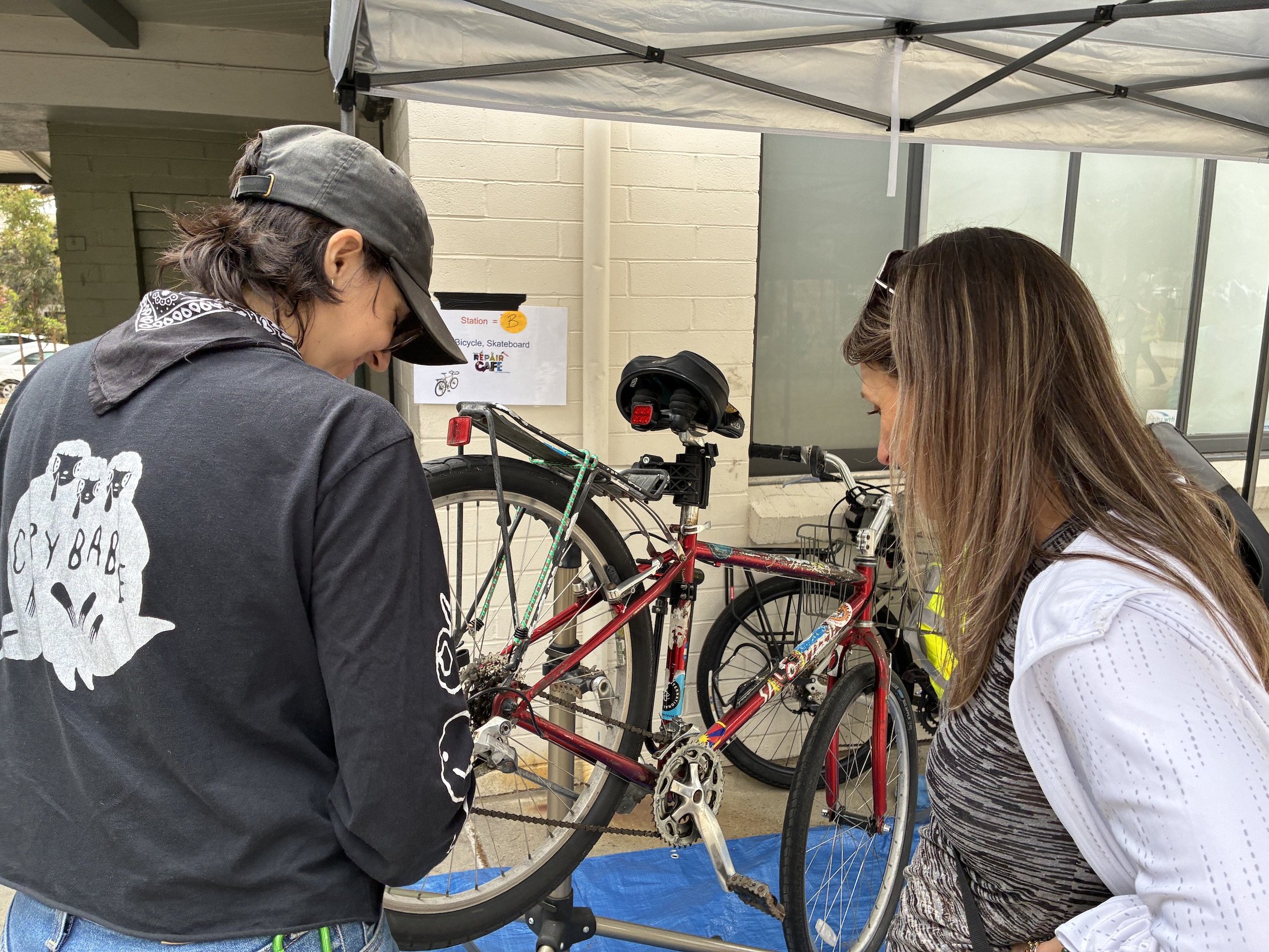
The repair events function like lightly controlled chaos, a kind of organized improvisation that reminds me of a theatre improv troupe. Hundreds of people arrive with all sorts of objects, each with a different problem. No one knows exactly how long a repair will take, what parts might be needed or how many people will turn up. The organizers have systems, but there are limits to how much can be planned. The repairers focus on their work, while volunteers manage the flow of people and objects. Tickets are filled out, carried to the appropriate stations and matched with the people waiting for their belongings. Jo’s glee is palpable. “People are just making things happen, and getting stuff done, and solving problems. It’s so delightful.”
Someone is always helping the next person find their way. “Just like I didn’t think I had anything to contribute,” Jo said, “there’s a place for anyone who wants to help. If you can’t wield a sewing machine or saw, you can help get people to the right place, which is essential.”
Adding to the atmosphere of can-do self-care, a wellness fair outside the Cafe has become a permanent part of the enterprise. While there are often long waits for repairs, the wellness offerings replace toe-tapping with Reiki healing, hair trims, and stations with art supplies so people can color while they wait their turn with a repairer. “Go get ear seeding done while you wait to have your toaster fixed,” Jo says. People show up offering to volunteer their own skills, and the organizers find a way to accommodate them. Instead of the usual in-and-out service, the event expands into a wonderful third space. People come with friends or their families, or meet new friends.
Of all the repairs Jo has worked on, two stand out. A woman brought in a pair of favorite shorts that seemed beyond saving. Before volunteering, Jo realized she’d confused the action of repairing with restoring to a pristine state. The objective is to make something usable again, not at all about perfection. “I had to sew the pockets shut,” she said, “but the woman was just happy to wear them again.”
That distinction, she said, was a perspective adjustment. Shortly after the Eaton and Palisades fires, a woman arrived with a sundress from a store offering free items to people whose homes had been destroyed. It was the only dress she owned. And it was so long it dragged on the ground.
Ordinarily, hemming a long flowing sundress would fall outside the café's usual definition of a repair. It was the kind of alteration someone would normally take to a tailor. Jo knew this was different. “Here was this opportunity to help someone reclaim a small piece of normal life after a devastating loss, and also allow me to feel helpful in a time where we all felt so helpless. So I broke the rules, as much for myself as for her.”
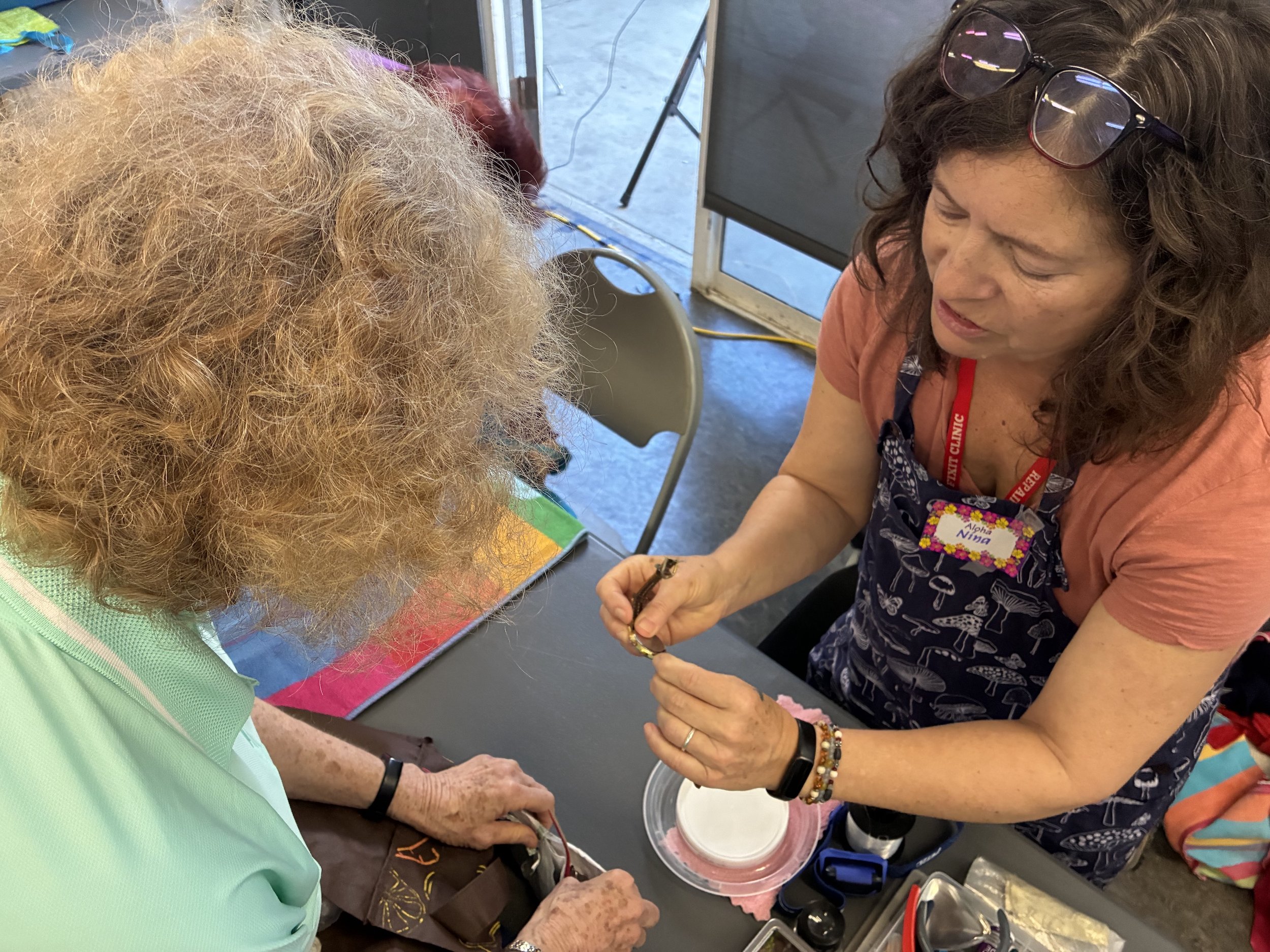
The next Westside Repair Café, at the Elks Lodge on Pico Boulevard on Sunday, November 15th, will bring together the familiar mix of repairers,organizers, wellness volunteers and people hoping to give their belongings, and themselves, as many chances as it takes.
When we repair our belongings in a communal setting, we feel a stronger sense of belonging. Rather than throwing away what’s torn, we are choosing to reach out for help, dig into communal effort and ingenuity, and bring new life to what at first seemed to be irrevocably broken. These activities can be transferred from our toasters to our relationships. Every interaction of repair adds up, mending our bank accounts, our natural environment, and the fabric of our culture.
Jo and Quynh will be joining us at Coffee & Connections this Friday, November 6th, to share more about this fantastic operation and to lead us through some basic sewing steps for mending knits. We’ll have needles and thread, so bring a piece of clothing to repair or embellish!
Jessica Cole
