
Santa Monica City Council Candidate Forum
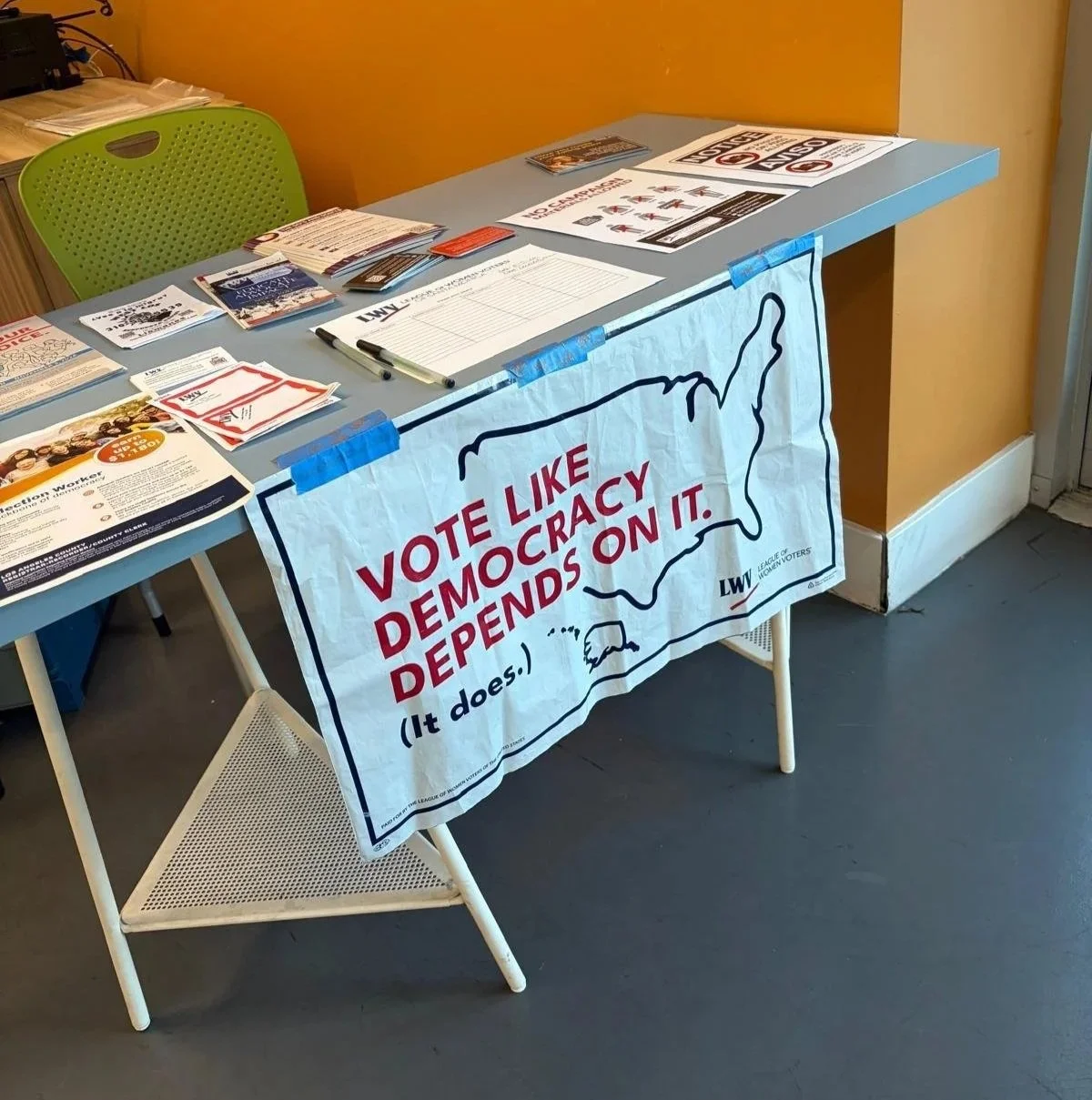
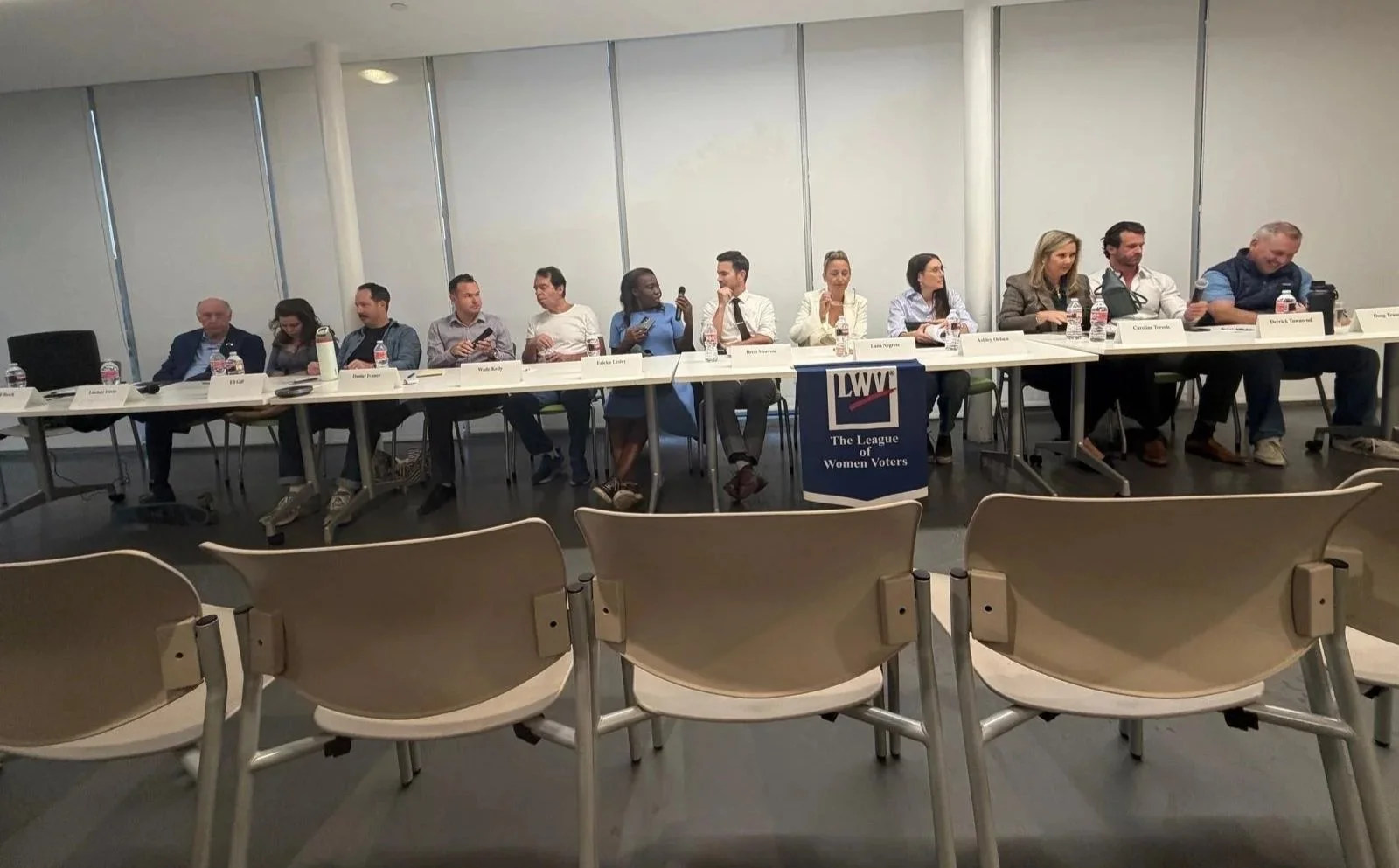
On October 14, 2026, the League of Women Voters of Santa Monica hosted its fourth and final candidate forum of the election season, bringing City Council candidates together in person for a nonpartisan discussion of the issues shaping the city’s future.
As with all League activities, the forum was nonpartisan, reflecting the organization's commitment to informed civic engagement and helping voters make decisions based on candidates’ ideas and qualifications. Santa Monica League President Maria Rodriguez hosted and Erika Bell moderated the discussion, asking candidates to answer questions that were published on the League website in advance of the forum.
With three open seats on the City Council, the twelve candidates broadly agree on the challenges and offer their own solutions and priorities. The diversity of approaches is precisely what makes candidate forums valuable. Voters can move beyond campaign slogans to hear how candidates frame problems, what experiences inform their views and which solutions they would pursue first.
Housing affordability and homelessness emerged as central themes throughout the evening. Wade Kelly, 67, who is currently experiencing homelessness, argued for ending the criminalization of poverty and expanding affordable housing and safe places for people to live.
Kelly cited RAND research comparing Santa Monica's housing production with that of similarly sized cities, arguing that Santa Monica has built less housing than the majority of its peers. He criticized the City Council for removing $47 million from the housing fund and for not pursuing development at the airport. “Building housing on Santa Monica Airport land would still leave substantial acreage available for a park,” he argued.
Kelly also questioned whether the city's SAMO Bridge program adequately addresses homelessness, arguing that removing citations for sleeping outdoors does not, by itself, resolve the underlying crisis.
Brett Morrow, who has more than 25 years of government and public service experience, praised the Bridge program, but agreed that replenishing the city’s housing fund is essential. Morrow emphasized the need to follow homelessness cases through to meaningful outcomes and to work more effectively with regional partners. Morrow echoed shared concerns about the future of rent control, warning that business interests could spend millions trying to eliminate it. He argued that the city must protect renters even as new buildings are developed. He raised the question of how the city could better protect immigrant hotel workers when federal immigration enforcement personnel are staying at local hotels.
Daniel Ivanov, an attorney whose parents immigrated to the United States, emphasized affordability and the need for an aggressive response to policies that threaten residents' ability to remain in their communities. He advocated a three-pronged strategy of litigation, legislation, and education, including lawsuits and amicus briefs in support of neighboring cities. He also called for removing barriers to housing construction and pursuing as much affordable housing as possible.
Ivanov lambasted the shortage of mental health beds available to Santa Monica residents. He said the city lacks dedicated beds and sends people in need of mental health care to Torrance, despite an identified need for roughly 50 beds for a city of Santa Monica's size. Ivanov called for removing unnecessary barriers to construction while pursuing affordable housing aggressively. Together, these perspectives highlighted a central dilemma for Santa Monica: protecting residents from displacement while creating enough housing to make the city accessible to future generations.
Ericka Lesley, herself a single mother of three and a survivor of domestic violence and homelessness, serves as the Chair and Commissioner of the Rent Control Board. She advocated addressing homelessness on multiple levels, including renewed partnerships with churches and other institutions that have historically helped care for unhoused people. She connects housing and health to environmental justice, pointing to the effects of the freeway, the recycling facility in Pico, and air pollution. Planting more trees improves neighborhood health.
For Eli Gill, father of two children in local schools, and renter in a rent-controlled apartment, the housing conversation must include families. He pointed to a reported 25% decline in school enrollment over the past decade and called for more family-sized housing. “Too many homes,” he argued, offer only one bathroom or otherwise fail to meet the needs of families who want to live comfortably in the city.”
Former mayor Lana Negrete described the uncertainty facing middle-income households whose earnings fluctuate. Residents may qualify for assistance one year but not the next, creating anxiety for people who do not want to face the prospect of repeatedly proving their eligibility to remain housed. She also noted that some tenants feel trapped in rent-controlled apartments and that residents may feel pressured or intimidated when asked to sign documents or support particular positions.
Doug Trussler, a homeowner whose children attend Santa Monica schools and whose career has involved repairing businesses, focused on practical steps the city could take to prepare for climate-related challenges. He called for stronger support and legal services for residents and raised concerns about insurance availability after major fires.
Trussler suggested that the community should explore different models for insurance coverage. He also pointed to energy efficiency as an area where local governments could lead by example, citing improvements such as replacing inefficient dryers, upgrading air-conditioning systems, improving windows and adding insulation to reduce energy use during heat waves.
Ashley Oelsen, an environmental scientist, renter and mother, emphasized the need to restore sustainability goals and measurable progress. She criticized the decisions by Santa Monica College and the Santa Monica-Malibu Unified School District to opt out of clean power and argued that the city should renew its commitment to environmental benchmarks.
Oelsen also highlighted composting as an important tool for reducing methane emissions, noting that sustainability requires looking beyond recycling alone. She called for a more deliberate approach to future development, with new growth focused along established corridors and greater attention to how development affects different neighborhoods. She anticipated that Pico Boulevard and its surrounding areas would experience more change than Montana Avenue.
Phil Brock, a longtime Santa Monica resident involved in civic organizations including Kiwanis and Lions, emphasized another environmental concern: water. He pointed to the city's aquifer and its dependence on imported water from the Colorado River, underscoring the importance of long-term water security.
These discussions reflected a broader understanding that climate resilience is not an abstract environmental goal. It affects household costs, public health, infrastructure and the city's ability to withstand extreme weather and changing regional conditions.
Caroline Torosis, who is currently serving as mayor, highlighted the city's investment in rental protections, citing $6 million allocated for that purpose. She also discussed the need to incentivize new businesses and support a healthy local economy. Torosis discussed protecting residents' information from being shared with outside agencies, including immigration authorities. She cited legal action against the Trump administration and efforts to connect people with attorneys as examples of how the city could defend residents' rights.
Torosis raised concerns about the growing popularity of e-bikes and the difficulty of distinguishing bicycles from motorcycles in some circumstances. She called for clearer classifications, signage and speed limits to improve safety.
Derrick Townsend, a renter, healthcare professional, and aging-in-place specialist whose mother died from a fentanyl overdose, highlighted the connections between health care, community support and the built environment. He supported increased density near rail stations and called attention to the condition of sidewalks in relation to elderly mobility.
Let’s vote for the city we call home and to ensure that the people who live and work here can continue to feel welcome and safe, help our neighbors, raise families, and continue to improve our community.
Jessica Cole
