
Multimodality and Car-Lite in Santa Monica
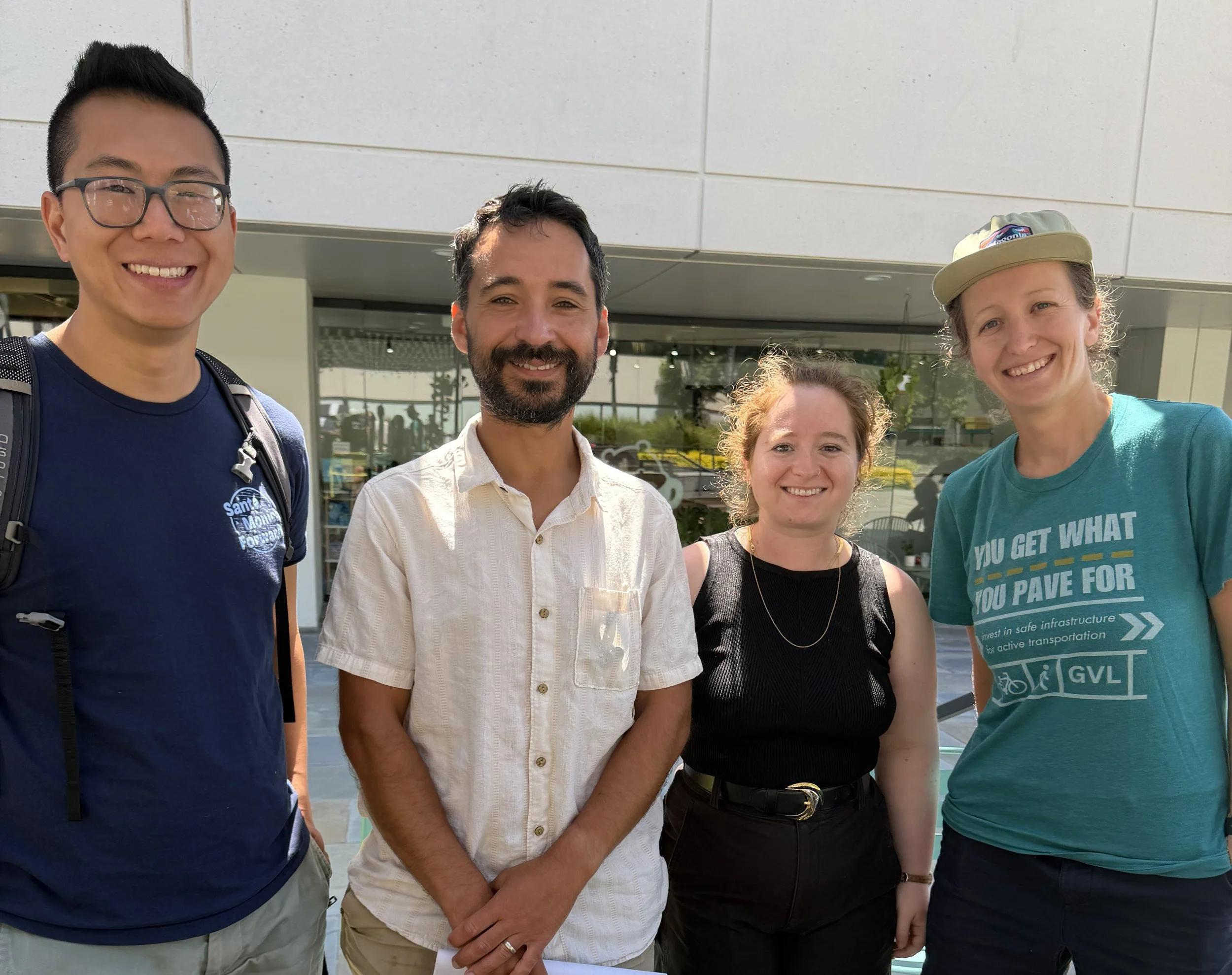
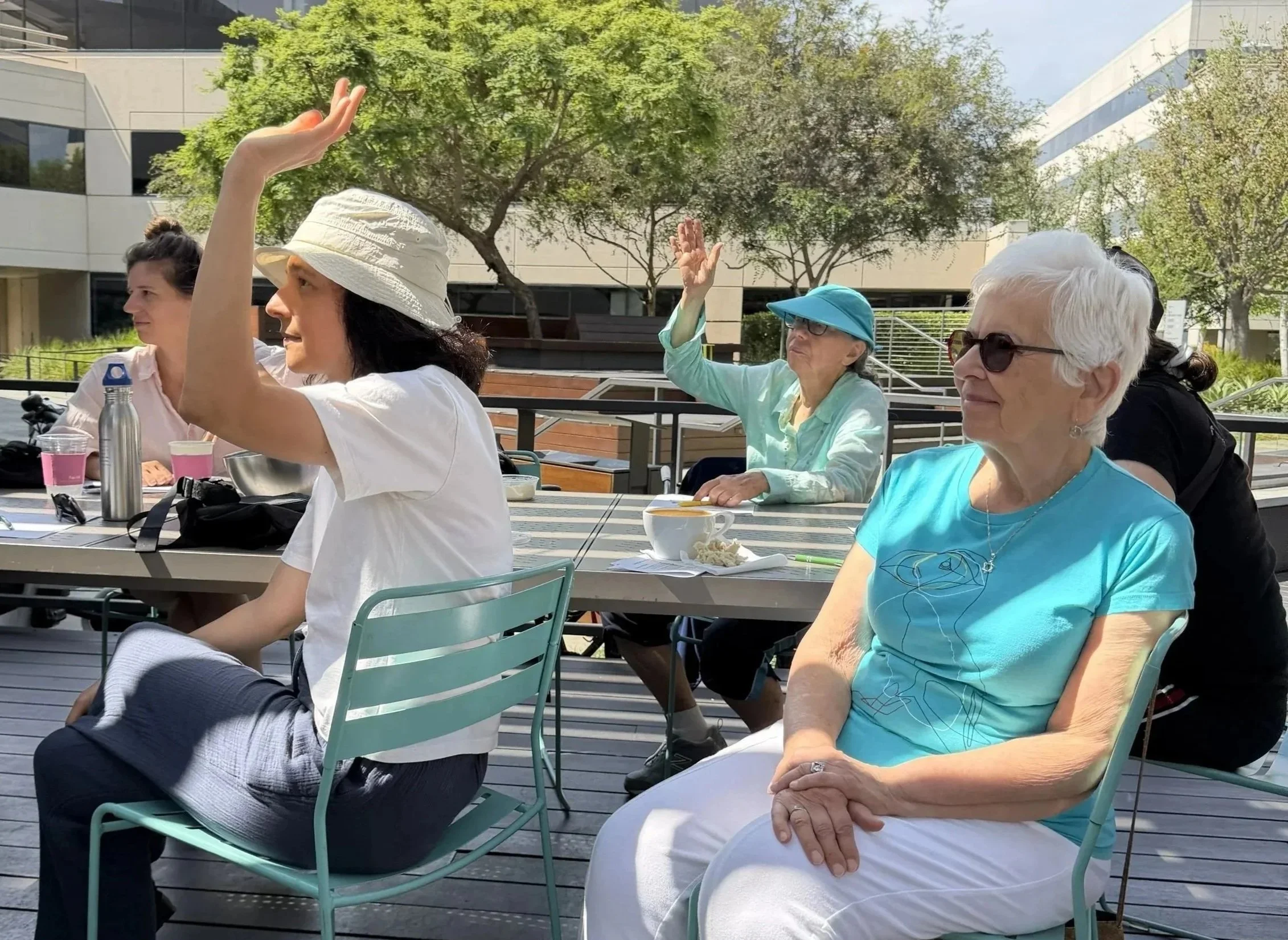
At last Friday’s Coffee & Connections, we heard from several community members who shared their car-less/car-lite approaches.
What emerged was a sense of empowerment. Multimodality allows us to choose which vehicle/s to use for a specific trip—walking, biking, buses, trains, rideshare, and driving. Steering away from perfection and staying within the lines of streets currently designed primarily around cars, the key question emerges: How do we all get around more safely together?
Long-mocked for its car culture, L.A.’s transit options are moving in the right direction, albeit slowly. While most of us want a faster, more comprehensive approach to alternative transportation, we fortunately have a decent foundation to build on. “Surprising to many, L.A. has the second-largest transportation network in the U.S. after NYC—already transports a million people per day Monday-Friday,” Sonia shared. Sonia works for LA Metro, but attended the discussion as a private citizen who’s passionate about carless transportation.
She and her wife live a 12-minute walk from the Palms Metro Station. Neither owns a car. They mainly use public transportation and their bikes to commute and to visit family and friends throughout LA County, with the occasional ZipCar and rideshare. “It might seem strange to drive so infrequently,” Sonia says. She’s wearing a baseball hat embroidered with cicLAvia, whose mission is to transform LA streets into car-free spaces for play. “But if we include seniors and children, one out of ten people in Santa Monica is car-free.”
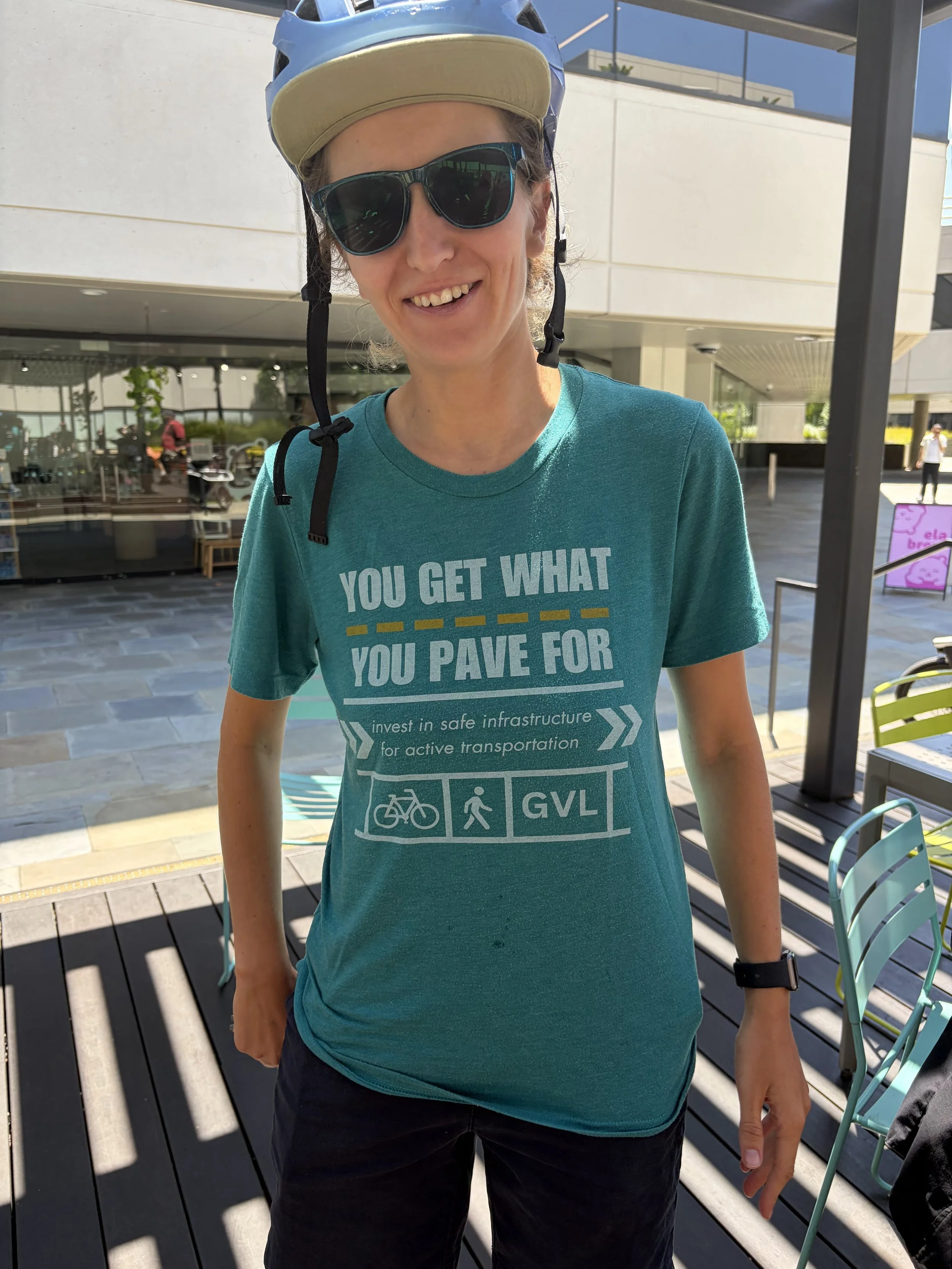
Caro, wearing a T-shirt with You Get What You Pave For written on it, doesn’t drive due to low vision. Her partner chooses not to own a car either. But not driving doesn’t thwart them from doing anything. They use their “analog bikes” (that is, not electric) for daily chores, commuting, seeing friends, and even camping. “Biking with added train and boat trips, like our recent trip to Catalina, expands the vacation to include the adventure part of getting there,” Caro says.
“The range of options that exist, even in L.A. County, can unshackle us from feeling like we have to drive,” Boris said. A Russian immigrant, he grew up on Staten Island, outside the reach of NJ Transit trains, which was especially inconvenient for his first post-undergrad information systems software job in New Jersey. “For me, driving was the only option. But as long as roads are free, people will find reasons to use their cars.” Boris chuckles. “Although, adding up the cost of gas and parking—and parking tickets…free doesn’t seem so accurate.”
Leaving the NJ job, noting how train travel in Spain and Japan gracefully wrangled a kind of “controlled chaos,” biking in Manhattan, going to grad school for an MBA, followed by an MA in Urban Planning at Cornell, all accumulated. “Before I knew it, I was a passionate alternative transportation advocate,” he said. Boris met his wife, Dorothy, on the Staten Island ferry on the way to a local Transportation Alternatives meeting (click the link for their meet-cute!).
Boris worked for the MTA crunching transportation data to create Key Performance Indicators (KPIs). This hybrid role, combining urban planning and data science, proved valuable for assessing and improving public transit performance, and resulted in a job offer from LA Metro.
Inspired by L.A.’s potential for transportation improvements and Dorothy’s SoCal roots, the couple moved to Santa Monica (via Pasadena) with their young family. Now Dorothy works for LA Metro while Boris looks for his next opportunity. They use a cargo bike ($8,000 new, $3,000 used) to transport their children, large plants, and groceries. “In Santa Monica, bikes, especially with an electric option, are the perfect solution. Or would be, if there was more supportive biking infrastructure. And fewer cars on the road,” Boris says.
In the discussion that followed, the group fielded many questions about safety, which encompasses everything from insurance for bike riders to more abstract feelings about our comfort as we walk, cycle, and take public transportation.
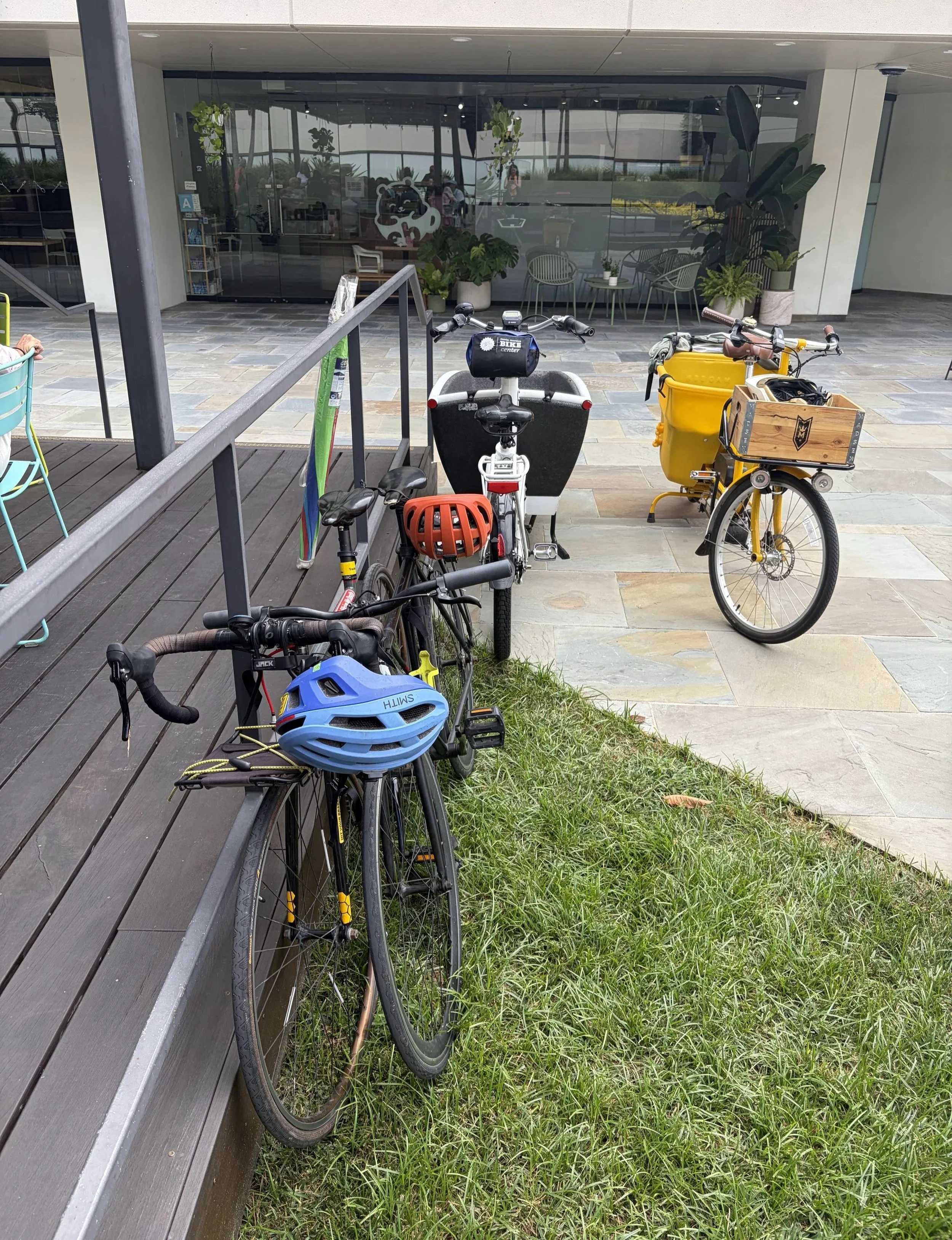
Eric, a longtime cyclist, urged cyclists to consider taking a League of American Bicyclists safety course. Some home/car insurance plans provide coverage for cycling, and specific policies for cargo bikes.
Valerie shared that she took a Metro/bus combo to LACMA on a recent Friday evening, which, she reports, was “easier than expected.” She enjoys being around other people and sees transit as part of being in community. Like Caro, the journey to the destination became part of the overall experience of “going out.”
As a caveat, Valerie shared that she wouldn’t want to take public transit alone at night, but with a friend, she felt comfortable: “If someone were behaving strangely on the bus, I’d simply move away from them, or look for one of the green-shirted employees.” Metro dispatches these highly visible Ambassadors throughout the transit system. Launched as a pilot in 2022 in direct response to concerns about the transit system in a post-pandemic world, Metro’s ambassadors fill a void. They provide customer service and also actively intervene in medical and criminal crises. Overall, their presence contributes to feelings of orderliness and a known structure with working parts.
Many Santa Monica parents noted that their kids walk, bike, and take the bus to school as a matter of course. While it’s mainly Samohi students, like mine, Augie, now an eighth grader, has been taking the bus since sixth grade from his house a mile and three-quarters from Lincoln Middle School. To help younger kids normalize taking the Big Blue Bus to and from school, parents can “adopt” their closest bus stop and, as a family, commit to an achievable once-a-month caretaking of the stop. Many younger kids feel a sense of ownership when they engage in light maintenance, and adults do too—more on this in next week’s blog.
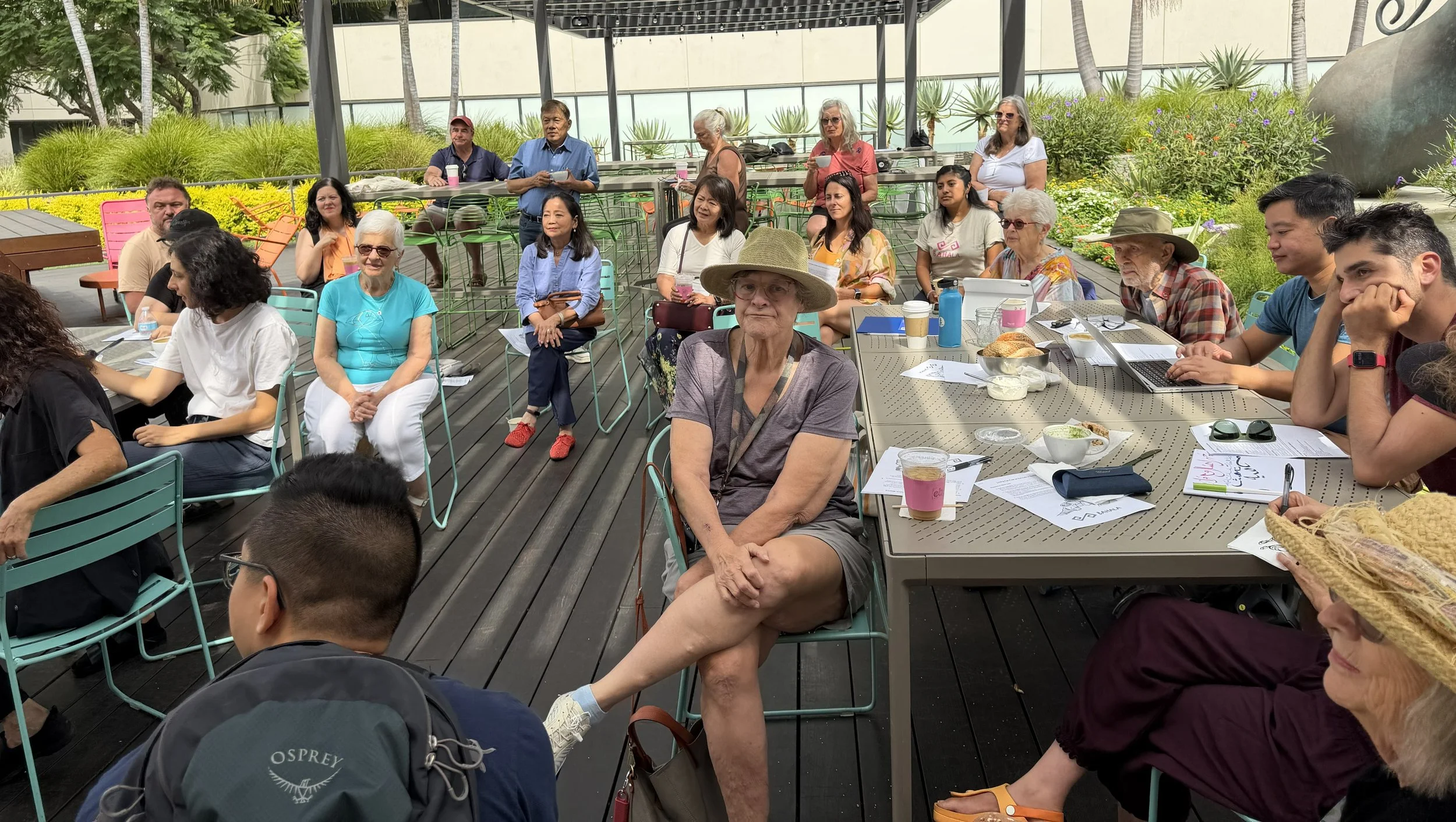
Coffee & Connections attendees alerted those assembled to services that anyone who’s public-transit-curious can use, including seniors and/or those with mobility issues. Starting from the most basic, Google Maps or Apple Maps can be used in advance of a trip to plan the route via public transportation, including any transfers. For ride-sharing options, check out LA Now and MODE Santa Monica (also booked via Lyft), which function like extremely cheap Uber rides and can drop people closer to their destinations. Other services include GoGo Grandparent, which offers rides to and from grocery stores, as well as meal and prescription deliveries, and Circuit shuttle, billed as affordable eco-friendly rides in Santa Monica. Let’s not forget Timebanking. When we help someone on a task, we accrue points to spend on rides to Costco or LAX. A free shuttle to Dodgers games has excellent reviews.
The above options benefit all of us by decreasing the number of cars on the road at the same time—and reducing their speed. When car owners complain that protected bike lanes and expanded curbs for pedestrians slow them down, transport advocates say, “Great, that’s the point.” Roads are designed for peak capacity during rush hour, similar to mall parking that’s built for Black Friday.
Sonia encouraged us to email the transportation department asking for expanded service—expansion depends partly on funding and partly on people demonstrating demand. To track Metro projects, visit Metro.net/projects, including planned housing built near transit stations.
James, from Santa Monica Forward, a volunteer-led community of neighbors dedicated to building a more affordable, equitable, sustainable city, agrees. “I’m not a cyclist—odd for a safe streets advocate, I know,” he chuckles. “But all the research points to protected bike lanes and public transportation contributing to safer streets for everyone.” James and his family of four are car-lite and qualify for Santa Monica’s One-car challenge, a program that pays people for using their cars less.
In next week’s blog, part two of the conversation will focus on initiatives for safer streets that affect all of us daily, whatever mode of transportation we use, and include an ongoing bike project that highlights the interface of humans, wheels, and streets in Los Angeles.
“None of us has to do it perfectly or in the same way as anywhere else,” James reminded us. “We can all just take the next step.”
Jessica Cole