
Singing to Stitch Community
If you can talk you can sing, as the saying goes. We drape headphones over pregnant bellies to introduce our eventual offspring to Mozart, we coo before we form words, and our early years are filled with singalongs at the library, in preschool, and Mommy & Me’s. As teens, we belt out the Top 40 at dances and b’nei mitzvahs. If we’re lucky enough to be in a school district like Santa Monica, there’s a renowned choral program for students (along with bands and orchestras), Santa Monica College for adult choirs and choirs at our places of worship. Soundtracking the Civil Rights movement, singing together still sets the beat for peaceful protests and nonviolent marches, comforts those held in detention centers, and simply bolsters our collective and individual morale.
Our voice is a powerful tool, literally and figuratively. Jane Fonda, who knows something about using hers to bring awareness to political violence, gathered a thrilling lineup of performers for the Rise Up, Sing Out! concert at a Town Hall in Manhattan this Sunday, June 14. Over 5,000 watch parties have already registered to stream it in their communities. The event serves as the official relaunch for the revived 1947 Committee for the First Amendment.
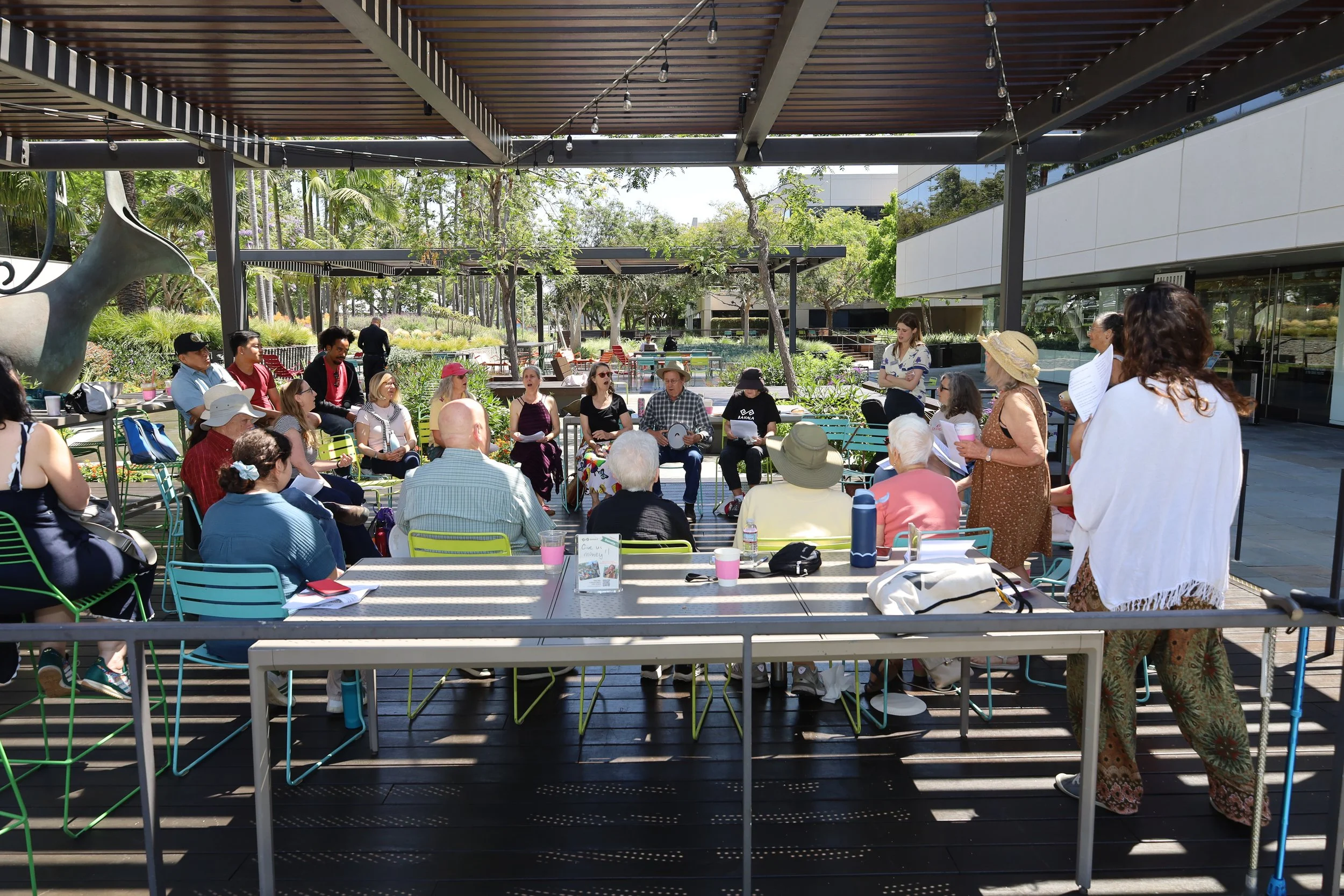
The program happening this Friday, June 12 at Coffee & Connections serves as both a resource and a reminder of our vocal birthright. The first co-facilitated Bahala workshop features people and organizations who center singing in their lives and can teach us the words.
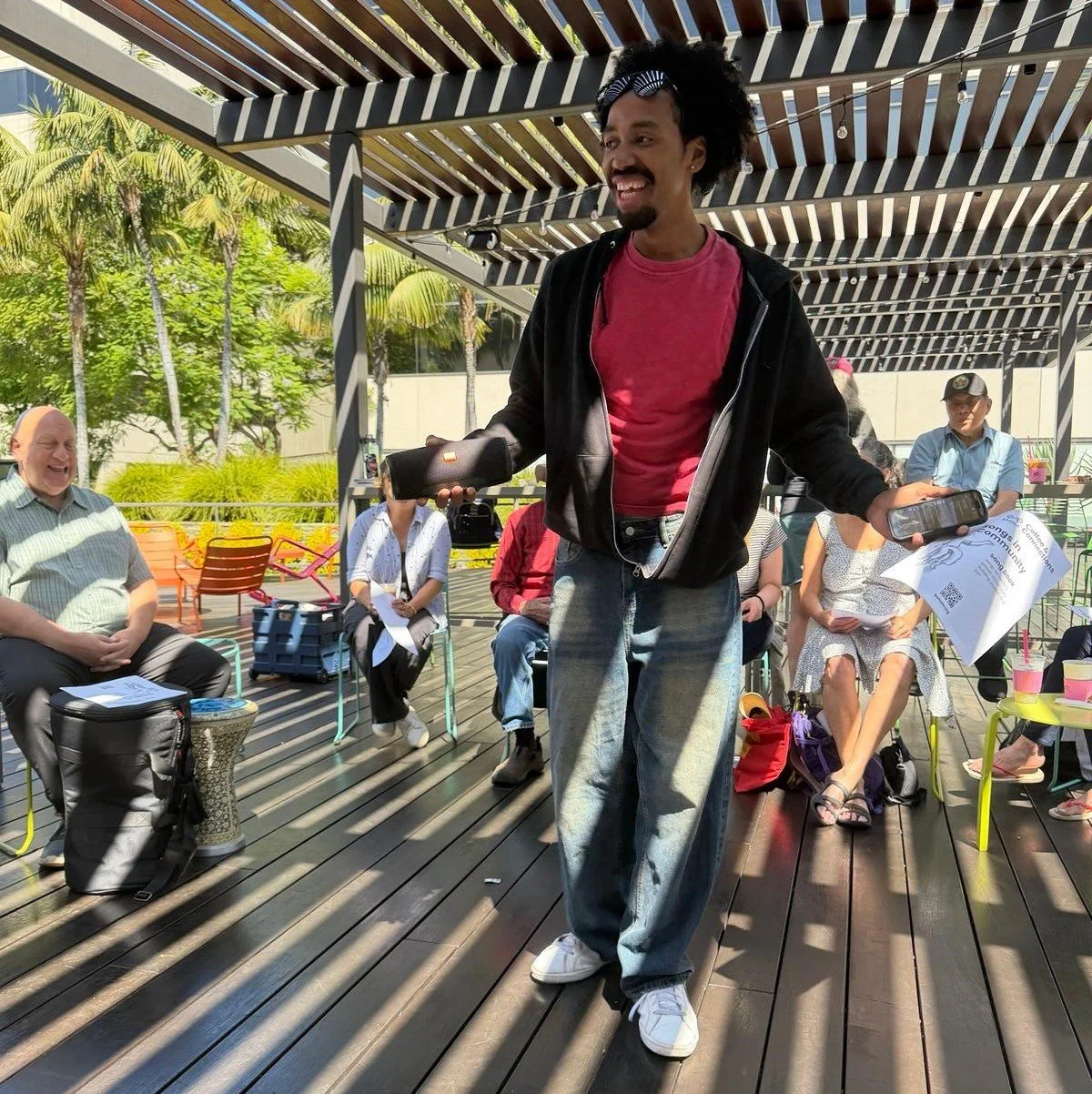
Christian Bethea has been singing longer than he can remember. He grew up singing in a nondenominational church near his home in Long Island. “I was always begging for solos.” At 16, he started attending a performing arts high school (Fame!), Long Island High School for the Arts, Billy Joel’s beloved alma mater. “There I did classical, jazz, and theater singing, and continued classical training in a vocal performance program in college.” Since then, he’s taken lessons with people who coach Broadway performers. “I've had a singing coach who was a regular at the Met Opera. I've had a singing coach who went to the top vocal school in the world, Jacobs School of Music at Indiana University. Currently, Christian performs between L.A., New York, and anywhere in between that calls him. In L.A., he led the Sunday singing at The Vision, the church he attends.
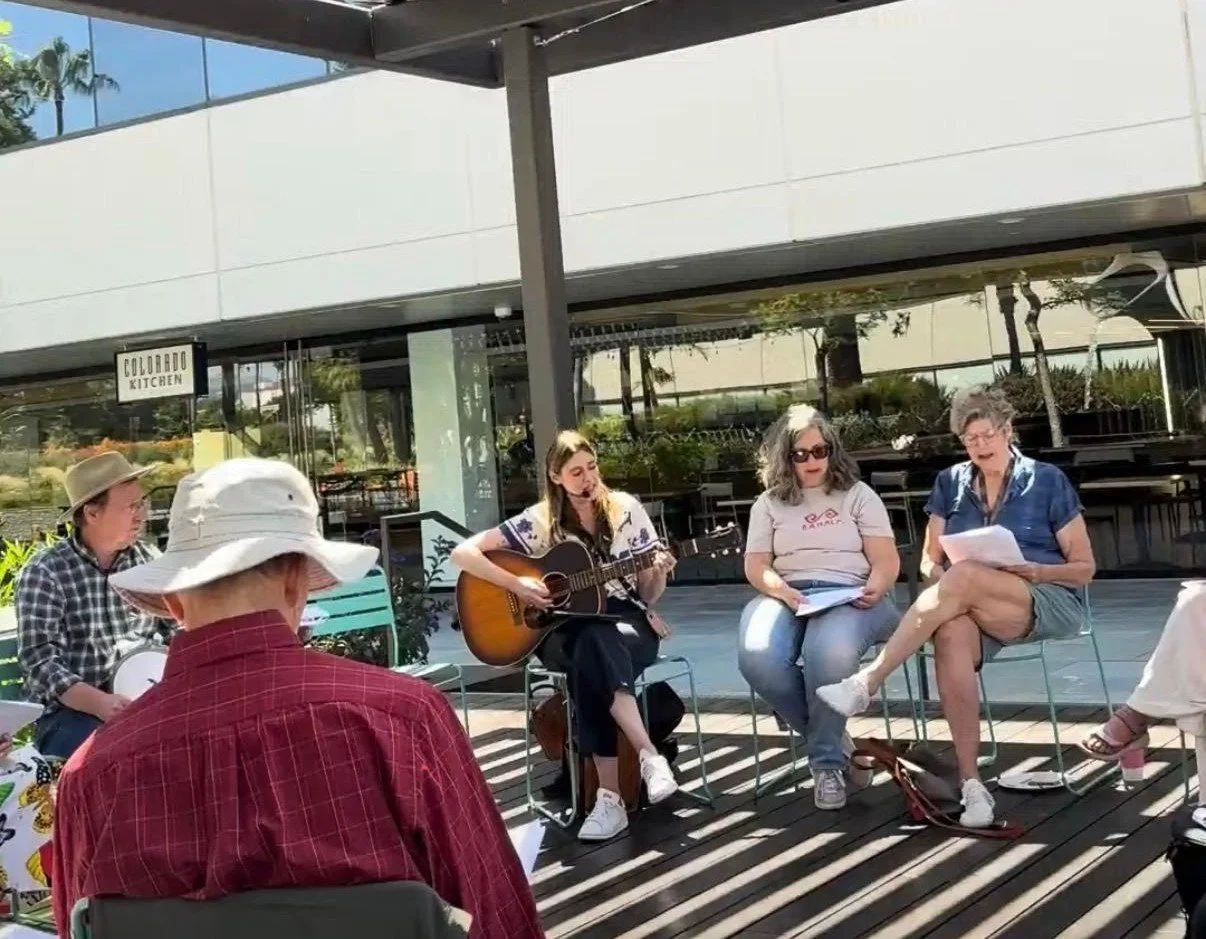
Jessica Jacobs is a Cantorial Intern at the Palisades Kehillat Israel (K.I.) She and her guitar provide the music for services at Beth Shir Shalom in Santa Monica, along with our official director of Jewish life and music, Eitan Strauss-Cohn and our bongo-playing Rabbi Alex Kress. The temple also sets one Friday night service aside for Shabbat in the round, a more informal service composed of 90% music in the community room one floor up from the sanctuary. Often there are 20 musicians in a circle and the rest of the congregants spiral around them, voices wreathing guitar, drums, violins, bass and flutes. Jessica also leads our monthly Wine, Women, and Wisdom gatherings sponsored by the temple, which always begin with a nigun, an Ashkenazi tune with repeated lai, lai, lai that feels so embodied it’s a cousin of chanting. She begins singing the nigun on her own, accompanied by her guitar, while the group is chatting. Little by little, the sweet notes infiltrate, and soon we’re all joining in. Afterwards, Jessica uses the nigun and the Hebrew lunar calendar to both ground us in the here and now, and as a jumping-off point for some inspiring education and a group activity. She has a similar plan for us at Coffee & Connections.
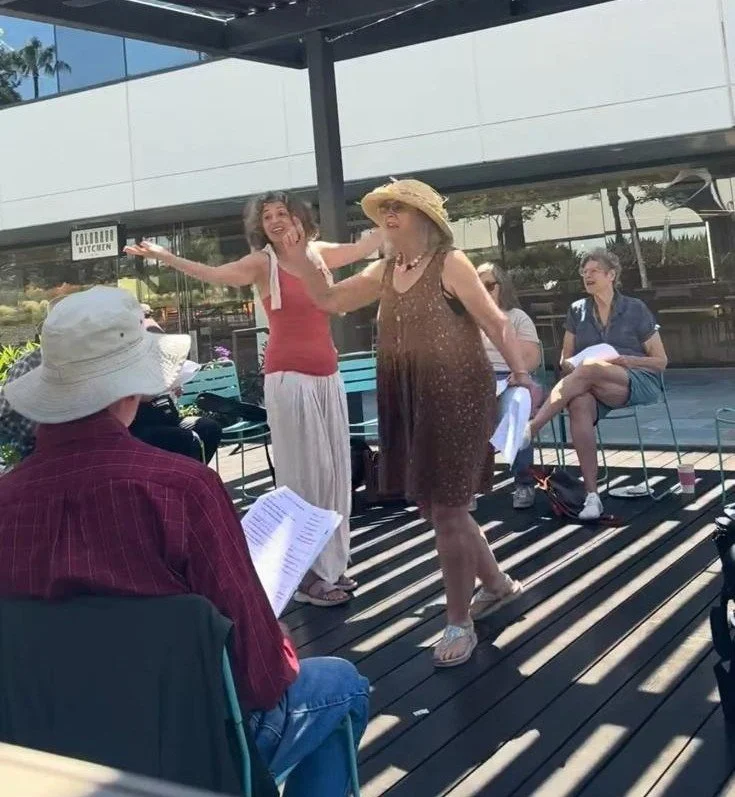
Louise Dobbs is the choir director at the Church in Ocean Park. Every Sunday, 9-10 a.m. every Sunday, folks are encouraged to drop in, no prior experience required. “After the fires of 2025, several singers responded to the church’s sign welcoming people affected by the fires and reassuring us we could sing in the choir without staying for the service afterwards,” Louise says. Jane nods. Sylvia chimed in: “Same reason I joined years ago. No one pressured me at Church in Ocean Park.” Come as you are. Community fire, community calm, either way, everything feels better after singing.
Many communities house intergenerational singing groups, which, as community harmonizers, welcome the public in all forms, independent of schools or places of worship. Others began informally and organized to meet a more urgent need. Singing Resistance, a “nonviolent activist movement that uses…shared community breath…in harmony, to advocate for collective liberation and peacefully challenge authoritarianism.” Sparked this past January in Minneapolis after federal agents killed Renée Good, people spontaneously began singing in the streets and in churches to funnel their heartbreak, fear, and feelings of helplessness into community solidarity and as a key part of the network formed to protect each other.
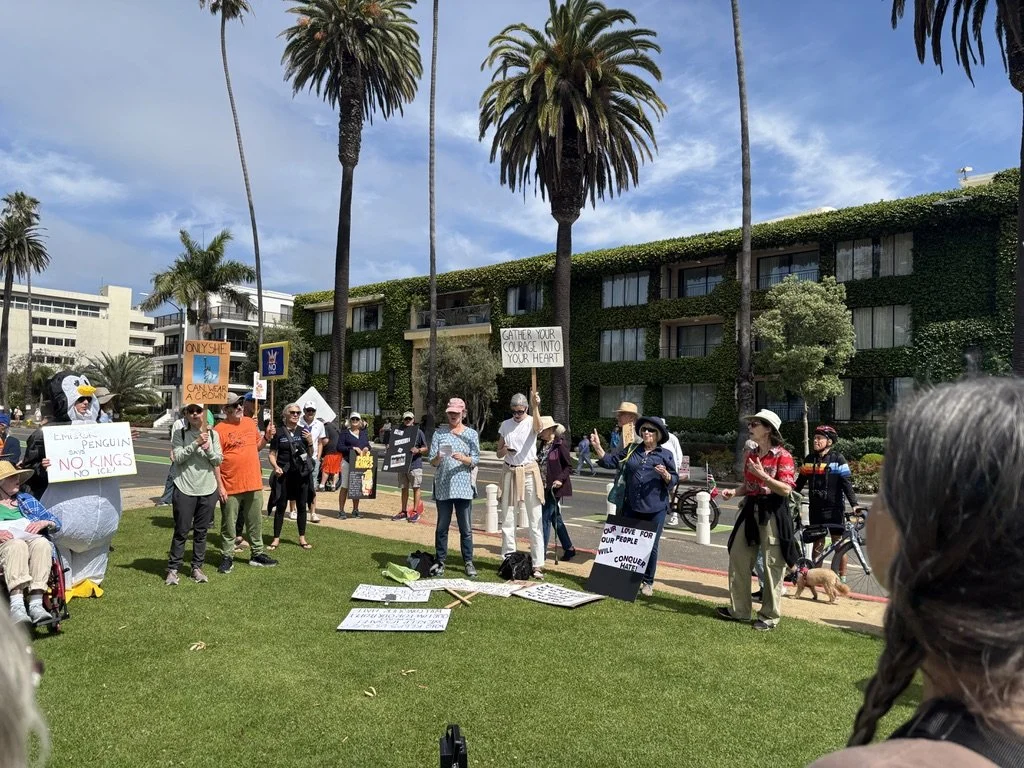
Singing Resistance uses Signal to plan and communicate where they’ll sing next. There’s one common songbook so that everyone can learn the words and easily participate anywhere there’s a protest or other community event. And there aretoolkits so anyone can start a group anywhere, while still being hooked into the national organization for support. The online network of singing groups has grown to 200+ chapters nationwide.
In early February, Louise signed on to a Singing Resistance Zoom call. “I realized I could start a [singing resistance] group locally at the church,” she says. “We first met on February 26th and 20 people came!”
In April, Louise attended a training session with people of all ages and backgrounds. Though the singing resistance group participated in both No Kings Days and the May Day March, Louise says they’re still in the “forming stage, excited to share selections from the songbook at Coffee & Connections.” They recently began supporting the weekly protest at Culver City Hall—Louise leads; Sylvia sings.
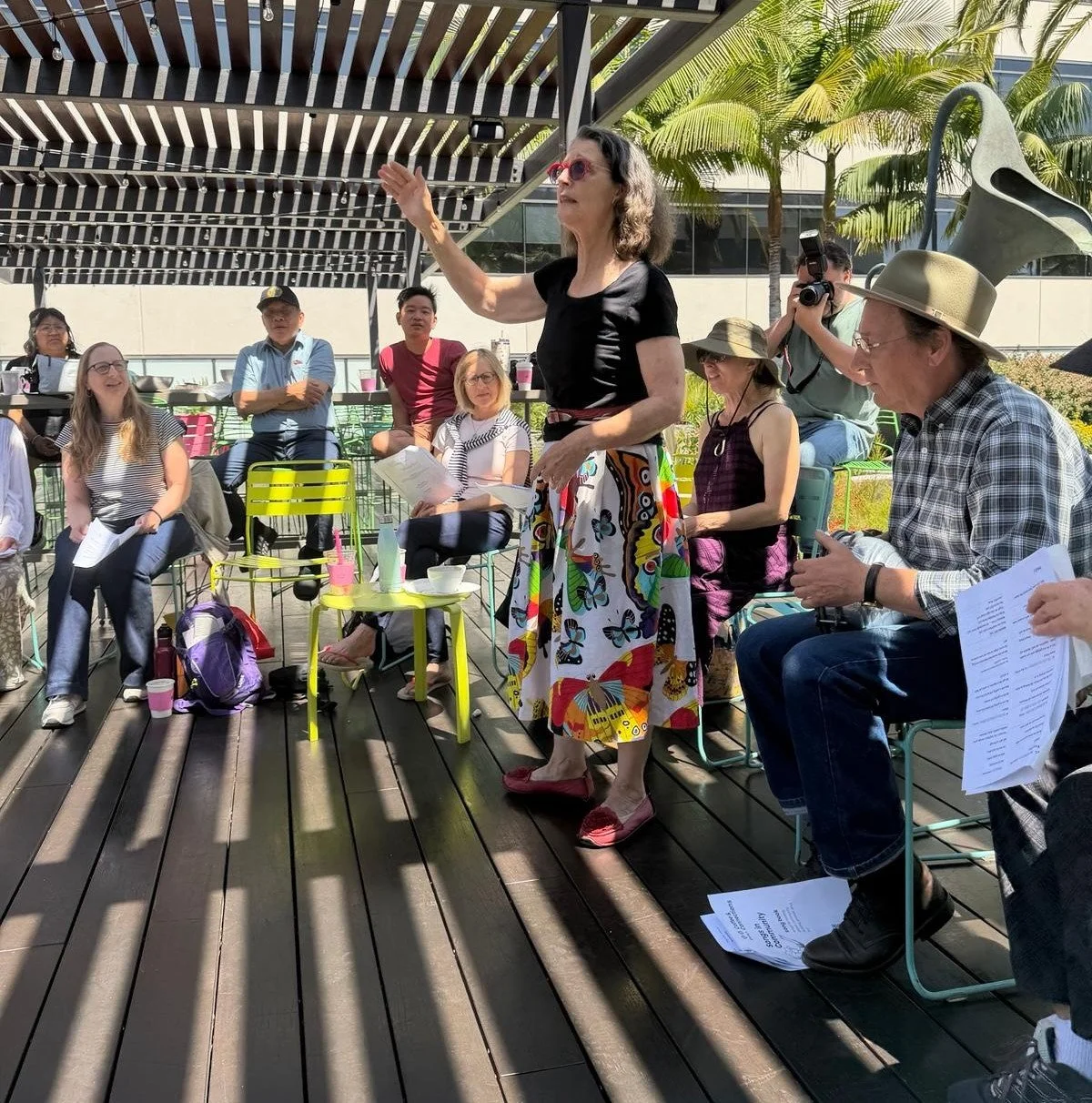
Sylvia Gentile comes from a family of singers and artists. She joined the Church in Ocean Park several years ago, at Louise’s invitation. She sang with Voices of Action, a student/faculty musical group at UCLA Lab School. Sylvia also sings in the Santa Monica College Emeritus Gospel Community Chorus. She enthusiastically agreed to join the Singing Resistance group because it combines singing with the social justice work and community building that she values.
A somatic practitioner, Gillian McGinty came to singing first through the body. She took Heather Lyle’s Vocal Yoga, an embodied approach, through Santa Monica Extension. “Singing is a powerful tool. It regulates our nervous systems,” she says. For almost six years, she has been singing in the SMC chorale program. “It’s an incredible curriculum with a high level of artistry and inclusion. It, too, is intergenerational—the oldest member is 85 (like Bob Dylan and, soon, Paul Simon!). Gillian didn’t grow up with musical instruction, but through the joy of singing, she taught herself to sight-read music. “Singing opened my heart and prepared me for parenting,” she says. “I feel like I sang my daughter into being.”
It follows that harmonic vocalizing is something she and her daughter have always shared. Though shy, her eighth grader has had singing parts in middle school musicals and soloed at choir concerts. “But something new happened at the spring concert.” Gillian says. “She really let herself be seen through her voice.”
Come be seen and practice community harmony in the literal sense with us this Friday at Coffee & Connections!
Jessica Cole