
Book Club Toolbox: Take a Penny, Leave a Penny
We want to read more; we crave community. Book clubs encompass both. The challenge lies in finding, creating, and sustaining one. We know how decisions overwhelm something as seemingly straightforward as finding people who like reading and talking about books. Bahala aims to dissolve barriers both within communities and those impeding our collective inkings, using crowd-sourcing and tech to generate connections and solutions, so why not turn our lens to book clubs? “Book clubs are like any communal group, including democracy,” Carlo quips. “How to create the right amount of choice, how decisions are made, how to create equity and a semblance of order, book clubs are fascinating microcosms of all that. They’re good practice for being citizens and community members.”
To this end, we’ve compiled various book club models. Whether you’re looking to start a book club from scratch, or revive a lagging group, feel free to pick and choose what resonates. Included are several options located in Santa Monica.
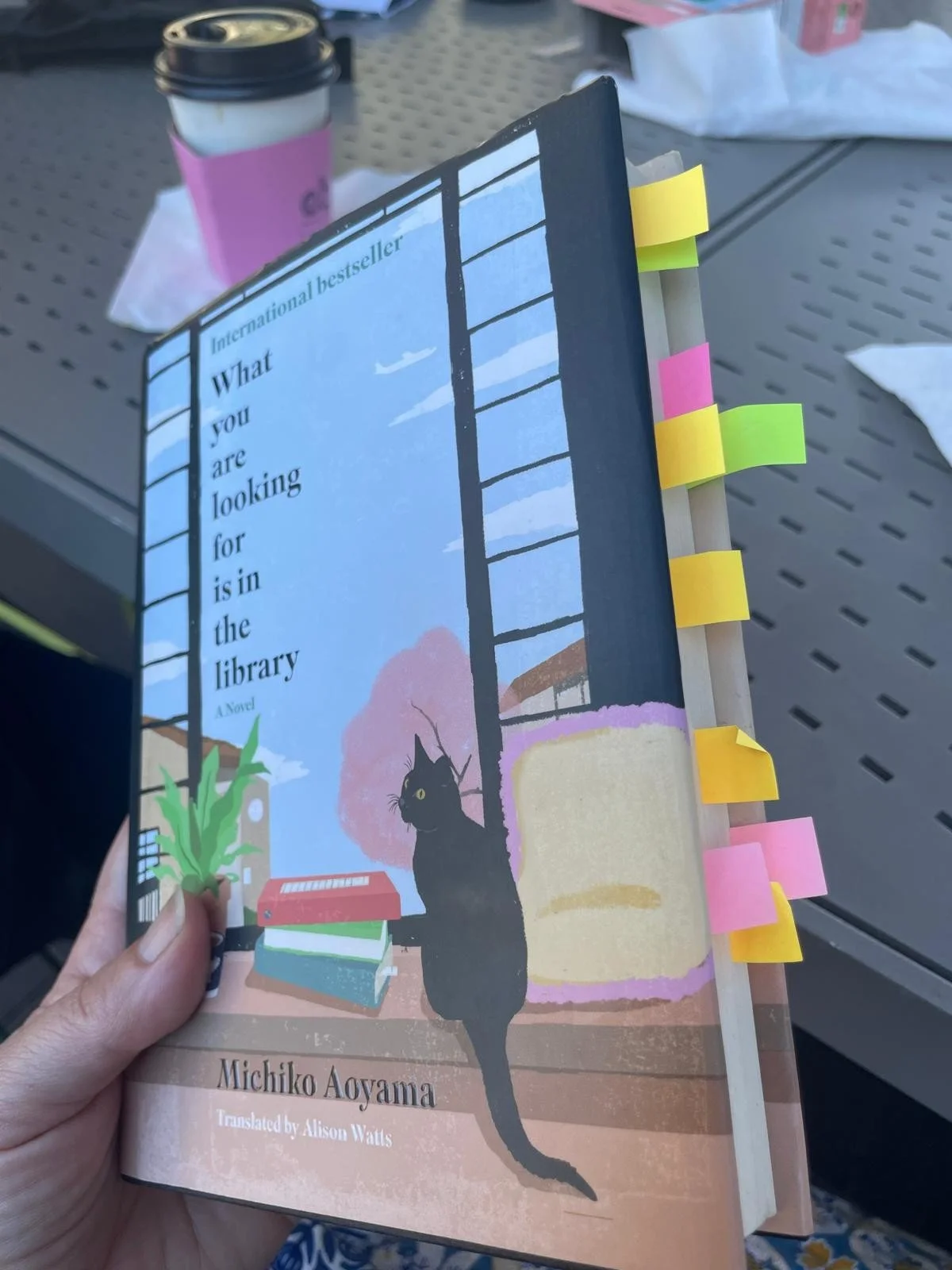
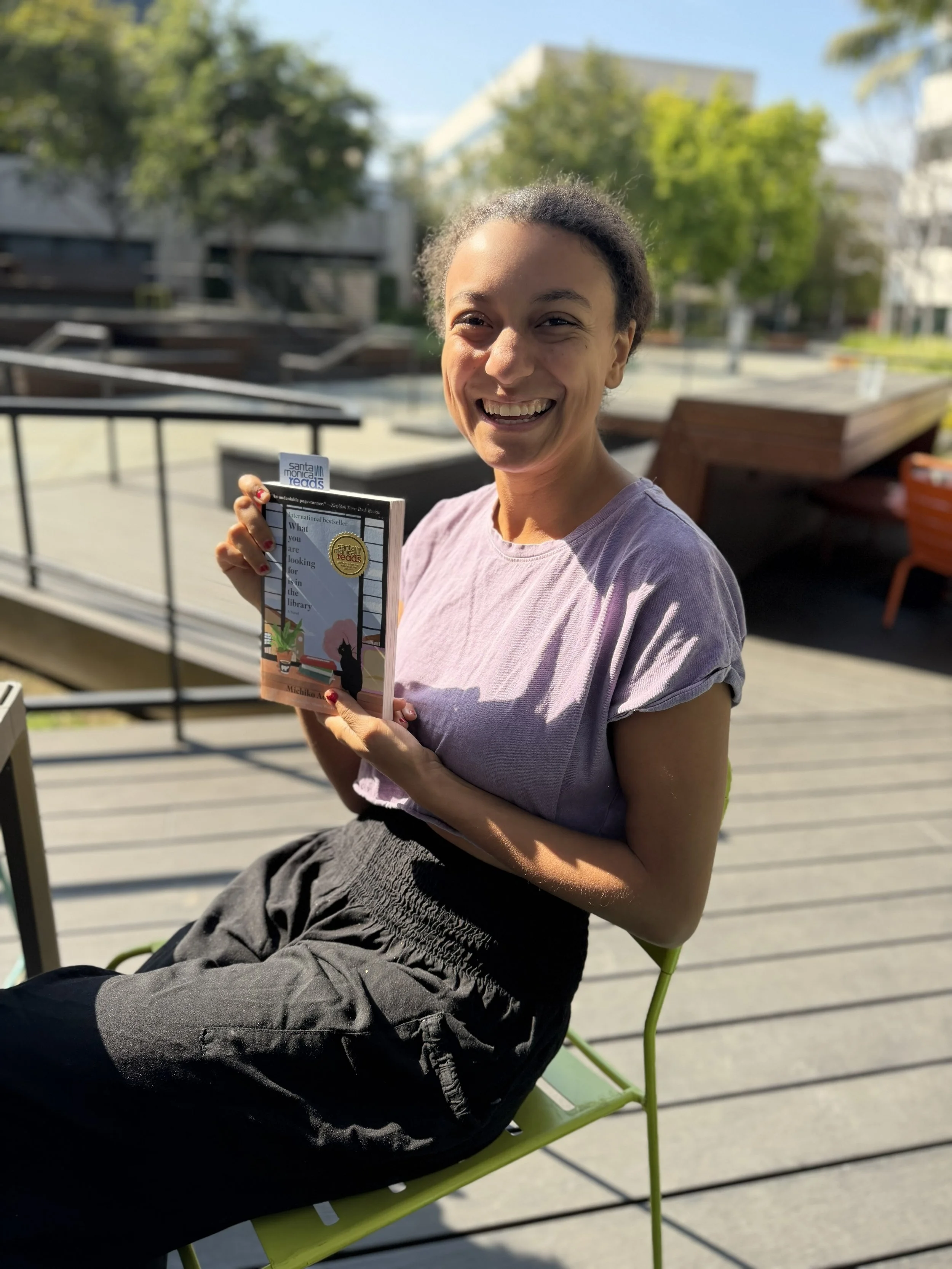
Santa Monica Reads is one of the nation’s longest-running community-wide reading programs, inviting people to share a single book and come together for thoughtful discussions and events that build connection, understanding, and a love of literature across diverse audiences. View a list of past book selections.
Last month, the decades-long Notable Fiction Book Club met for the first time in over six years at their former meeting room at the Ocean Park Library. The pandemic pushed the group to Zoom; after that, limited library hours impeded their meeting times. Recently, Ocean Park opened its doors for a few evening hours. Because it takes place in the basement of the library, no food or drinks are permitted. “We don’t discuss our days or our grandchildren,” one member said. “We dive right in and go deep.” A library staffperson compiles a physical list of books with their descriptions (and covers) and members write down their top five choices. The discussion boasted the best parts of a rigorous college seminar.
The library also offers a Zoom-only book club. I attended a lively chat with a handful of others about a fun book, sparked by excellent questions fielded by the staffperson facilitating. Many of the attendees are writers, which reminded me of Quinne’s Book Club for Writers last year. She gathered eight writers, all strangers before we began, and chose a book for each of the eight months we met at the lovely store, Sunset Park Provisions. Our discussions focused in on craft decisions the authors made; we were encouraged to share writing with the group, as a kind of makeshift salon.
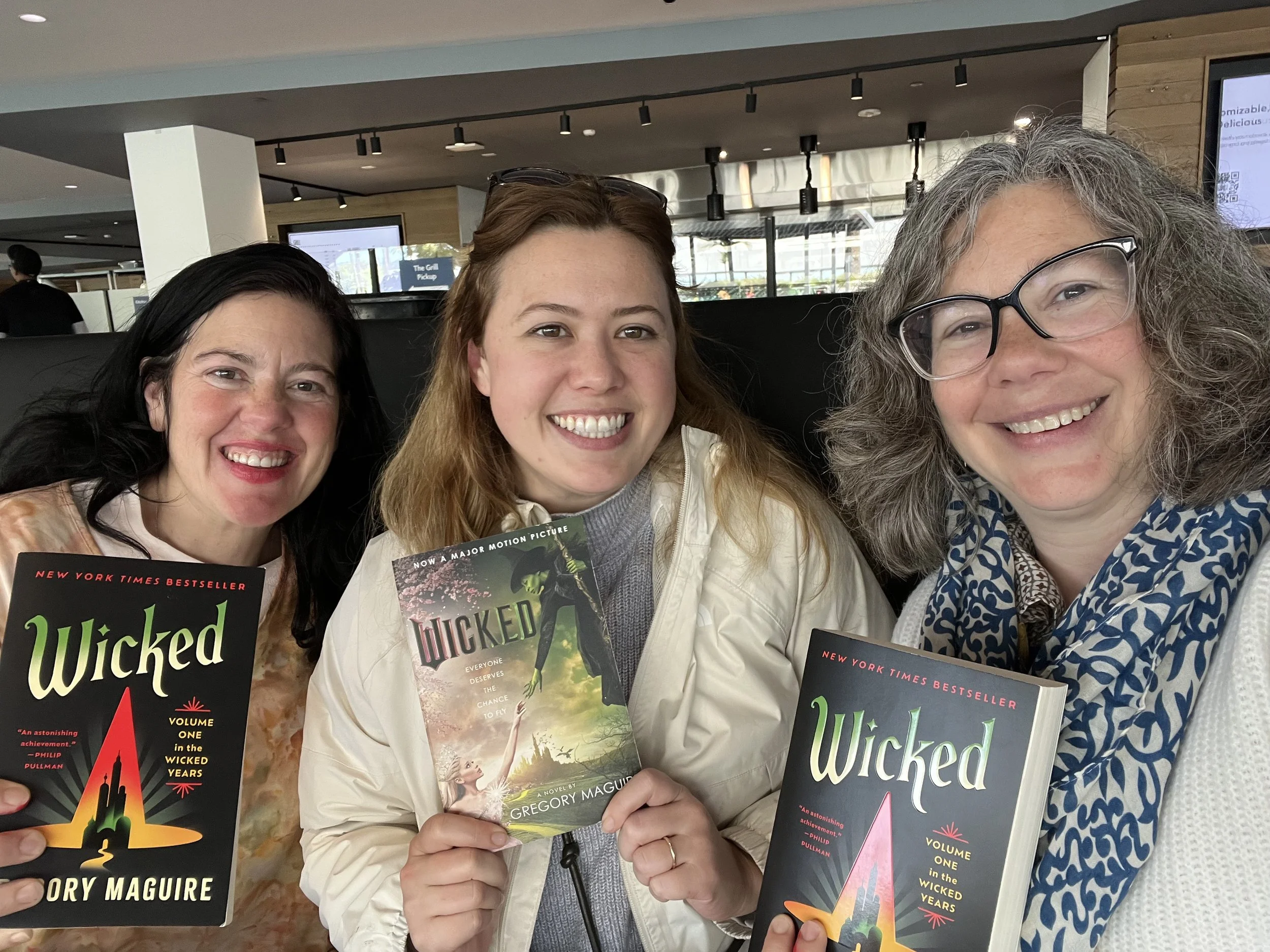
Deb started a book club with several of her friends, all busy moms. The gatherings usually take place at members’ homes for a potluck brunch, a few times at a bar. There’s been talk of simplifying—meeting outside at a park at the same location each time to relieve the pressure of hosting. We decided that at next month’s gathering, we’re going to share whatever book we happen to be reading, instead of being limited to chatting about one title we’ve all read (or not).
One of the challenges of book clubs is we all want to read what we’re drawn to, not necessarily what’s assigned. At Bahala’s recent Tea & Talks event, attendees briefly shared about the book they were currently reading. “It reminded me of an informal school book report, but better,” Deb mused. “It was intellectual, but informal, and informative. We were inspired to hear about books we might not read, and to discover titles for our own shelves.”
Kate has been in a book club with her friend, David, for a decade. It’s just the two of them, and they’ve been known to read all of Proust’s Remembrance of Things Past (incredible, according to her) and other books she might not pick up (or finish) without a reading and discussion partner.
Anna’s book club started with parents and faculty at her children’s private school. At the behest of one member, they exclusively read books by women, people of color, and marginalized communities. It had a good five-year run, but got smaller and smaller over the years. Now it’s three friends who meet every 4-6 weeks without a set schedule, sometimes at each other’s homes, others at a cafe or park. “I still refer to it as my book club for the sake of convenience,” Anna says. “I appreciate the bit of rigor that comes with reading in a group, as well as the books I may not have picked up, especially those by people of color.
They read fiction, mainly by women and/or people of color, but with leeway. Anna identifies as a slow reader who lives with a book for several weeks. Another member, an academic, reads mysteries for stress release, but craves a meatier read every once in a while. The most voracious reader of the three often offers the five books she’s recently enjoyed, and they choose from her list. “We’re organically building a kind of group library, a shared lexicon we can draw from.”
When the group was reading Frankenstein, Anna’s teenage son read Mary Shelley’s classic novel along with her. “My discussions with the group and with him reverberated with each other, making both richer.” The duo inspired me and my/son to bracket off Thursday evenings to chat about classic dystopias like 1984 and Brave New Worldthat my other book club probably won’t pick and that he’s discovering.
Brian is in two official book clubs. The first began over 25 years ago and is composed of current and former social studies teachers at Aragon High School in San Mateo where he taught for five years in the 80s. Three members have died and a fourth has serious Parkinson’s—the group shares ferrying him to and from meetings. More recently, the club recruited two new teachers to join. They meet every couple months, rotate houses/hosts. The person who is slated to host the next book club meeting brings three ideas for books—mostly nonfiction, such as their current title, Secondhand Time: The Last of the Soviets by Svetlana Alexievich. They select one through a casual majority vote for the next meeting. Brian’s second book club, all men, started when several dads of rising ninth graders got to chatting at the high school orientation at Berkeley High. Now their kids are in their 30s and the book club joyfully endures, tackling challenging literary fiction often in translation and nonfiction. Often the books are so long and dense they assign them in parts, limiting discussion to the assigned pages.
Robin’s book club in Rochester, NY, has been meeting faithfully once a month on Wednesday mornings for 25 years. Titles can only be proposed if another member has already read and enjoyed it. The woman who advocated for the chosen book facilitates the discussion, which involves research about the author, consulting reviews, and having a few questions on hand to prompt fruitful discussion. The host used to make a big breakfast, but they’ve simplified it to bagels and coffee.
Since moving to L.A., Robin faithfully signs into Zoom at 7:30am once a month. “It’s too important for me to miss,” Robin says. Two other members who moved away similarly participate via video call. Locals—some of whom are dear friends outside of the club, others who simply like and respect each other—can meet in person or stay in their warm houses on icy days. One member has died. When she was in hospice, the other seven women visited her daily, individually or in clusters. Every July, they meet at a member’s lake house to decide the fall roster.
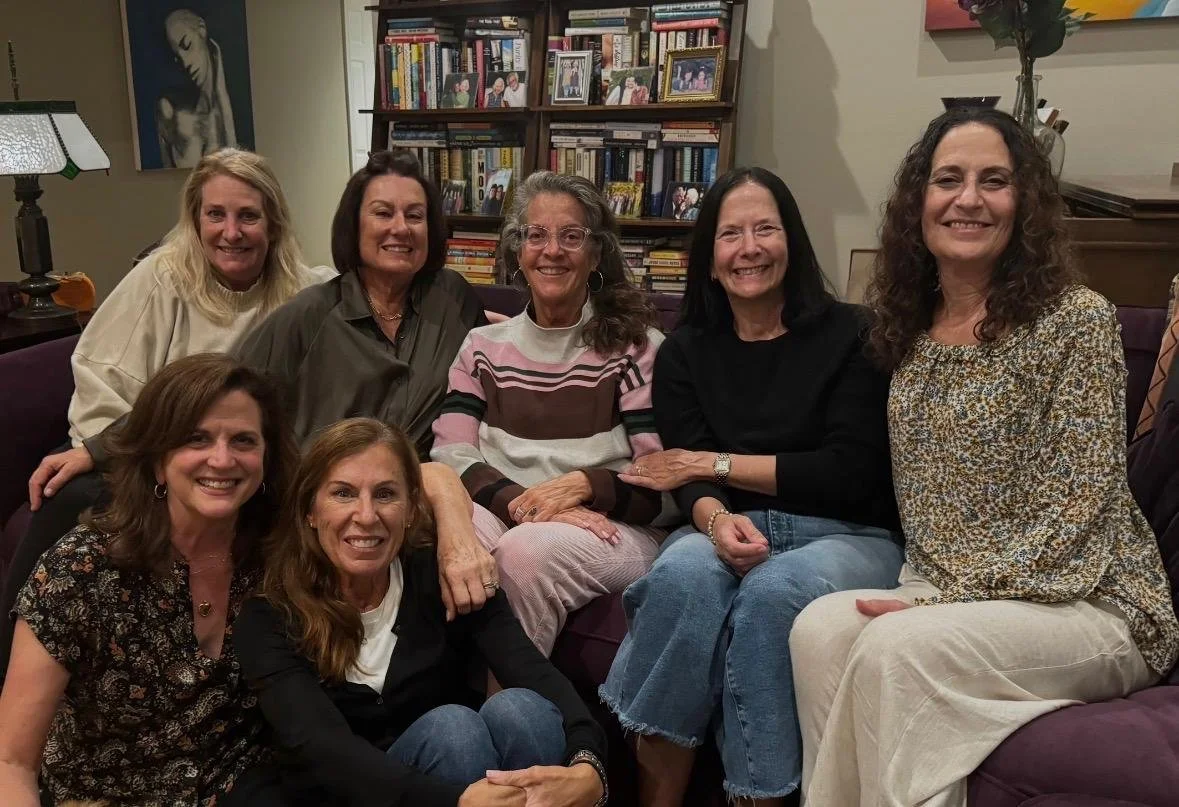
For more than three decades, Elyce’s book club has met at one of the eight women’s homes for a host-cooked dinner on the first Wednesday of every month. This ritual began when their children were newborns, functioning like a secular congregation-mothers’ support group-cum-literature class.
Meetings start promptly at 7pm with kibbitzing over appetizers and wine before mentioning the book. Over time, their book conversations became a chronicle of adulthood: marriages, illnesses, disappointments, aging parents, and grandchildren. There are some parameters around their literary discussions. At the request of two of the women, they don’t talk about abortion and adultery in the books they’ve read.
In thirty years, there’s been surprisingly little drama. One former member “went to the dark side politically”; another tried to convert Elyce, who’s Jewish, to Christianity. Both voluntarily left the group.
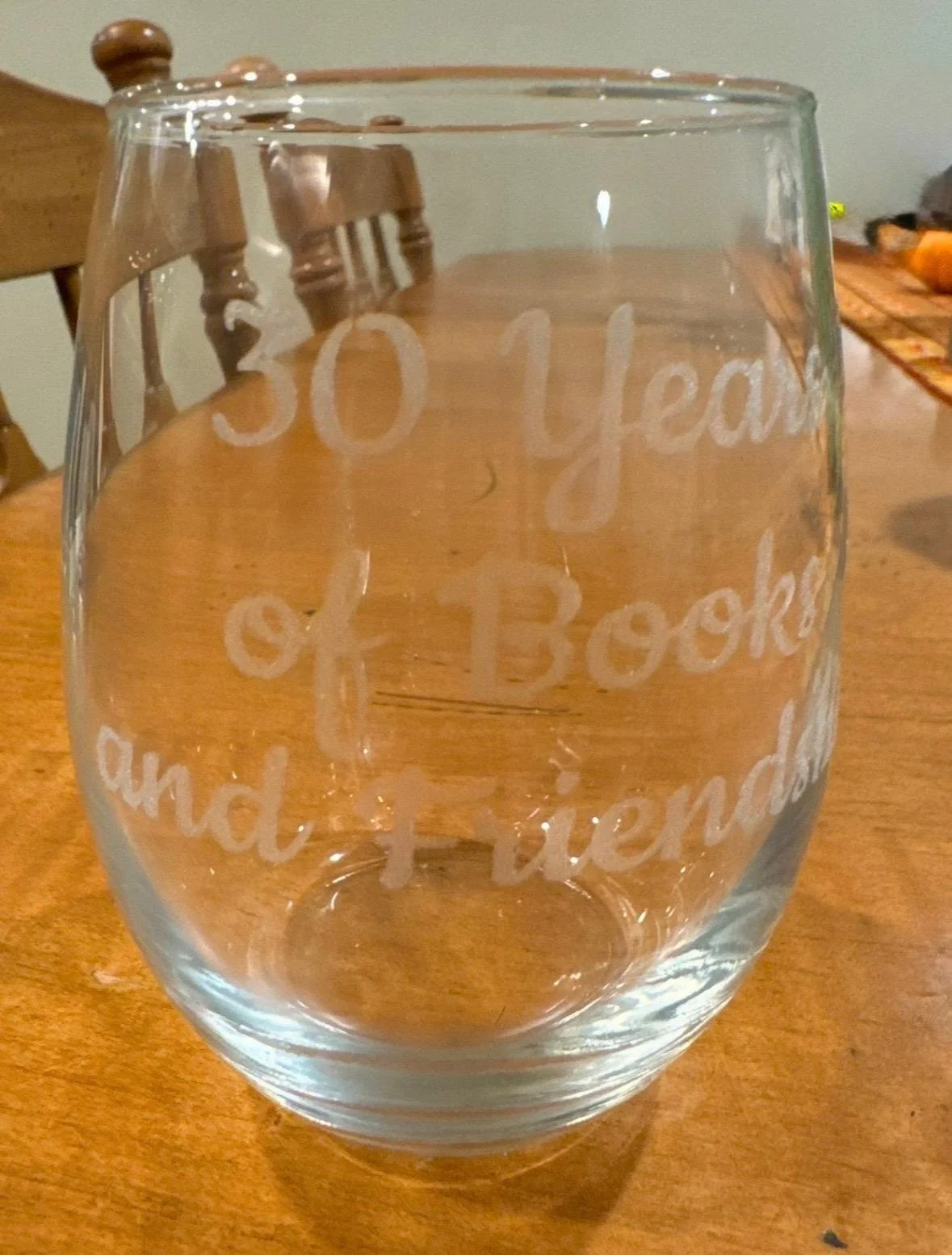
The discussions are democratic in spirit, shaped by a “benevolent dictator,” Katie, the former English teacher, who reliably keeps discussions on track. Liz often selects more obscure titles, only for the group to discover unexpected depth in them. The club leans toward popular, so-called “book club” fiction, though poetry by Rilke and short stories have found their way into rotation. Elyce meticulously archived the club’s history—every title, every year—commemorating milestones with tote bags printed with decades of reading lists and, at thirty years, custom wine glasses.
The women rarely socialize outside the meetings, and yet the group remains sacred to them all. During the pandemic, they moved seamlessly onto Zoom and never missed a month. When I asked if there were rules around “I hated it”-style proclamations, Elyce said those were allowed. “They’re real, it’s a natural reaction, and serve as springboards for deeper, nuanced conversations.”
Haley Nahmen’s essay, Rate My Art argues for a dampening of the “I loved it/I hated it” reflex. Carlo notes, “Unless they’re quickly expounded upon, both responses in isolation can shut down discussion, and book clubs are ultimately so much about the discussion.” Not that the relationship between critic and art was never fraught, but with newspapers shrinking their review sections and without a Roger Ebert of book reviewers where we as a culture consume what they recommend, we are missing something like guidance. “He didn’t turn off his critical brain or his brain that loved movies. He’s a great model,” Deb said.
The internet culture’s likes and sites like Goodreads rushed in to fill the void left by a once-thriving critical ecosystem, intensifying the polarizing cultural environment. Book clubs by dint of being a group of people, diversity of opinions are baked in and given respectful space. “I'm happy my book club pushes me away from binary thinking,” Carlo said. “That’s what I crave more than anything. Not the content but the nuance, the contexts and subtexts.” To receive the benefits of loose ties, we don’t have to be best friends with people in our book clubs, and certainly don’t require having the same take on a book. Some books we don’t enjoy make for good discussions—there’s a genre literally called book club fiction.
Mirroring Carlo’s observation, political content creator Amanda Nelson recently compiled what she calls America 101, an extensive course designed for learning or relearning our history to better grapple with the present moment. Folks intimidated by the many books on the list immediately began proposing book groups for accountability and inspiration. After all, we’re not in school anymore, so sweetening the voluntary homework aspect of reading through the fun of social gatherings, food, and wine motivates us.
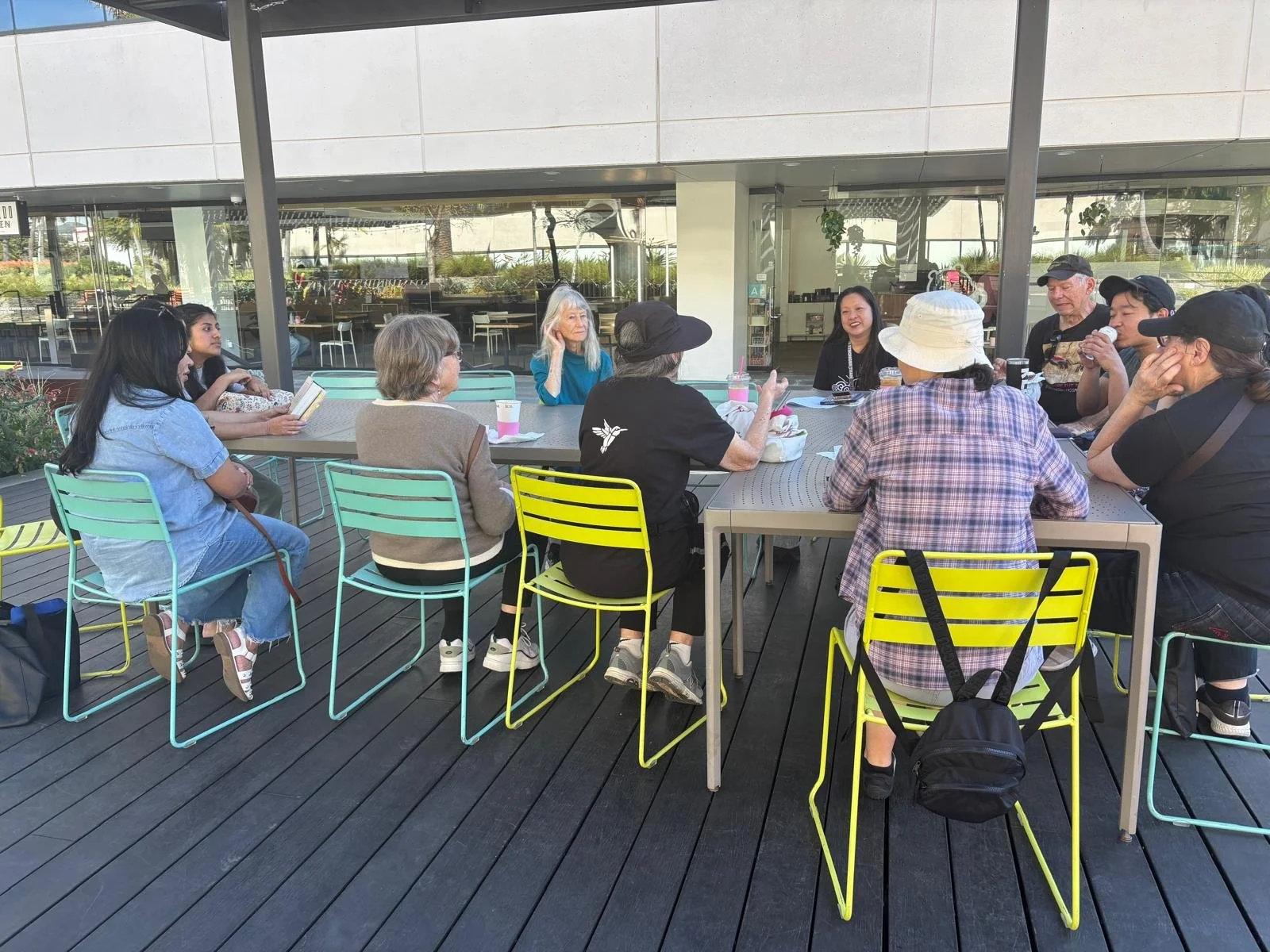
One thing seems certain: books and book clubs are here to stay. They’ve survived a pandemic, publishing shenanigans, and death of the novel doomsdaying. The meta ouroboros of books about book clubs serves to uphold both. One of the first, a tome of over 1000 pages about a literary club in small-town Ohio, was written over the course of 50 years! While the author was in a nursing home the last two years of her life, the book went on to sell over two million copies. The Jane Austen Book Club by Karen Joy Fowler inspired recent spins, like Kate Nash’s recent debut, The Mother-in-Law Book Club. An entire genre of murders involving or set within book clubs, proliferate.
There are more styles and structures of bookclubs than I could ever fit in this piece. The only requirement is for the framework to work well enough to continue for all members of the group, to adjust as needed, like all democracies, Compromise is a given, as are the unexpected gifts of compromise. “Only connect,” author E,.M. Forster beseeches us from the pages of his novels.
Let us know at Coffee & Connections or via email what other resources, ideas, or programs would support you in your reading and community-building journeys.
Jessica Cole