
Spinning Community Threads
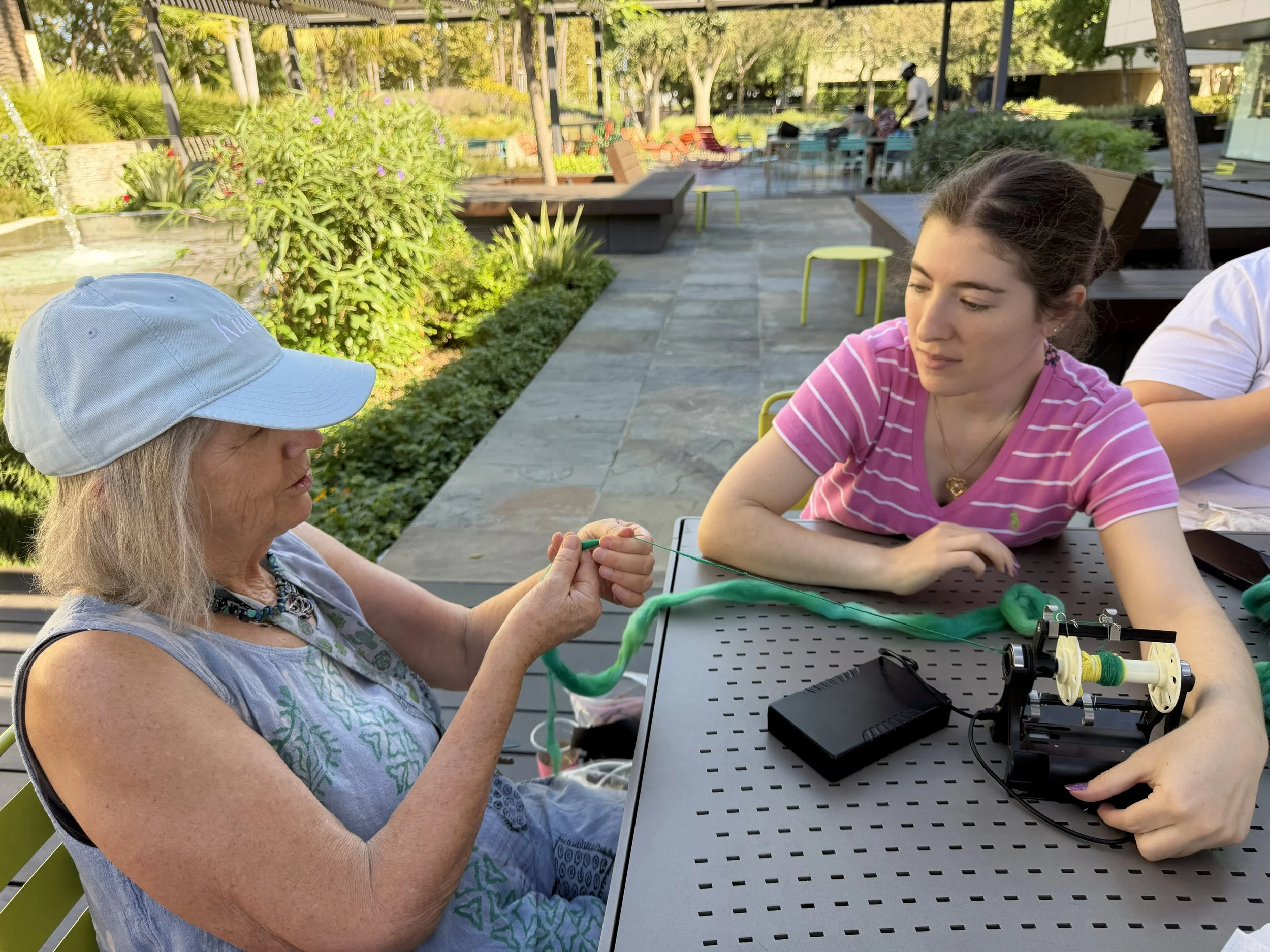
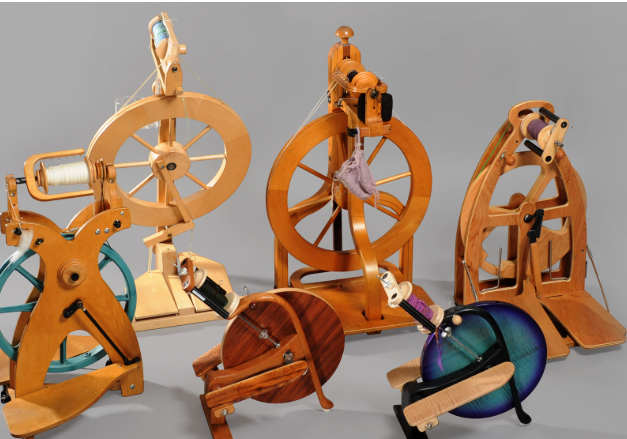
On Thanksgiving 2021, Drew Hirschinger visited a friend who had recently acquired a vintage spinning wheel. “I was absolutely terrible at it,” she recalls. Still, her pandemic-era algorithm kept offering her videos about medieval weaving, historical textiles, and the intricate processes behind making fabric by hand, and she decided to try her hand at spinning. She bought a drop spindle and taught herself the basics.
Like all arts, spinning can be a solitary pursuit involving a collection of tools. However, to learn new techniques, troubleshoot snags, and gather with people who share a unique passion, finding a community becomes essential. Drew attended her first meeting of the Greater LA Spinning Guild, and kept coming back.
The word guild conjures up Olde World Europe with its flavors of pre-industrialization, hyper-specific craftmaking, Time-honored but timeworn, guilds seem mostly obsolete in 2026. But guilds, designed to act as an amalgam of labor union, apprenticeship, mutual aid hub, persist. The guild houses in Muenster, destroyed in WWII, were all painstakingly rebuilt to their medieval original designs. In the U.S., Handwork2026, a year-long nationwide initiative by Craft in America, brought 300 museums, schools, and local craft guilds together to preserve traditional making techniques across all 50 states.
Drew became co-president of the spinning guild in January 2026. She coordinates events and opportunities for members to participate in the wider fiber arts world. The work also involves the less glamorous business of maintaining a nonprofit organization, including filing governmental paperwork.
Because of her work behind the scenes and a thriving community, members can simply show up, connect with other enthusiasts, and enjoy themselves. In addition, she’s the social media coordinator for the Southern California Handweavers Guild. Both organizations have substantial memberships, with the spinning guild numbering around 100 and the weaving guild 150 or more. Monthly meetings typically attract 30 to 40 people, although special events can draw larger crowds.
The guilds also offer a way for fiber enthusiasts to connect across Southern California, where members are spread between the San Fernando Valley, West Los Angeles, the South Bay, and other areas. Geography can make attendance challenging, but Drew continues to look for ways to bring the groups into more community events.
The largest fiber arts event of the year, the SoCal Fiber Fair, occurs in Pomona on November 21-22. Her goal is to persuade the weaving guild to participate alongside the spinning guild, hoping they can share a table and to arrange for the weaving guild to cover member parking costs. Surmounting the practical challenges of sustaining community goes a long way in making these traditional crafts more visible and accessible—connections she sees in her practice as a marriage and family therapist. “Working out the basics first, if possible, yields higher goals.”
The potential symbiotics between creative activities and therapeutic work shine on both the practical and more associative levels. “When working with children, for example, sitting across from one another and talking for an entire hour is not always the best approach. A game, art project, or another hands-on activity provides a more natural way to engage,” Drew muses.
She incorporated arts and crafts into her professional work before, and discussed the possibility of exploring fiber arts in a therapeutic setting with another therapist friend who is also talented in the craft. “There’s something so appealing about the way fiber arts break complicated processes into manageable steps,” she says, “which echo therapeutic approaches.”
Drew learned to knit and crochet as a child, though she was more drawn to embroidery and cross-stitch. Joining the spinning guild eventually led to some good-natured peer pressure to pick up knitting again, which introduced a humbling question: Does she actually know how to count? “I did go to grad school,” she jokes, “but on the other hand, no. Cast on 15, I’m probably going to count that three times.”
She appreciates drop-spindles because they allow people to stop and start, focusing on individual parts of spinning rather than trying to master everything simultaneously. “I feel like there’s so much in life I would like to…compartmentalize out so that I can learn them individually, and after I learn all the parts, bring them together,” she says.
Meanwhile, it’s wild how going further and further “back to basics” propels someone deeper into a craft. At home, she has been cultivating a cotton plant that has flowered into bolls, the fluffy material she can spin into yarn. She planted green cotton seedlings that are growing so well, she transplanted them into larger pots.
Alongside the cotton, a different pot houses an indigo plant. She’s researching how best to harvest and preserve it, including whether it can be dried for later use or needs to be processed fresh. These projects connect the finished yarn or fabric to its origins, adding another layer of discovery to a hobby that already offers plenty of opportunities for experimentation.
Only natural fibers like wool and cotton can be spun using traditional spindles. And dog hair, apparently! Two people showed up at the guild asking for help spinning their Bernese Mountain Dog’s fur made into yarn for a scarf. Drew laughed at the unexpectedness of the assignment, though she understands the appeal, and volunteered to create the yarn for them.
As for her own creative projects, she recently participated in a weaving guild challenge inspired by the telephone game. Teams of four passed a weaving idea from one person to the next, with each participant creating a new piece based on what the previous person had made. Drew was the final person in her team, tasked with interpreting the work that had passed through several hands. It was another exercise in creativity, collaboration, and the glorious unpredictability of art-making.
Her path into the craft may have been accidental, but the skill set she’s expanding, the community she fosters, the leadership she’s gracefully stepped into, and the many small challenges that come with learning something new speak to consistent intention, generosity, and an excellent sense of humor.
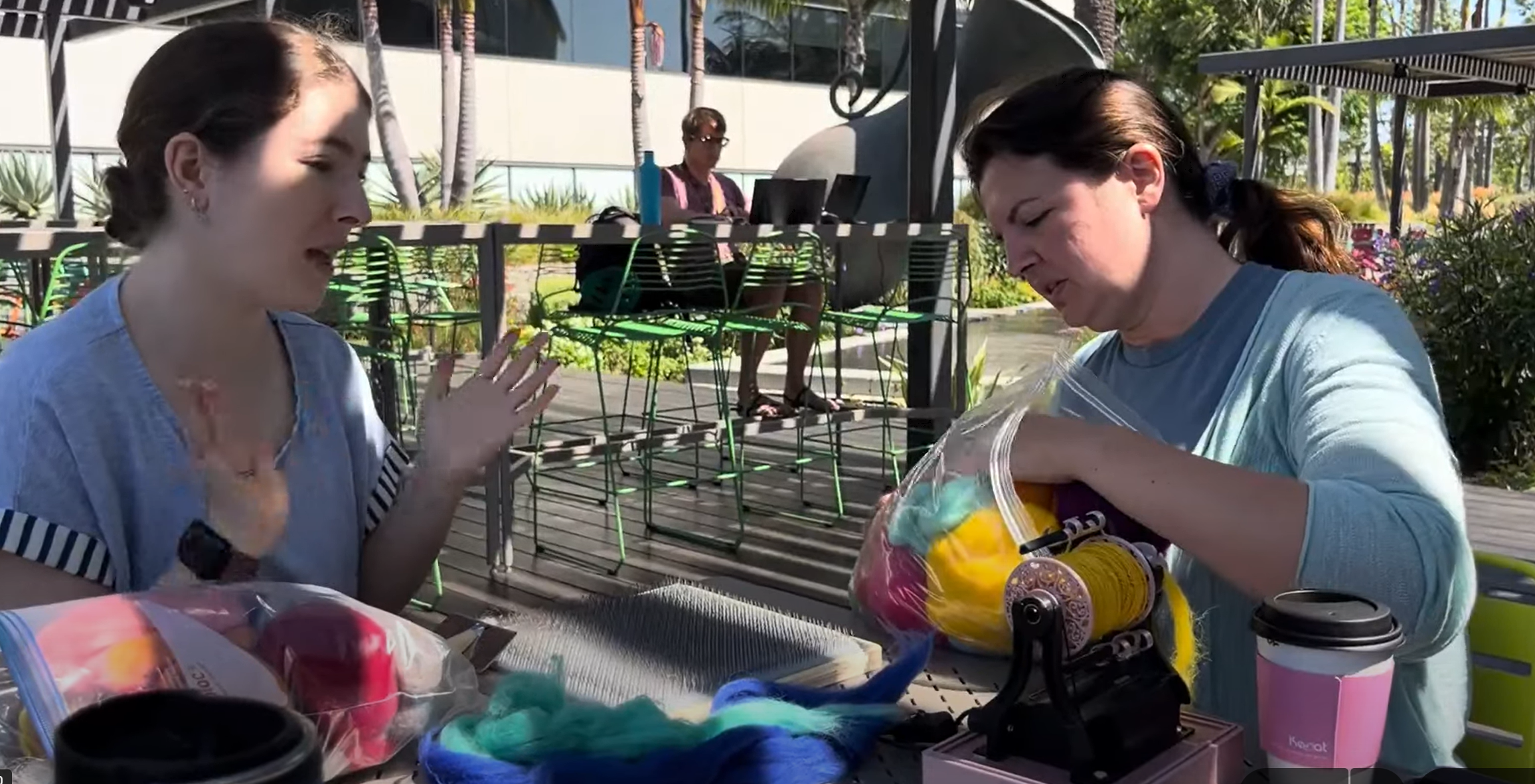
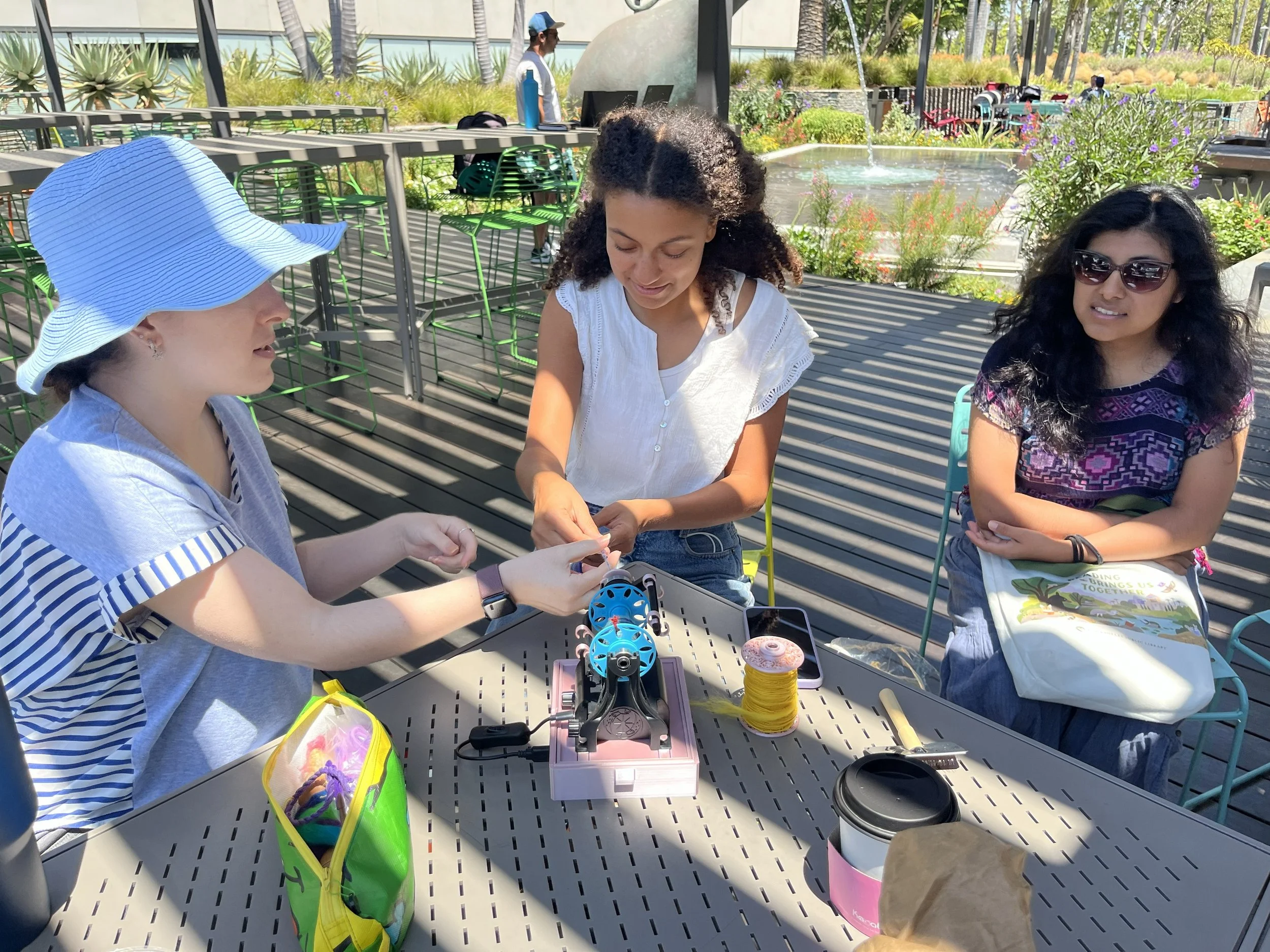
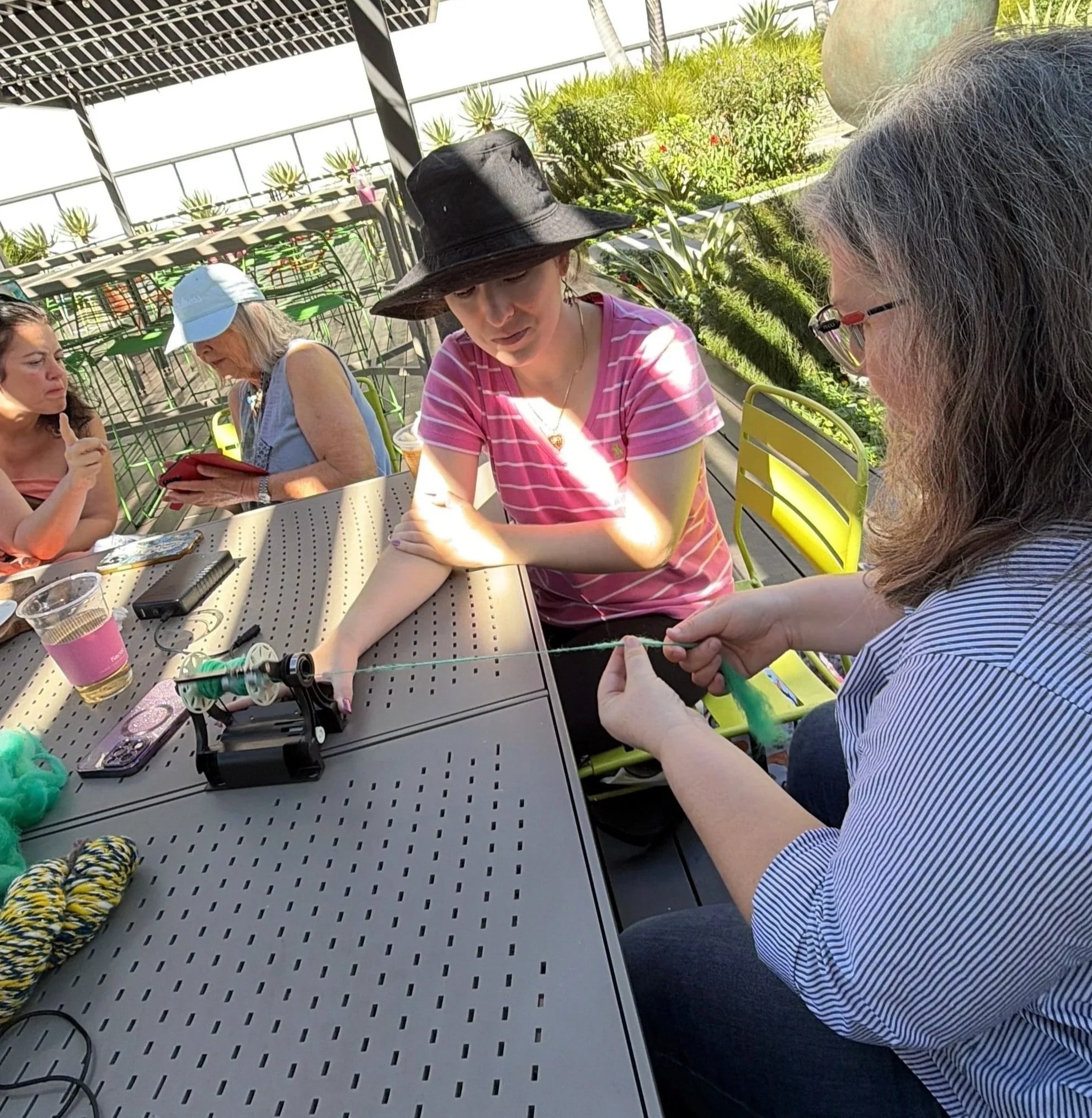
Drew led a workshop at Coffee & Connections this Friday, October 16th. She brought both her electric spinning wheel and drop-spindles to teach participants a beginner-friendly introduction to the process of spinning.
As Drew's experience shows, we never know where a single strand might lead.
Jessica Cole