
Quilting that Warms the World
As with other crafts, quilting is having an international resurgence, including in Santa Monica,
Every Wednesday at 10 in the morning and Sundays after the service, the basement of St. Paul’s Lutheran Church is humming with the whirr of sewing machines, the snipping jaws of scissors, and the focused energy found in the best group projects. On the day I was there, a handful of women and men of all ages worked individually and together to piece fabric together for a common cause, literally called Quilt Ministry.
Functioning as a sort of “warm covers” precursor to José Andrés’ World Central Kitchens, Lutheran World Relief distributed its first quilts in 1945 to families across postwar Europe. Eighty years later, the organization serves 136 countries.
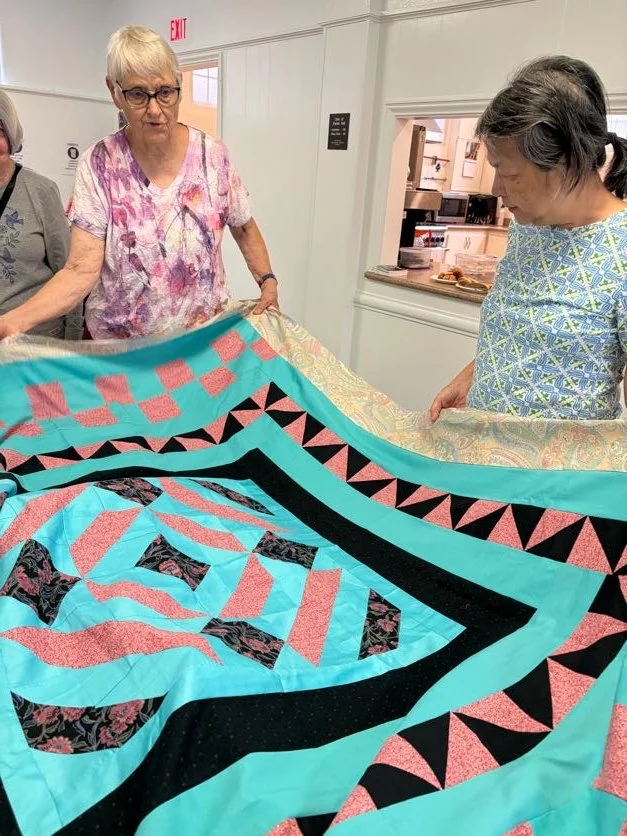
Sylvia Henry has been part of the St. Paul Lutheran Church quilters for 13 years. “The quilts we handmake right here in Santa Monica are sent to people suffering in Angola and Venezuela, wherever there is war, strife, or suffering.” Last year, a core group of six people made an incredible 78 quilts!
In the past 25 years, small Lutheran churches across the United States have made millions of quilts a year to send around the world. In 2024, 30,000 were sent to Angola, 21,000 to Lebanon, and 60,500 to Ukraine, to mention just three. Many Midwest groups make upwards of 300 quilts every year. “In six months,” Sylvia says, “we’ve completed nine quilts, just six or eight of us, a few hours every Wednesday.”
Once a year, a truck pulls up at churches all over California and gathers goods made by volunteers: knit baby sets, school kits, personal care kits, and the quilts.
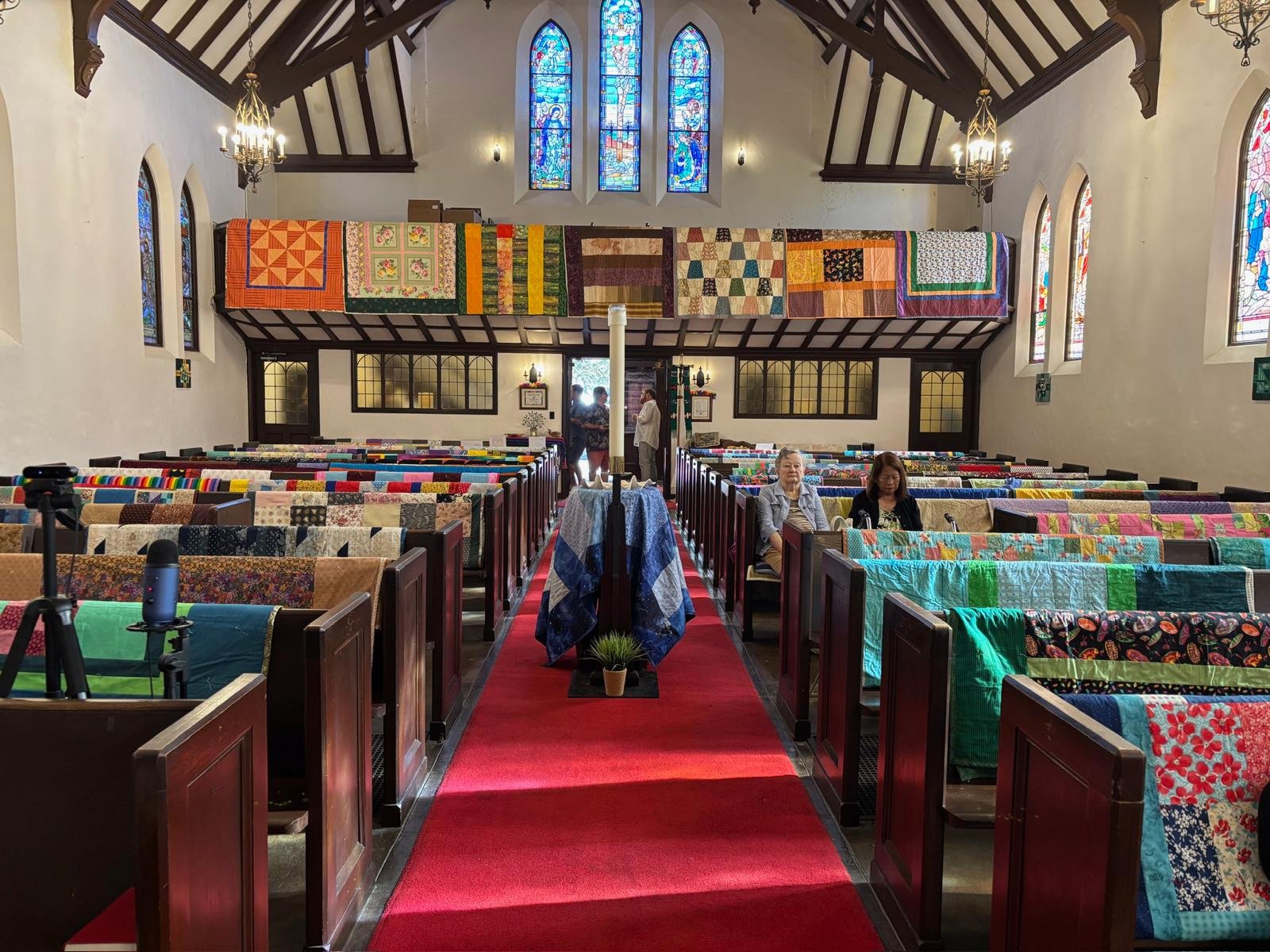
Before the truck arrives, the quilts made that year at St. Paul’s are displayed in the sanctuary, draped over pews and unfurled like flags representing a harmonious galaxy, the fabric version of the stained glass windows. “After the trucks are packed, we say a blessing that what we made with love and care brings comfort to people who need it most,” Sylvia says.
She grew up in the area between Pomona and Chino, once known as the cow capital. Now that all the farms are gone, that part of the state is known as the Preserve. Her mother and both grandmothers taught her to sew, and she was active in 4H. “My grandparents bought their farm in 1912. My father lived in the same house, a Craftsman on the property, for 70 years. “The plumbing was outside when he was young.” Sylvia smiles. “I loved that old house.”
She raised a family with her husband, a Lutheran minister—which included a stint in Salzburg when their daughters were small—and worked for 50 years as an educator. She is inspiring and dynamic, balancing clear explanations and easygoing forward momentum—the correct measurements for creating beauty with a team.
Though we’re in a basement, nothing is dank, dusty, or depressingly fluorescent. Sunlight finds its way in. Everything feels bright and possible.
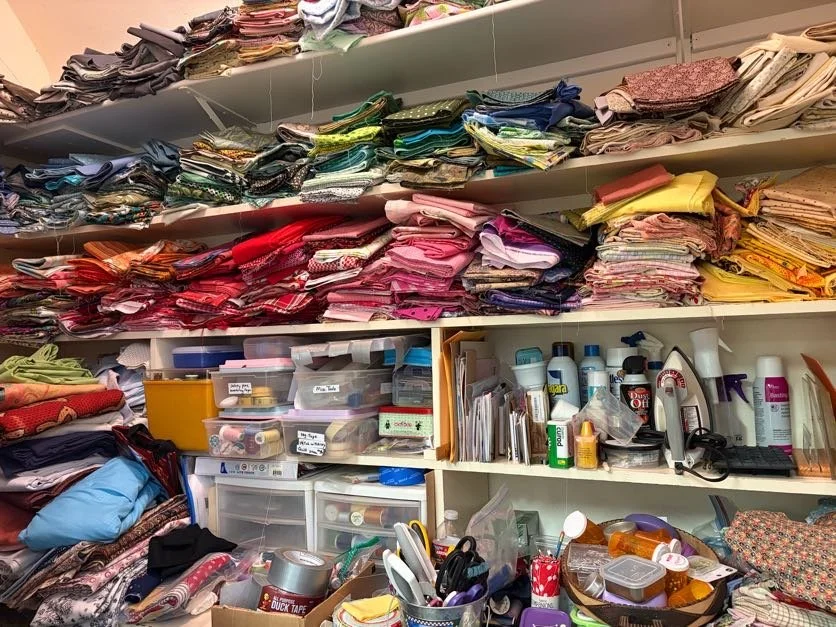
First Sylvia showed me the materials, much of it donated, so beautifully organized by color that the supply closets alone look like works of art. “Here we have all the kind of pins we need, a bucket of scissors, and mats,” she said, showing me each in turn.
“We use old sheets from college dorms and tie-dye them for backing. Batting is a high-cost item, $10 up from $6.50 per quilt since Joanne closed. The best is an 80% cotton 20% poly mix for strength and softness.”
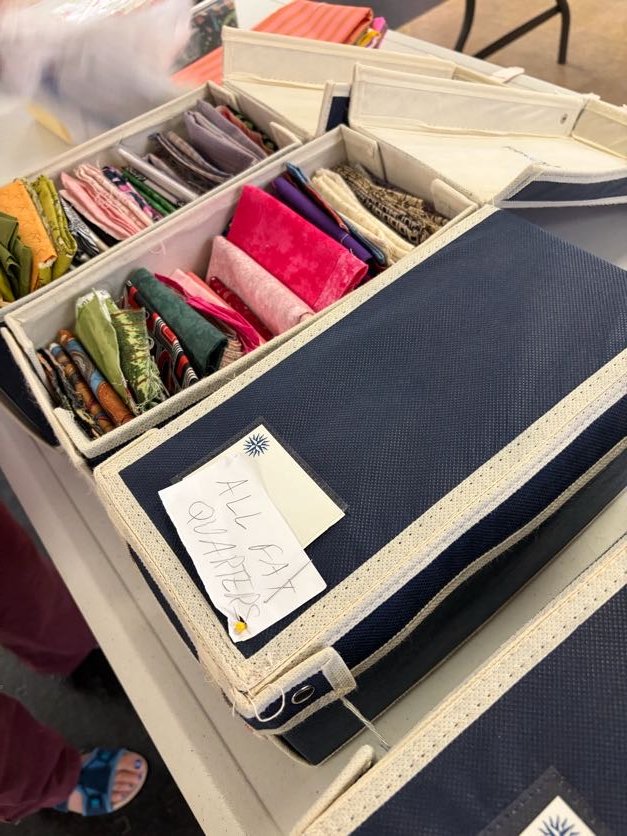
Arguably, the most important material in quilting is a quarter, a classic quilting square measuring 44 inches. Sylvia opens what looks like a giant recipe card box, but it’s made of fabric. Inside there are squares of neatly pressed cloth called fat quarters—yards of fabric folded in fours. These came out twenty years ago. “Fons & Porter put these boxes together,” Silvia tells me. “They come full of fat quarters, and work as storage for additional ones.”
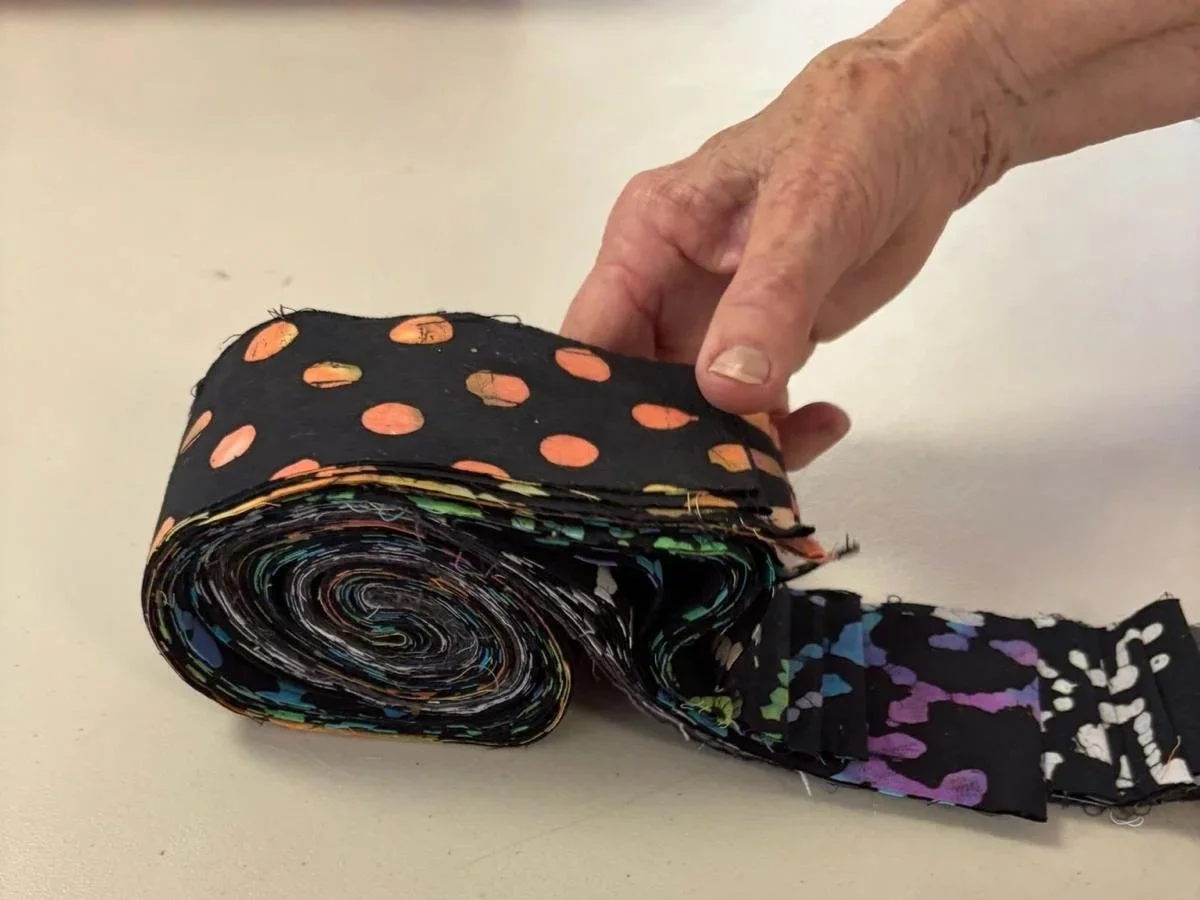
“We do receive bunches of strips, too, like long skinny ties, and we make stripe quilts from them.” Everything can be used. “This quilt ‘middle’ we inherited,” Sylvia says, showing me the most recent quilt they’ve finished. “You can take a panel and make it look much more interesting. This pattern is called attic windows.”
“Sometimes we get pieces from the Salvation Army, strangers’ abandoned projects.” Saved from moldering in a forgotten box in an attic or a landfill, these discards grow into 60-by-80-inch pieces of art that stave off chills amidst strife.
I’m struck that completing someone else’s goal ties off someone else’s intentions for them, which draws us all together in an unseen embrace—a powerful enactment of universality and faith.
Sylvia gestures to a smaller table. “Over here, we can test ideas, like a little incubator.”
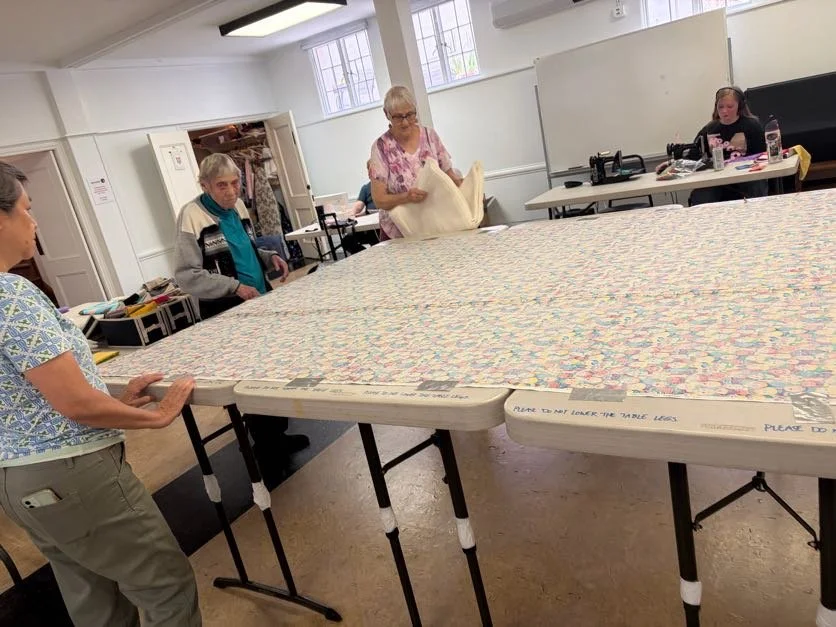
Many of the women laying out the next quilt on the biggest table are part of the Santa Monica Quilt Guild. Karen quilts while watching her beloved baseball games (it must be noted that Sylvia sports a perfect Dodgers pedicure). “My son said, ‘Sylvia needs you,’ so I came.” Sonia makes quilts for the Pendleton Marine Base and is also a member of Quilts From the Heart, which meets in the Mar Vista library. “I’ve belonged to another group called Binky Patrol, and we do a lot for Baby2Baby, some NICU centers, and the Venice Family Clinic.” Ming says, “I didn’t have enough for the section, so I used a different color.” The pattern looks even more beautiful with the substitution.
While quilting, like all fiber arts, have been perceived as women’s activities, men are increasingly joining the fray. After all, finding activities that fulfill human psychological needs of “autonomy, competence, and relatedness” is universal and evergreen. 1,200 quilts will be hung and judged—no one is left out—during the Festival of Quilts in the United Kingdom, including an upcoming exhibition of men’s quilts.
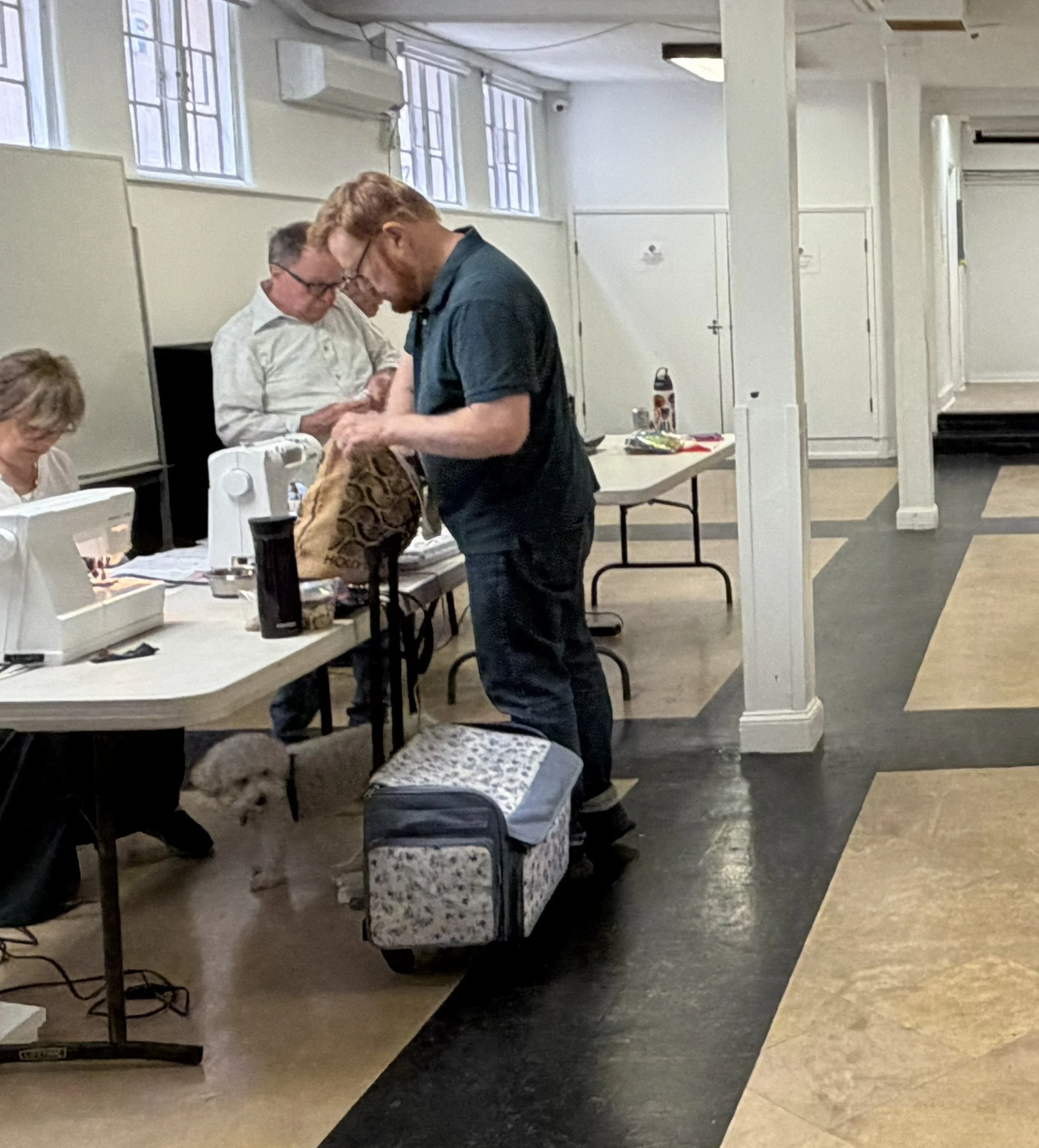
Jim has worked on four quilts so far in the basement of St. Paul’s. After him, more men joined, including Michael, local author of The Lincoln Moon. Today, he’s using the modern sewing machine, his adorable dog Linus at his feet. Michael has been coming to the Wednesday group for about a year. “Writing and quilting are so similar,” he says. “Pulling together bits in a whole. Composition has the same rules no matter the medium, but it’s nice to work on something tangible.”
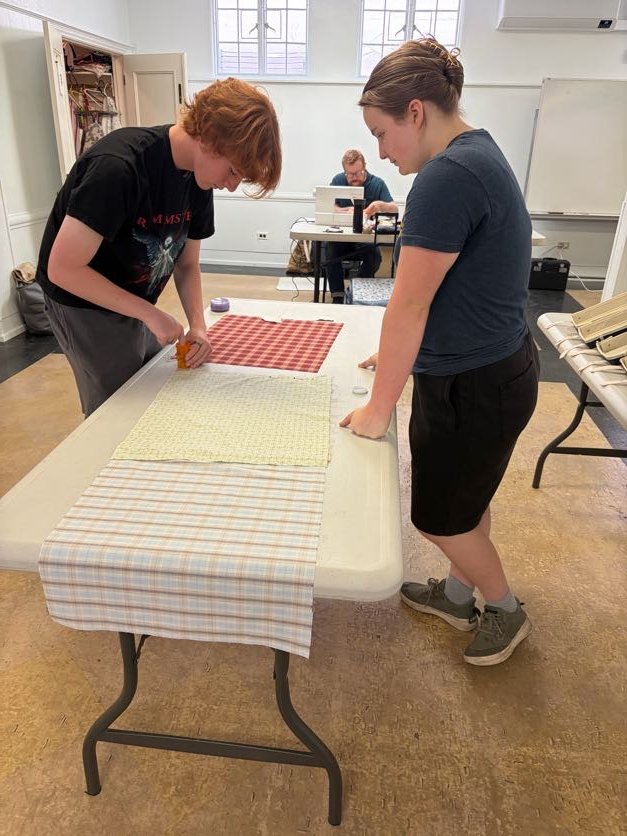
“Did you arrange it the way you want it?” Sylvia asks my son and her granddaughter. “Yeah, we did,” the teens answer in unison. They’ve laid out a pattern on the second biggest table. Sabine demonstrates how to sew the quarters together on one of the computerized sewing machines, and guides Dylan as he makes his first stitched line. “All of my grandchildren, boys and girls, make their own quilts to take with them to college,” Sylvia says.
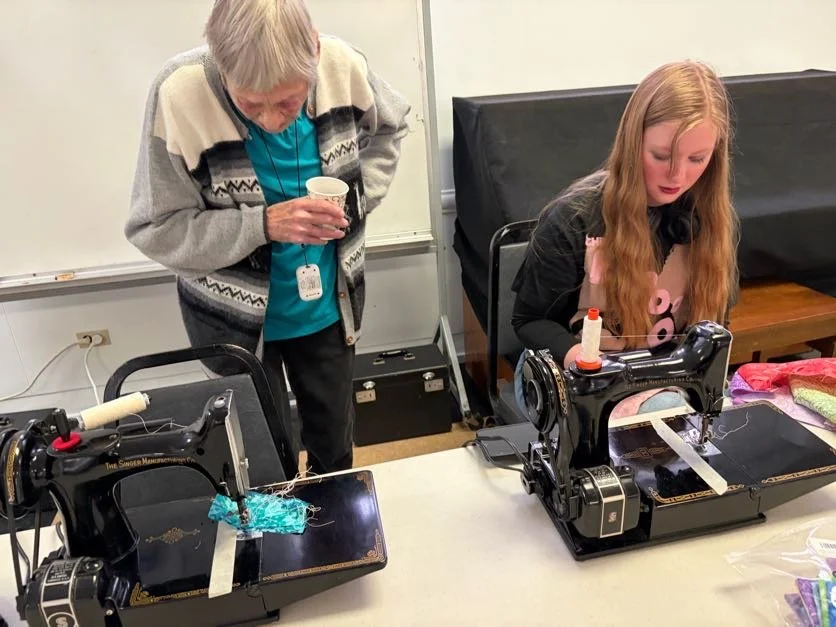
There are also two classic Singers—one of the regulars’ granddaughters is using it. She’s in Santa Monica from college in Colorado before she leaves for a year abroad in Japan. “My grandma taught me to sew using these old machines,” she said. “So they’re what I’m used to.”
Sylvia prefers the classic ones, too. “Singer showed the first model at the 1934 Chicago World's Fair and started selling them at the event for $125, about $2000 in today’s money. It was the first time anyone could buy new technology the moment it became available. It only sews straight, zero wiggle, whereas the newer sewing machines can do all sorts of stitching. They’re fabulous machines for quilters because they show the stitches. Now you can't buy any of them for less than about $350. I wonder aloud if it’s difficult to find people who can fix the older models. “I can fix them,” Sylvia says nonchalantly.
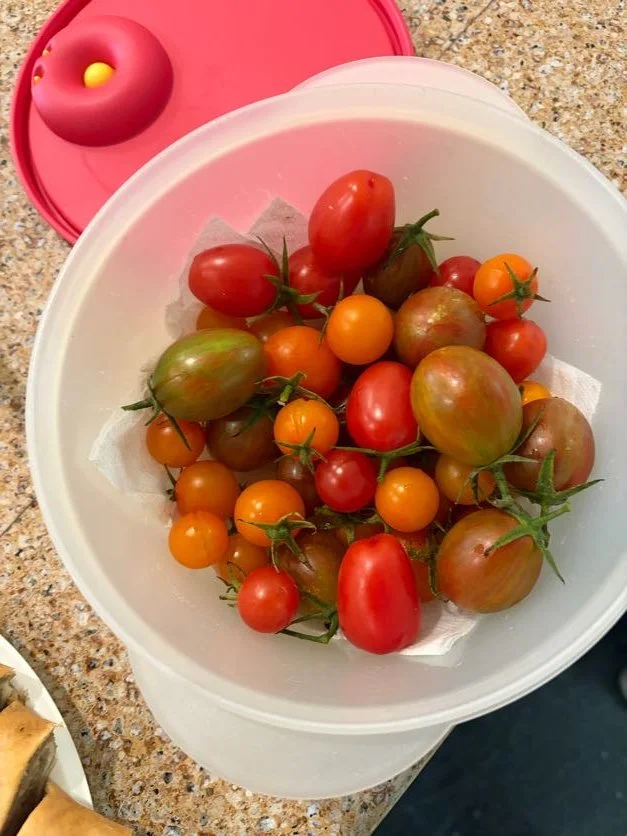
Anyone is welcome to join the group. There’s always snacks, including tomatoes from Sylvia’s yard. I left feeling relaxed, energized, and inspired.
“You’re all going to live to 200,” I marvel. The integrated mind-body activity, watering creative goals, planning out the future in colorful patterns, and “parallel play” socializing feels like the essence of life.
“We hope,” they said. “Besides that, it’s something fun.”
Jessica Cole