
Kitchen Table Conversations: Hand in Hand and #SanctuaryHomes Reimagine Community Care
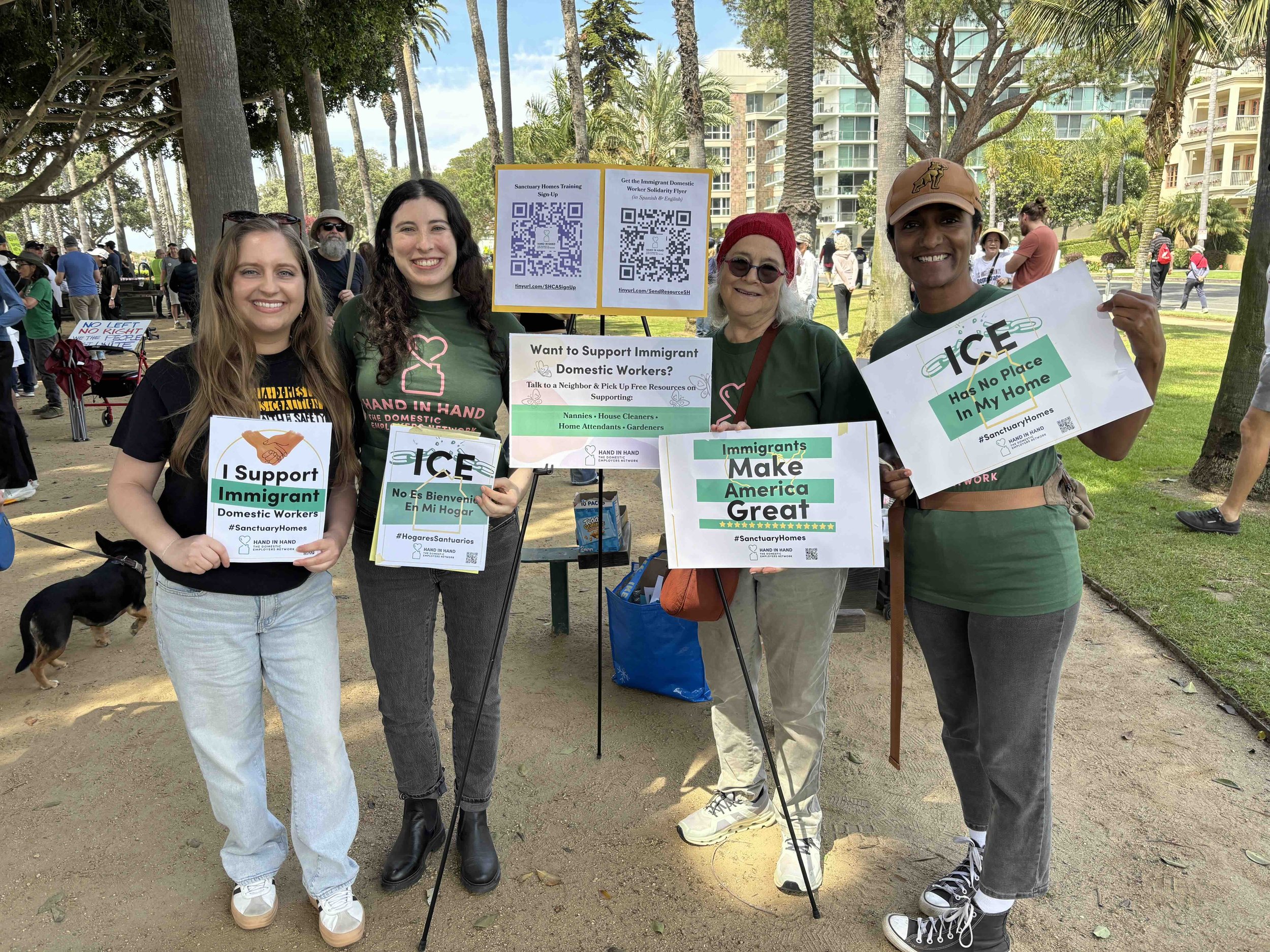
For fifteen years, Hand in Hand: The Domestic Employers Network has been quietly reshaping what solidarity looks like inside California homes. Rooted in domestic worker justice and immigrant rights, the organization begins from an often overlooked truth: no one gets an HR manual when they hire someone to work in their home.
“People want to do right by the workers who support their families, but they don’t always know how,” explains Kayla Shore, Lead California Organizer for Hand in Hand. “We help them learn what fair employment looks like and how to build trust across power imbalances.”
To that end, Hand in Hand partners closely with worker centers across Los Angeles, including IDEPSCA, CHIRLA, and Pilipino Workers Center, all of which support day laborers, home health workers, and domestic workers navigating complex employment landscapes.
For Kayla, the work is both political and deeply personal. Raised in a family that prioritized hospitality and community care, she remembers growing up in Boston watching her mother regularly invite newcomers, students, and neighbors into their home for Shabbat dinners. “The belief that people deserve safety, belonging, and care has stayed with me ever since,” she says.
Her path into organizing also emerged from the immigrant justice movements that intensified during the first Trump administration, particularly in response to family separation policies and detention practices. In 2017, Hand in Hand mobilized parents and caregivers across the country through “playdate protests.” Families brought their children to demonstrations outside banks investing in private detention centers and offices collaborating with immigration enforcement.
That work has taken on new urgency in Los Angeles, where fears around immigration enforcement have once again become deeply personal for many domestic workers and their families. Hand in Hand organizes employers of nannies, house cleaners, caregivers, gardeners, and home health aides, encouraging them to see their homes not only as private spaces, but as workplaces where dignity, safety, and fairness matter.
The #SanctuaryHomes program emerged during the first Trump administration as a practical response to growing fear among immigrant domestic workers. Rather than asking employers to become experts in immigration law or frontline organizers overnight, the program focuses on something more immediate and actionable: building trust and starting conversations with the domestic workers who already come to our homes.
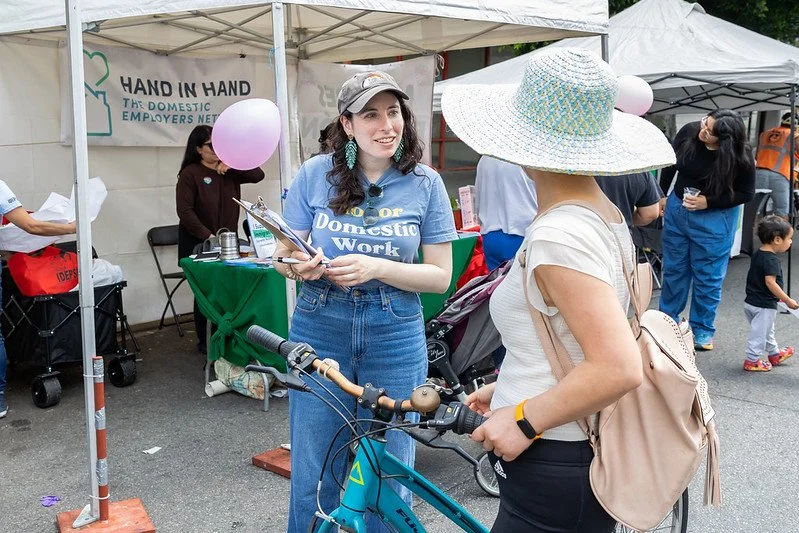
“After the election, there was so much hand-wringing and feelings of helplessness,” recalls Melissa Lo, who first met Kayla years ago when they both worked in the entertainment sector. “Part of Hand in Hand’s education was reminding more privileged people that they do have power, especially in their homes. The program Sanctuary Homes translates that power into real safety for the domestic workers employed by homeowners.”
Hand in Hand teaches employers how to initiate vulnerable, non-presumptive conversations with workers—without asking about immigration status or making assumptions, such as “I know this is a challenging time. I don’t want to presume anything, but I want you to feel supported. Are there ways I can help?”
Those conversations may sound small, but they create openings for trust, planning, and mutual care. Starting from a place that acknowledges the barriers can be as simple as offering the use of a printer can have incredible power.
“Having strong relationships with the people who help run our homes is essential. It’s a more intimate workplace environment vs. an office building. Building that trust facilitates creating an emergency plan together.” For those who employ home workers who need more know-how, Hand in Hand offers workshops that include emergency preparedness tools, know-your-rights information, and practical safety planning resources for both employers and workers.
In recent months, Hand in Hand’s organizing has become especially visible on the Westside. After rumors spread about immigration enforcement activity involving nannies near Douglas Park, members quickly organized outreach at local playgrounds and parks, speaking directly with parents and caregivers about ways they could support the workers in their homes. That support might include offering paid leave during moments of crisis, contributing to worker-led mutual aid funds, helping create emergency childcare plans, or simply opening honest conversations about safety.
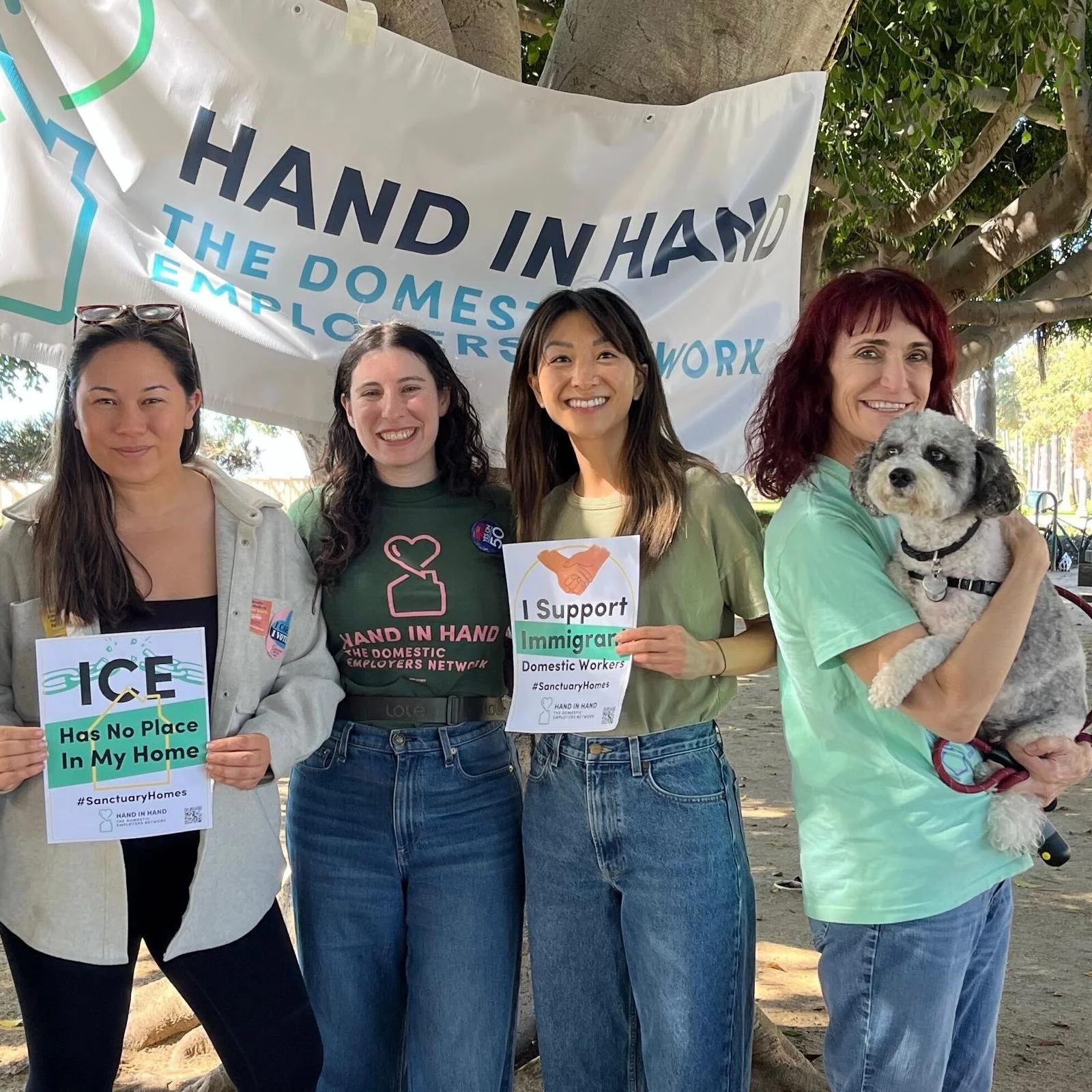
“What’s been powerful,” Kayla says, “is realizing that all the tools we’ve been developing to show up day-to-day alongside immigrant domestic workers apply so much to this moment. It’s really about cultivating respect and relationships that honor people’s full humanity.”
The work also challenges assumptions about domestic labor itself. “We think of domestic workers as mainly female, but Sanctuary Homes intentionally includes gardeners, landscapers, and other mainly male workers often excluded from conversations about care work,” Melissa adds.
That spirit of connection and conversation is what drew Hand in Hand into collaboration with Bahala and its ongoing “Coffee and Connections” gatherings in Santa Monica. Both organizations foster opportunities to grow community care, rendering it less abstract, less overwhelming, and steeped in empowering action.
Future collaborations may include participation in Bahala’s LA vs Hate Week programming this fall, alongside bystander intervention training and broader conversations about discrimination, labor, and belonging.
For now, though, the focus remains remarkably simple: show up, talk honestly, and build trust.
As Kayla puts it, “We’re trying to expand the dignity of a fair and safe workplace into every corner of our communities. Conversations that might feel trivial compared to bills and laws can have exponentially powerful effects. How better than joining hands can we keep each other safe?”
Kayla will bring sample emergency plans to this week’s Coffee and Connections gathering and invite attendees to host workshops in their own neighborhoods or participate in future outreach efforts.
Jessica Cole