
Growing Community Off-Grid
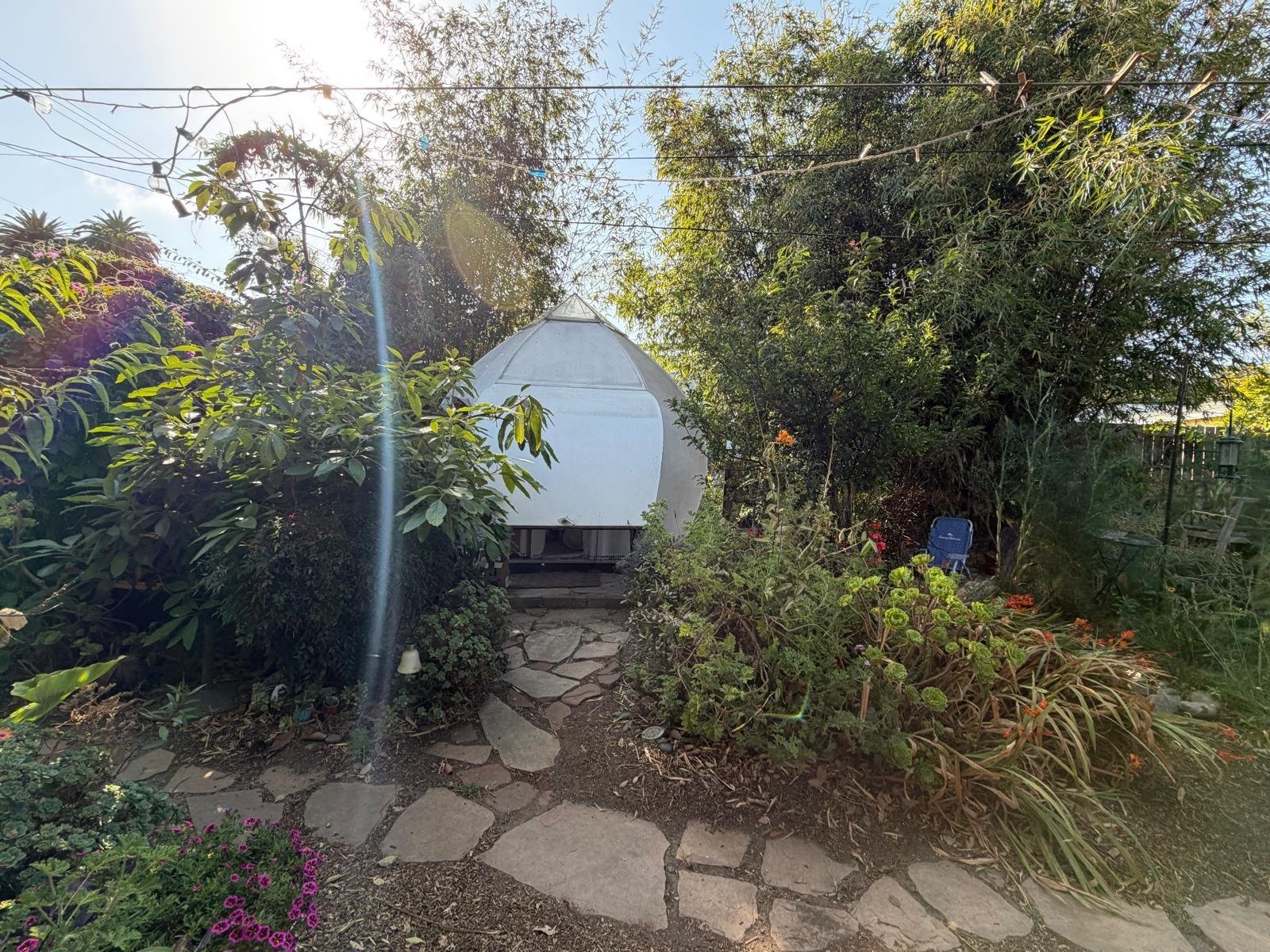
This Friday at Coffee & Connections, we’ll be joined by some folks from Santa Monica’s Office of Sustainability and the Environment. In keeping with the theme of nature preservation, I interviewed a Santa Monica resident living with three other adults in a house with a huge garden where they host community gatherings and serve food grown steps from the front door.
In 2008, when Guzel arrived at her communal house, which she now shares, the backyard consisted of patchy dead crab grass and piles of stuff. There was one lemon tree, one fig tree, and a giant camphor tree. Nothing else was alive, and the soil was dry and hard.
The contrast was stark, since Guzel had been living on a permaculture farm in Costa Rica for the previous six months.
An Albanian-American, who’d lived in L.A. since 1995, Guzel left her job as an environmental educator at a charter school in Lawndale, ended a relationship, and was evicted from her apartment around the time of the 2008 crash. Undaunted, she realized these changes opened opportunities for a fresh start. “What’s next?” she thought. “I got rid of most of my stuff, but it wasn't sad. I was making empowered choices.”
She read Elizabeth Gilbert’s Eat, Pray, Love. “I know it’s a cliché,” she says, “but it sparked even more excitement to explore a new part of the world.” Feeling disenchanted with the U.S., financial markets, and capitalism, she wanted to live in nature. “I realized the world was my oyster,” she says.
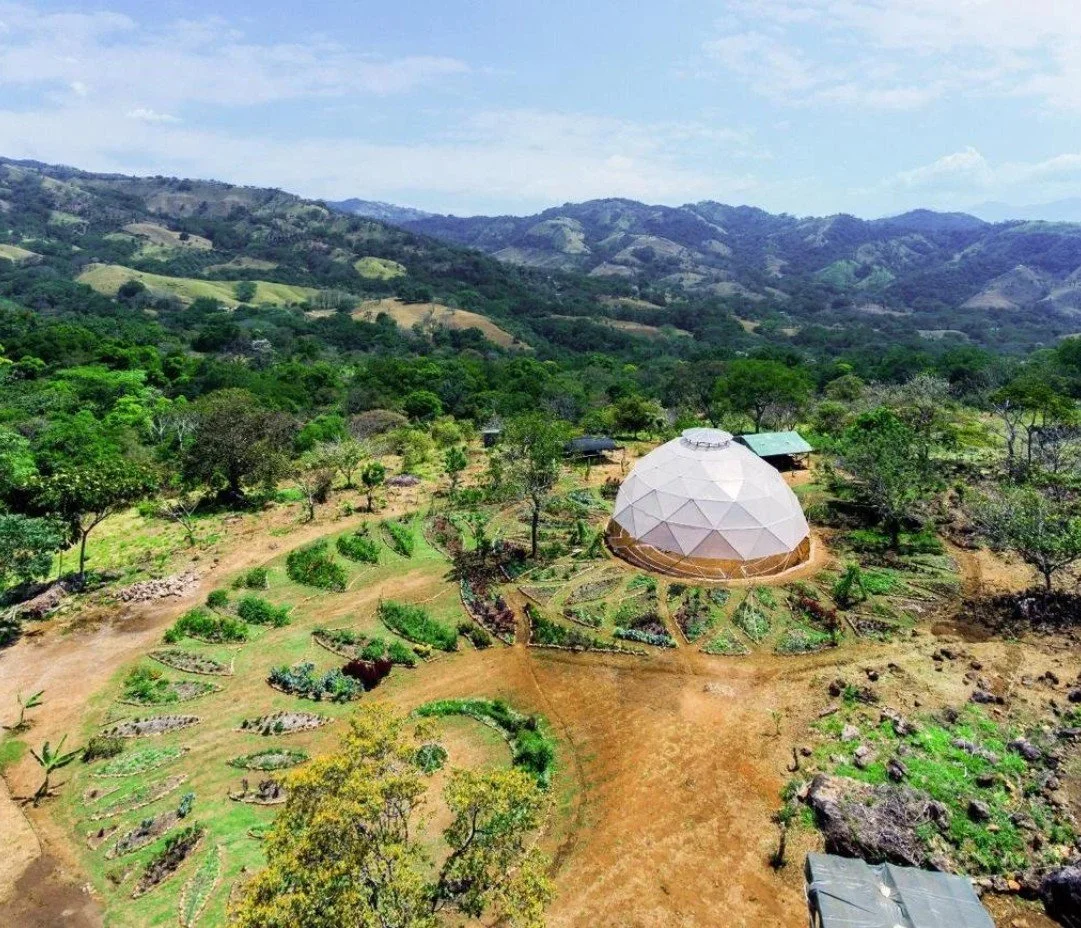
Her oyster, in this case, was living somewhere tropical on a permaculture farm. She randomly typed “Costa Rica, permaculture,” and a farm, Punta Mona, came up. As she poked around the farm’s website, she realized she’d met the guy, Stephen Brooks, who purchased the land and created the farm at an environmental conference the year before.
Taking the coincidence as a sign, Guzel emailed her resume and inquired about a position. The response came quickly: the current farm manager had a nine-year-old son who needed a teacher, and because of her prior teaching experience, the job, which included room and board and a stipend, was hers.
A month after arriving, Guzel began managing interns who worked on the farm during harvest, and she scheduled school groups’ visits, showing them how to grind cacao the old-school way. When she had downtime, she worked on the land. “We didn't grow anything to sell,” she says. “The man who owned the farm collected seeds to see if they would grow in Costa Rica—including eight different kinds of banana trees.

The farm served as a model of an off-grid life with all the elements. Punta Mona is located in a lush, verdant jungle that also includes a beachfront. “I acclimated to the jungle instantly and deeply,” she says, reminiscing. “I lived in a place that had poisonous everything, but I didn't have fear. I loved it. The air was sweet. I was eating fresh food and drinking pure water. And I was surrounded by wonderful people who were passionate about the same things I was.”
There were challenging moments, of course. “Living in community means not everyone finds each other amazing all of the time.” She laughs.
Then came the rainy season, one of the wettest and most extreme in Costa Rican history. The off-grid farm had no electricity, which meant not being able to use dryers for clothing. Things began to mold. The housing sported no windows or doors. “The intense rain drove me out of the jungle. I arrived in LA for a short visit, thinking I was going to go check out Nicaragua,” Guzel says. “But when I saw my friends here, I realized how much I missed my LA community.”
One evening at her friend Gidget’s house, Gidget asked Guzel to move in. “As long as I own this home,” Gidget offered, “You have a place to land in LA.” Gidget was born into this mid-city Santa Monica property, which her grandmother purchased. Guzel thanked her friend. “But,” she said, “I don’t think I can sleep indoors anymore.”
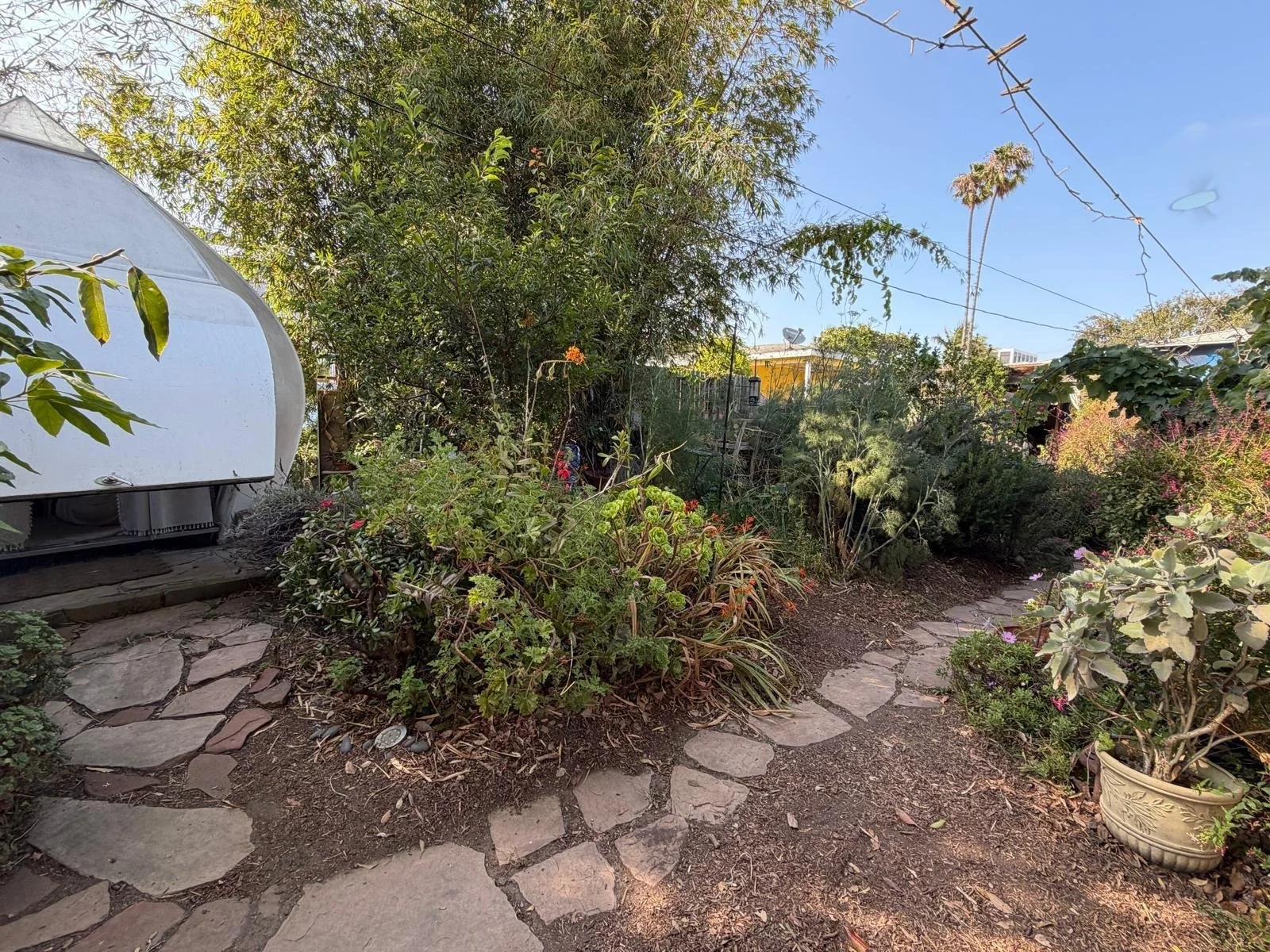
Their mutual friend, Ray Cirino, an amazing designer and builder, was sitting next to Guzel at dinner. Ray saw the backyard’s potential. He said, “We can build structures out here. We can build a garden. He drew a pod, basically a more permanent, structured outdoor room, right then and there. A way for me to be outside while having a closet to hang my clothes. There’s a big kitchen and bathroom in the house.”
Inspired, Guzel told her, “I’ll move in, but let’s prioritize creating a community. That's when we came up with the name Giving Garden because my name and her name both start with Gs, first and last.”
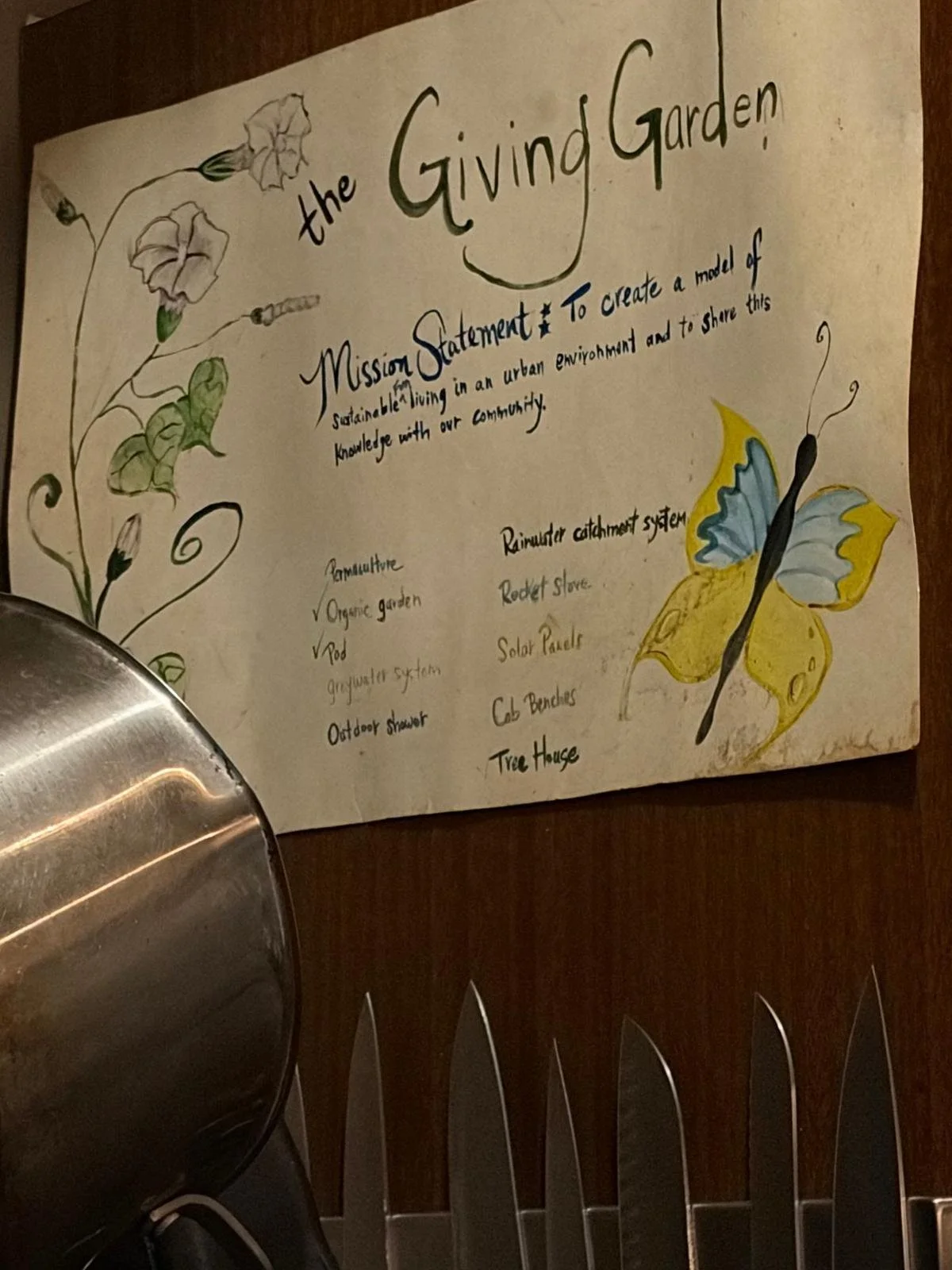
Guzel brought all her ideas to the venture, gleaned from the permaculture farm.
First, they needed to regenerate the soil in the large backyard. They laid down cardboard and watered it. As cardboard decomposes, it creates food for worms, which are dormant in such hard, unaerated soil. The worms eat and poop out casings that fertilize by rebalancing the correct chemistry. Then they could start planting.
Little by little, the garden came into full bloom. Gidget, Guzel, and the two other women who initially shared the house hosted garden days for planting and building the structures on the property, akin to Amish barn raisings. They’d feed everyone, and the vibes were high. “I can't tell you how many times people would come to pull weeds, which I really don't like doing,” Guzel says. “And they would thank me at the end and ask to come back!”
These community days struck a chord. People wanted not only to be together, but also to work the land together in a city. Sifting sustainable practices into contemporary life ends up building sustainable communal relationships in tandem—as Punta Mona did. Guzel imported everything from her experience in Costa Rica. As on the off-grid farm, Guzel experimented to discover what would thrive.
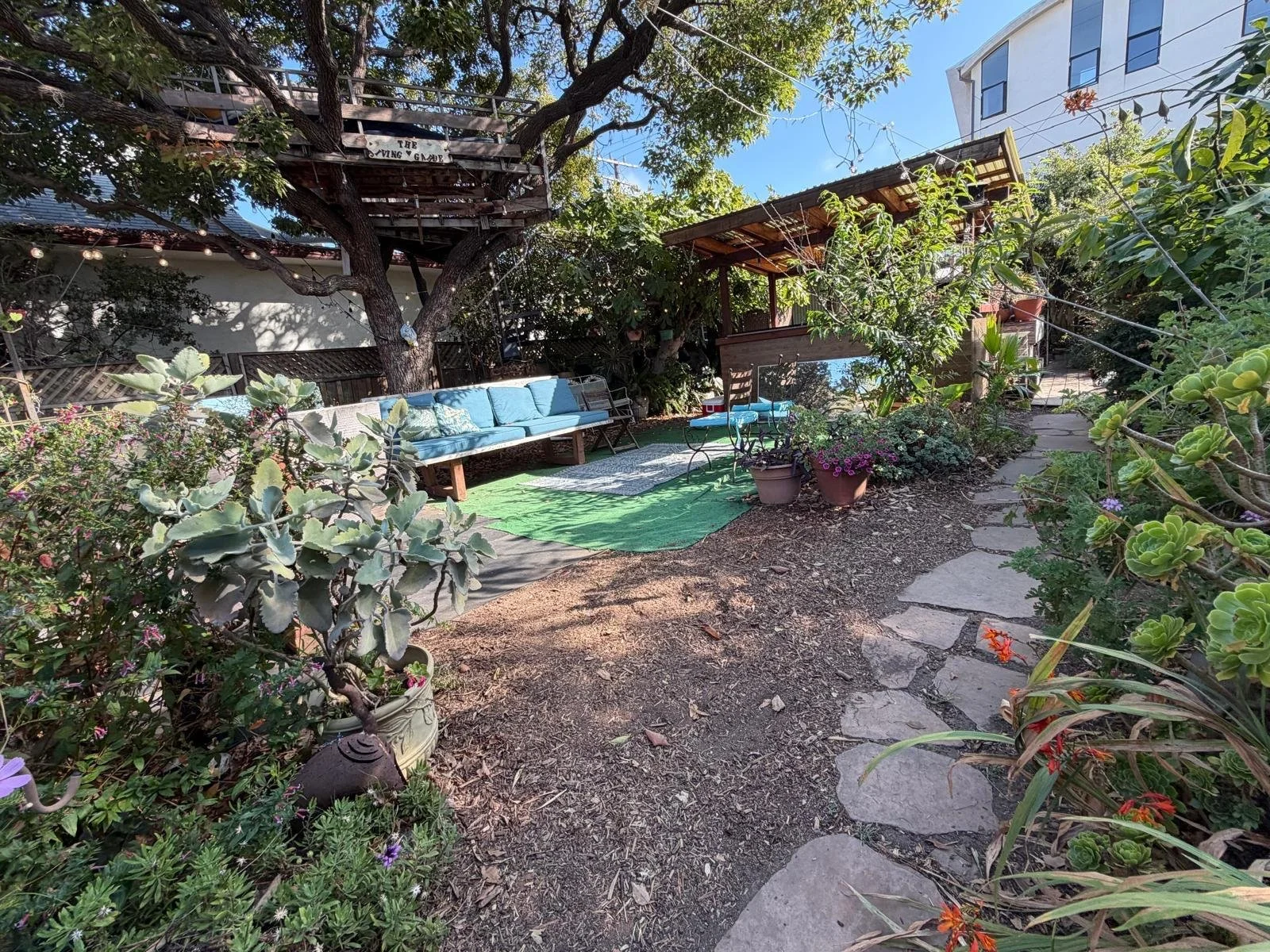
Guzel tells me she’s sitting in the pod, facing the avocado tree named Ava. “I had this vision when we built the pod that I would step outside to pick my breakfast.” She laughs. “I say visions because I didn’t have a game plan. We didn’t map the garden out, such as this plant here and so on. It was an organic process, really beautiful how it all unfolded, because a lot of what we planted was either given to us or we found a resource.”
Since Guzel was deeply connected to the permaculture community in LA, she could easily find organizations giving out trees for free. Several even offered fruit trees. That’s how Ava came into their lives and garden. “This year has been the first year she’s fruited profusely, and it’s incredible.”
She adores the 50-year-old fig tree. “I grew up with fig trees, which are very big in my Mediterranean culture. When I arrived here and saw the tree full of figs, I felt like I was home.” Harvest time is coming up in August.
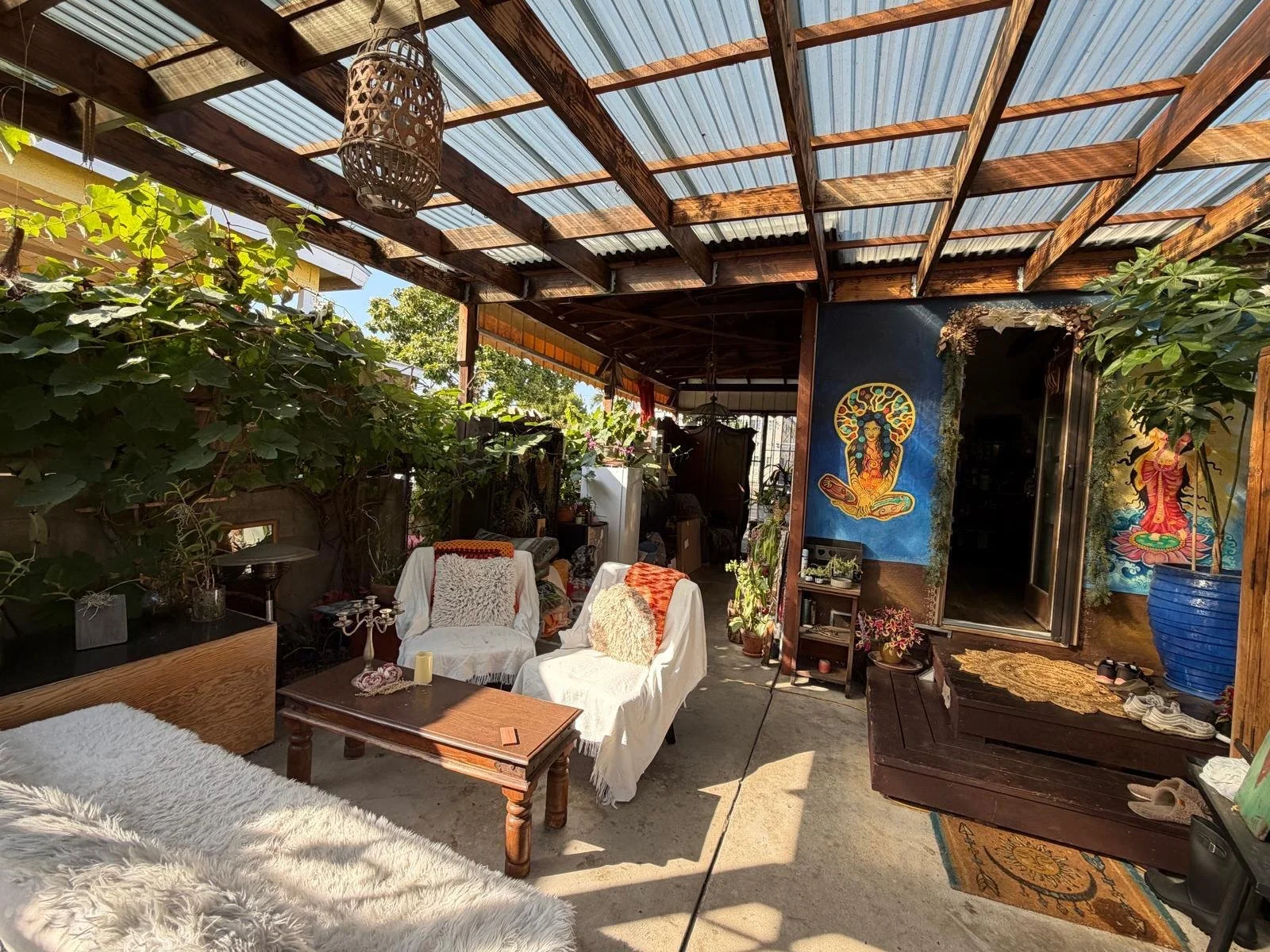
Guzel moved out of the house in 2015, and, after a decade away, moved back in last year, ready to revivify community engagement. “A friend's band performed here last Friday night. Oh my gosh, we had so much fun, and it sparked the community fire in us again. We're like, oh, let's bring them back. Let's bring back the community gatherings.”
The plants and the garden itself feel more like characters in a story rather than simply the setting. “Most of the plants here were planted communally. There have been lots of dancing on our grass, communal meals, and joy. Plants have absorbed or been a part of all this energy. I think they really love it when people are here,” Guzel gushes.
As a woman in midlife, she aims to “midwife women through midlife.” Guzel hosts an online circle for women in midlife, though all ages are welcome to join. Currently, she’s taking the summer off, she leads monthly sweat lodges—powerful purification ceremonies—in Thousand Oaks. Her rainbow lodge embraces all lineages. “Since all of our lineages had some earth-based practices that involve the elements,” she says. “The sweat lodge is beautiful medicine.”
Guzel’s Giving Garden offers us an individually derived model of sustainability that is both land- and people-based. We’ll hear from the Office of Sustainability and Environment about how to transform our beautiful city into something we all help flourish. Guzel says, “I know that we all need to gather. So I'm doing the work to gather us.”
You can find all of Guzel’s offerings through her Instagram, Spiral Circle Healing.
Jessica Cole