
Santa Monica’s Early Childhood Ecosystem: Building a Thriving Community From Day 1
In Santa Monica, support for young children doesn’t begin and end with preschool enrollment. It’s part of a large community-wide effort that stretches from the earliest years of life into adulthood—a philosophy that recognizes when children thrive, the whole community benefits.
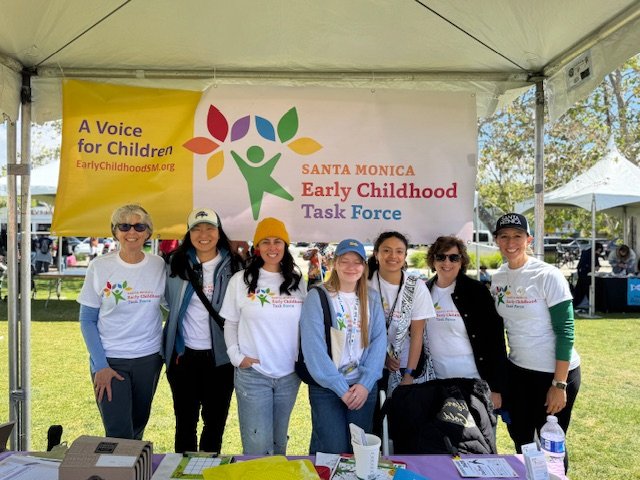
At the center of this work is the Santa Monica Early Childhood Task Force (ECTF), a coalition that brings together childcare providers, educators, parents, advocates, and civic leaders to strengthen the city’s early childhood landscape. Working closely with the nonprofit Connections for Children and the City of Santa Monica, the group helps ensure families have access to quality childcare, resources, and support during the crucial first five years of a child’s life.
“What makes Santa Monica special is that it’s truly a coalition,” said Jill Cipresso, a relatively new, passionate member of the task force. “It’s this incredible gathering of providers, community advocates, parents, caregivers, and childcare centers. Everyone has a role to play in supporting our youngest residents.”
Today, that coalition includes many childcare entities across Santa Monica. These range from well-known childcare centers—like Growing Place—to small, home-based caregivers who watch children while parents head to work.
“That can include a large center or a grandmother caring for a child in her home,” Jill explained. “Even those caregivers can receive support through subsidies. It’s a wide, welcoming network.”
Santa Monica’s commitment to early childhood education dates back decades. One early milestone came in 1972, when the city began providing grant funding to Connections for Children to support childcare services for local families. The $10,000 grant, designated for emergency childcare, helped many Santa Monica families.
Over time, that support grew significantly. Today, funding is distributed through the city’s Human Services Grants Program, helping sustain a network of childcare providers and family support programs throughout the community to ensure every child in Santa Monica enters school healthy, supported, and ready to learn.
“Our guiding idea is that every child in Santa Monica should be healthy, enjoy learning, and enter school ready and eager to succeed,” Jill said. “If we can build those first five years in the most nurturing way possible, children enter education with excitement and confidence.”
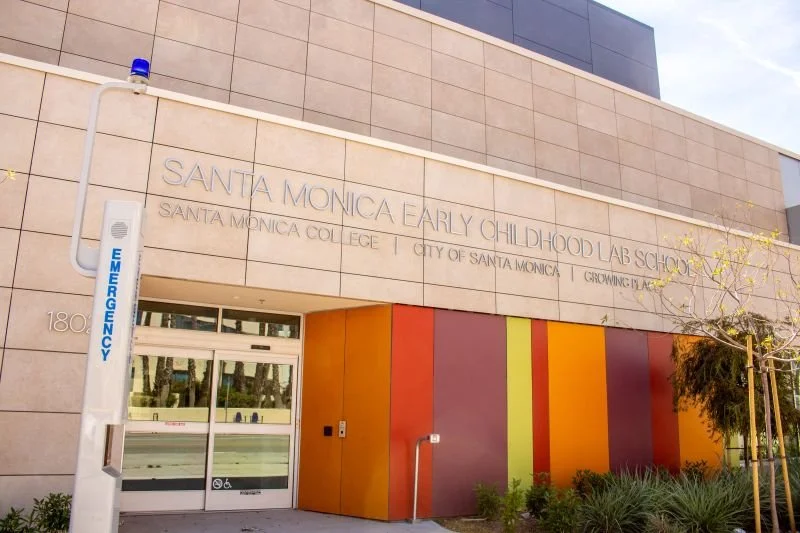
One of the task force’s proudest accomplishments is advocating for the development of the Early Childhood Lab School, a partnership between the city and Santa Monica College. Located near City Hall, the lab school is operated by Growing Place and functions as both a childcare center and a learning environment for future educators.
Students studying early childhood education at Santa Monica College can observe experienced teachers in action, gaining practical insight into child development and classroom practices.
“They’re able to watch professionals care for and teach young children,” Jill said. “Those students are our future caregivers.”
The program helps strengthen the local workforce while maintaining high-quality early childhood programs.Even in a city committed to early childhood services, affordability remains a challenge. Childcare costs in Santa Monica can easily exceed $2,500 per month, far out of reach for many families.
To help bridge the gap, the city provides additional subsidies layered on top of federal and state assistance programs. Connections for Children helps administer these funds, ensuring families can stay in the workforce while raising children in the community.
“Federal subsidies cover some of the cost,” Jill said. “But in Santa Monica, because of the cost of living, they often aren’t enough. The city steps in with additional support to help offset childcare expenses and keep families here.”
Still, rising costs are pushing some parents out of the workforce altogether.
“We’re seeing people leave their careers because childcare simply doesn’t balance financially,” she said. “Our goal is to make that choice easier—so parents who want to work can do so, and childcare is accessible, affordable, and available.”
The benefits of early childhood support extend far beyond parents and toddlers. According to Jill, investments in children ripple through every part of the community.
“It’s not just about a random three-year-old you don’t know,” she said. “This work touches everyone—from parents and caregivers to grandparents and neighbors. When children are supported, the entire community feels the impact.”
That philosophy gained renewed urgency in 2011, when two tragic teenage deaths prompted Santa Monica leaders to examine youth mental health more closely. In response, a collaborative led by the city launched Cradle to Career, a collective impact initiative focused on supporting residents from early childhood through adulthood.
The initiative reconnects educators, health providers, nonprofits, and civic leaders around a shared goal: strengthening the systems that guide young people through each stage of life.
“Cradle means starting with our youngest children,” Jill said. “If we can nurture them early, we put them on the best trajectory for success.”
Data also plays a role in shaping Santa Monica’s approach. Through an assessment called the Early Development Instrument (EDI), local partners—including the Santa Monica‑Malibu Unified School District—track the well-being of kindergarten students across several areas, including emotional health, physical readiness, and social development.
The assessment doesn’t measure academic skills like reading or writing. Instead, it focuses on overall child development and readiness for school.
“We’re looking at the balance in children’s well-being,” Jill explained. “It’s about emotional readiness and physical readiness, not just academic theories.”
Recent results show Santa Monica still outperforming national averages in several areas. However, some neighborhoods have seen declines, especially in the years following the COVID-19 pandemic. “That data helps us identify where communities might be vulnerable,” Jill said. “Then we can look at what resources or programs might help change that trajectory.”
Beyond policy and funding, Jill believes the real strength of Santa Monica’s early childhood ecosystem lies in the people who sustain it. Many advocates remain involved long after their own children have grown up.
“You see people, like former mayor Gleam Davis (and Jill herself, along with Erika Bell, Ben Swett, and others) giving back even when they don’t personally need the services anymore,” she said. “They understand the value of advocating for the next generation.”
Programs through the Santa Monica Public Library—including baby and toddler story times hosted at branches across the city—also play an important role in connecting families and building community.
“These programs are about more than literacy,” Jill said. “They bring families together, create opportunities for play and interaction, and help parents feel supported.”
As Santa Monica faces rising costs and shifting economic conditions, the future of early childhood programs will depend on continued advocacy and collaboration. “We’re still growing,” Jill said. “Every year we’re redefining what the mission looks like on the ground.”
But the underlying vision remains unchanged. “When we invest in the first five years, we’re investing in the future of the entire community,” she said. “That’s the foundation for everything that comes next.”
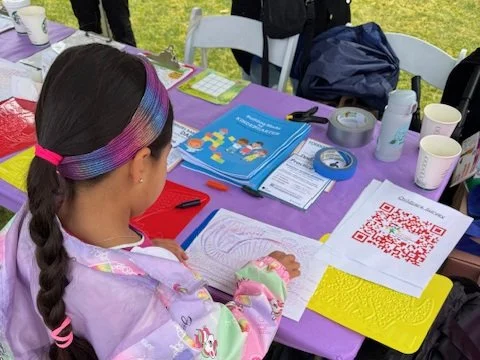
For more information, sign up for the ECTF’s monthly newsletter that includes an events calendar with FREE activities around Santa Monica.
Jessica Cole